The Pinnacle of Simplicity Sushi is arguably Japan’s most famous gift to the world. However, what passes for “sushi” overseas often differs greatly from the authentic experience. In Japan, sushi is a universe ranging from cheap, fun conveyor belt restaurants (Kaiten-zushi) to sacred, silence-filled counters where a meal costs as much as a laptop.
At its core, Edo-mae Sushi (Tokyo Style) is not just raw fish on rice; it is “treated” fish. The chef cures, marinates, simmers, or ages the fish to extract maximum umami, pairing it with vinegared rice (Shari) held together by air and pressure.
The Main Types of Sushi
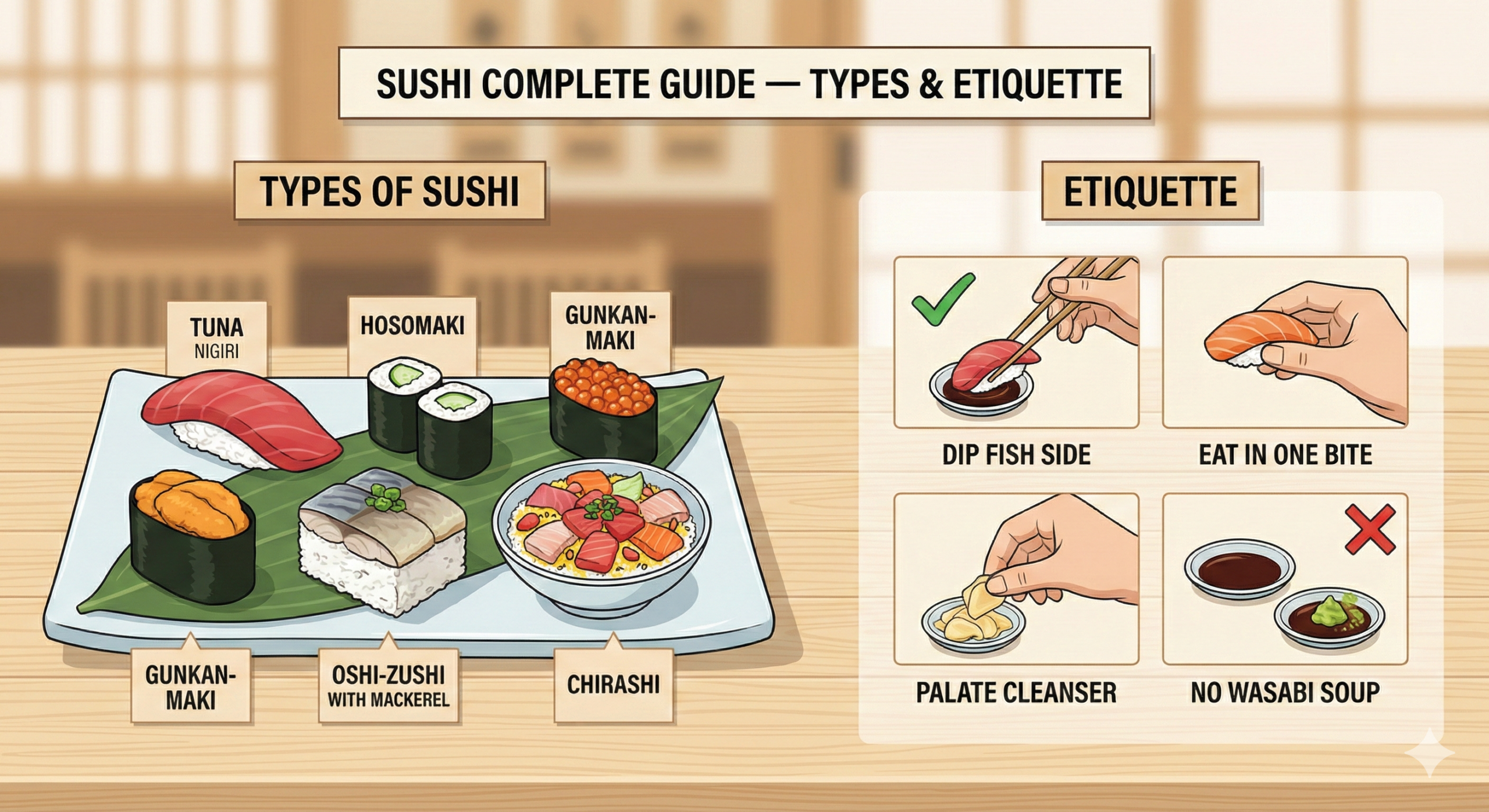
- Nigiri: The classic style. A slice of fish (Neta) draped over a small, hand-pressed mound of vinegared rice.
- Maki (Rolls): Rice and fillings wrapped in seaweed (Nori). Unlike Western “inside-out” rolls, Japanese maki usually has the seaweed on the outside.
- Hosomaki: Thin rolls with one ingredient (e.g., Cucumber, Tuna).
- Futomaki: Thick rolls with multiple ingredients.
- Gunkan (Battleship): Oval rice balls wrapped in a strip of nori, topped with soft ingredients like Sea Urchin (Uni) or Salmon Roe (Ikura).
- Oshi-zushi (Pressed Sushi): A Kansai (Osaka) specialty. Fish and rice are pressed into a wooden box (Oshibako) to create perfect rectangles. The fish is usually cured (like mackerel) to last longer.
- Chirashi: “Scattered” sushi. Sashimi served over a bowl of vinegared rice.
The Neta: A Seasonal Calendar
- Maguro (Tuna): The king of sushi. It is divided by fat content: Akami (lean red meat), Chutoro (medium fat), and Otoro (fatty belly that melts like butter).
- Shiromi (White Fish): Delicate fish like Sea Bream (Tai) or Flounder (Hirame). Often eaten first.
- Hikarimono (Silver Fish): Mackerel (Saba) or Sardine (Iwashi). These have strong, fishy flavors and are usually cured with vinegar.
- Kai (Shellfish): Scallops (Hotate), Clams, and Abalone. Prized for their crunch and sweetness.
How to Eat: The Golden Rules
- Chopsticks or Hands? Both are acceptable for Nigiri. In high-end shops, using hands is often preferred as it prevents the loosely packed rice from falling apart.
- The Dip: Dip the fish, not the rice, into the soy sauce. If you soak the rice, it crumbles and becomes too salty. Turn the sushi upside down to dip.
- One Bite: Eat the piece in one bite. Biting it in half is considered rude as it destroys the chef’s perfect balance.
- Ginger (Gari): The pickled ginger is a palate cleanser to be eaten between pieces, not as a topping.
- Wasabi: In Japan, the chef adds the wasabi inside the sushi. Do not mix a slurry of wasabi into your soy sauce bowl (called “Wasabi Soup”), as it ruins the flavor of the soy sauce.
Ordering: “Omakase”
In high-end restaurants, the best way to order is Omakase (“I leave it to you”). The chef will serve the best seasonal fish in a specific sequence—usually starting with light white fish, moving to rich tuna and silver fish, and finishing with sweet eel and egg (Tamago).
Make your Japan trip exciting with 『Japaner Guide』

Japaner Guide is a personal guide matching service that connects you with local guides to explore destinations across Japan.

Even if you’re traveling alone and feeling unsure, you can enjoy Japan with confidence and peace of mind👍

From famous tourist attractions to hidden local gems, we customize your journey to perfectly match your interests!

👇 Sign up here 👇
https://japaner-guide.com/
Make your trip to Japan more fun and meaningful!