The Golden Fry Tempura is a testament to the Japanese ability to adopt foreign ideas and perfect them. Originally introduced by Portuguese missionaries in the 16th century (“Peixinhos da horta”), it was a fritter. The Japanese refined the batter, lightened the oil, and turned it into high-end cuisine.
The Batter and Oil
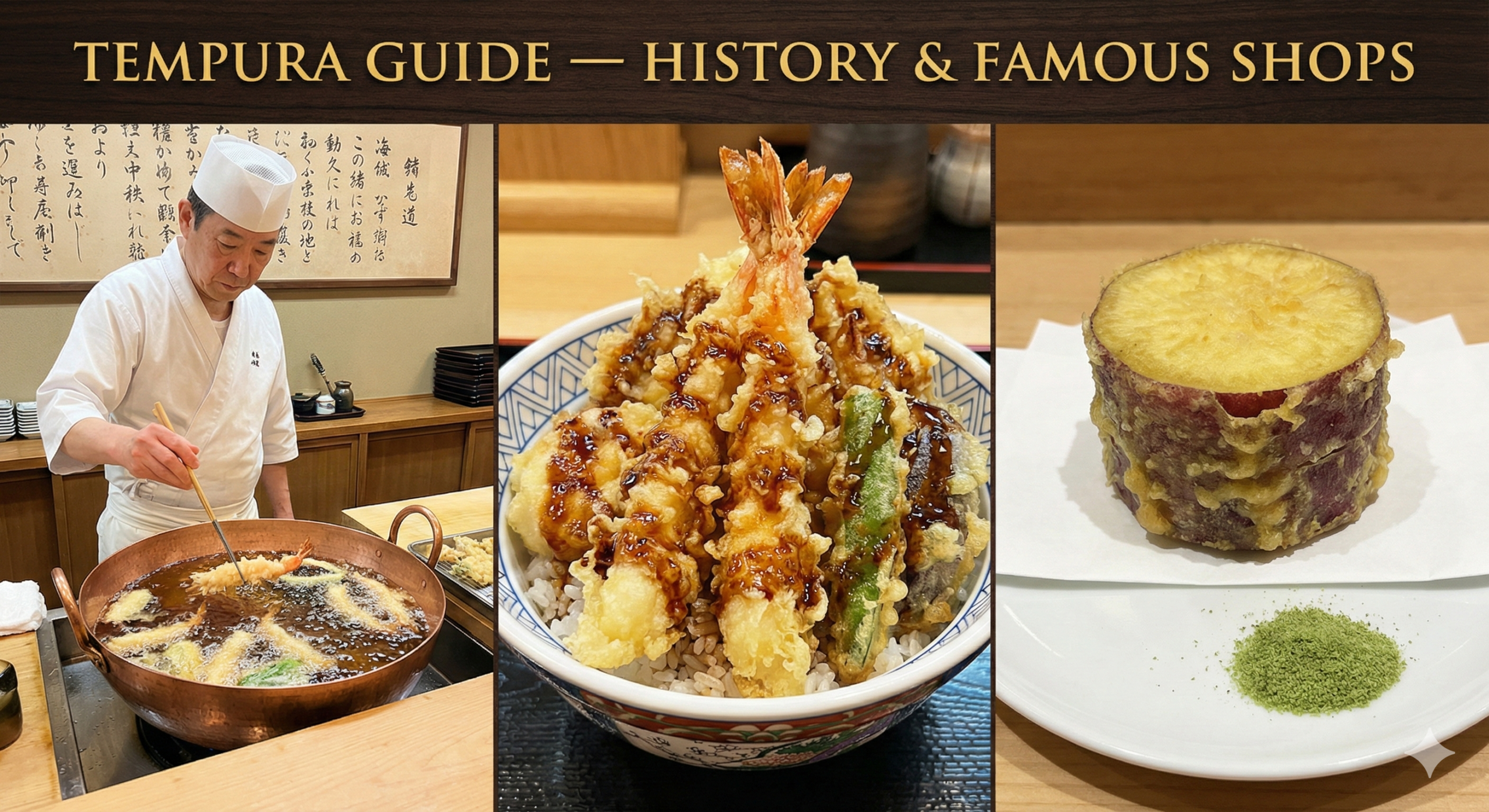
The secret to professional tempura is temperature contrast. Chefs use ice-cold water and specially blended flour, mixing it minimally to avoid gluten formation. When this cold batter hits the hot sesame oil blend (180°C), the water evaporates instantly, creating a crisp, airy shell that steams the ingredient inside.
Common Ingredients (Tane)
- Ebi (Shrimp): The quintessential tempura.
- Kisu (Whiting): A delicate white fish.
- Anago (Conger Eel): Rich and fluffy.
- Yasai (Vegetables): Pumpkin (Kabocha), Sweet Potato (Satsumaimo), Eggplant (Nasu), and Shishito peppers.
- Kakiage: A mixed nest of chopped ingredients (often onions, carrots, and small shrimp) fried together into a puck.
Dining Styles
1. The Counter (Zashiki/Tempura-ya): This is the luxury experience. You sit at a counter, and the chef fries one piece at a time, placing it directly onto your plate.
- Seasoning: You are usually given salt (often mixed with Matcha or Curry powder) and Tentsuyu (dipping sauce with grated radish).
- Pro Tip: Use Salt for high-quality ingredients to taste the natural flavor. Use Sauce for oily or hearty items to cut the grease.
2. Tendon (Tempura Bowl): The casual, hearty lunch. Tempura is piled high on a bowl of rice and drenched in a sweet-salty glaze.
3. Chain Restaurants: Chains like Tenya offer remarkably good tendon for under 1,000 yen, making tempura accessible as fast food.
Famous Tokyo Shops
- Tempura Kondo (Ginza): The chef here revolutionized vegetable tempura. His signature sweet potato tempura is a thick stump fried for 30 minutes until it becomes like a dessert.
- Mikawa Zezankyo: A legendary shop where the chef is known as the “God of Tempura.”
- Daikokuya (Asakusa): Famous for its old-school, dark sesame oil tempura that is soft and heavily sauced, a style popular in the Edo period.
Tempura is best eaten seconds after leaving the oil. The sound of the crunch is part of the flavor.
Make your Japan trip exciting with 『Japaner Guide』

Japaner Guide is a personal guide matching service that connects you with local guides to explore destinations across Japan.

Even if you’re traveling alone and feeling unsure, you can enjoy Japan with confidence and peace of mind👍

From famous tourist attractions to hidden local gems, we customize your journey to perfectly match your interests!

👇 Sign up here 👇
https://japaner-guide.com/
Make your trip to Japan more fun and meaningful!