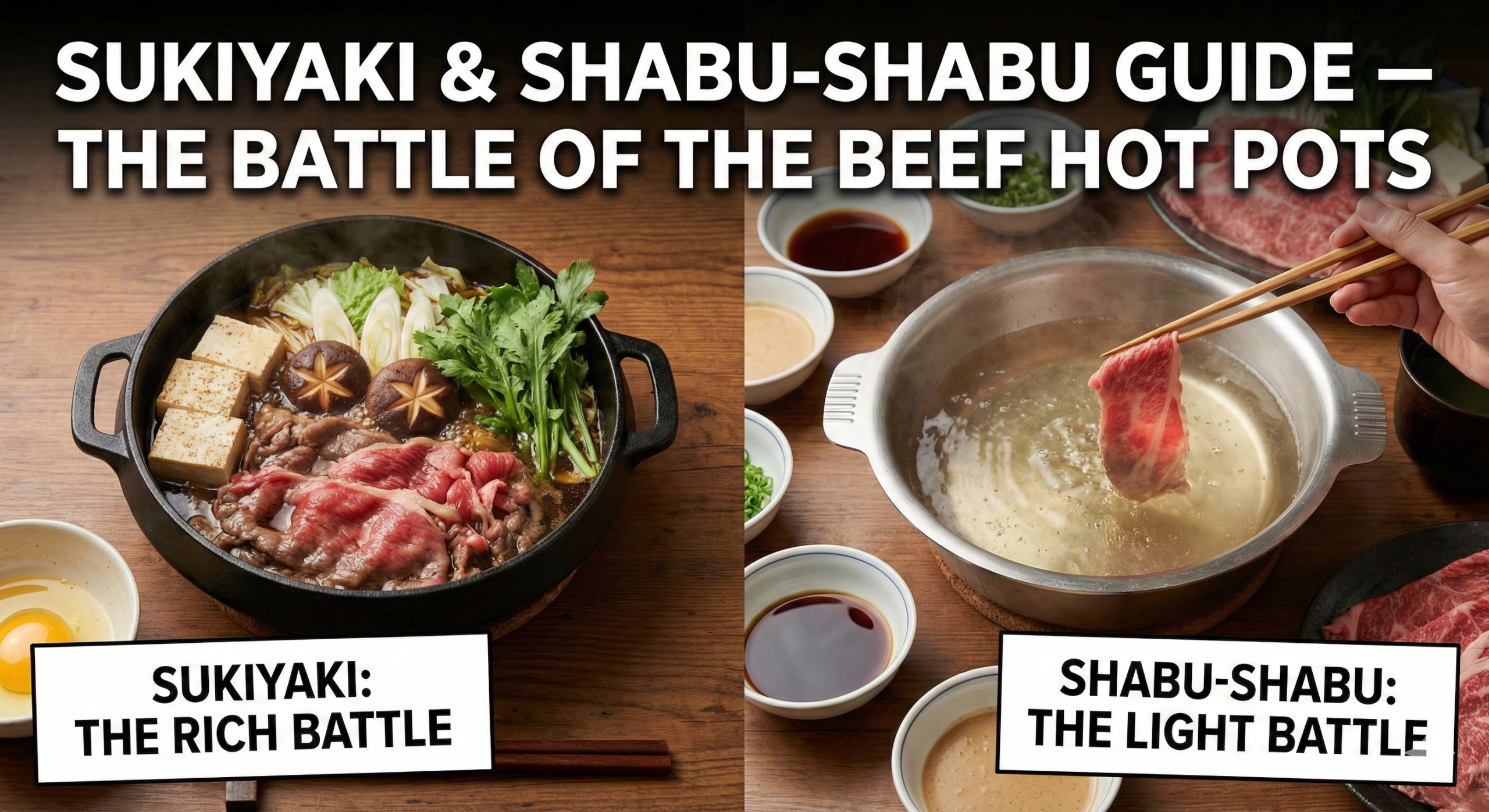
The Twin Kings of Wagyu When it comes to enjoying premium Japanese beef (Wagyu), steak is not the only option. The two most famous methods are Sukiyaki and Shabu-shabu. Both are Nabemono (hot pot dishes) cooked at the table, but they offer completely different flavor profiles and experiences.
Understanding the difference helps you choose the right meal for your mood: Do you want rich, sweet, and intense (Sukiyaki)? Or light, savory, and pure (Shabu-shabu)?
Sukiyaki: The Taste of “Civilization”
Sukiyaki has a special place in Japanese history. Before the Meiji Restoration (1868), eating four-legged animals was largely prohibited by Buddhist influence. When Japan opened to the West, eating beef became a symbol of modernization and “Civilization and Enlightenment” (Bunmei-kaika).
The Flavor Profile: Sukiyaki is rich. The beef is simmered in a shallow iron pot in a sweet-salty broth made of soy sauce, sugar, and mirin (sweet rice wine).
Kanto (Tokyo) vs. Kansai (Osaka) Style: There is a fierce rivalry in how it is prepared.
- Kanto Style (Stewing): A pre-mixed sauce called Warishita (soy sauce, sugar, dashi, mirin) is poured into the pot. The beef and vegetables are simmered together in this sauce. It is consistent and tender.
- Kansai Style (Grilling): This is closer to the original “yaki” (grill) meaning. The chef greases the hot iron pan with beef tallow, sprinkles sugar directly onto the meat, and sears the beef first. Soy sauce is added later. This creates a caramelized, intense flavor.
The Raw Egg Dip: The defining feature of Sukiyaki is the dipping sauce: Raw Egg. You beat a raw egg in a small bowl. The hot, salty beef is dipped into the cold, creamy egg. This cools the meat to a safe eating temperature and coats it in a rich emulsion that balances the salty soy sauce. (Note: Japanese eggs are pasteurized and safe to eat raw).
Shabu-shabu: The Sound of Meat
Developed much later (in the 20th century), Shabu-shabu is named after the onomatopoeia sound of swishing meat in broth.
The Flavor Profile: It is light and clean. The pot is filled with a simple Kombu (kelp) dashi or plain water.
- The Method: You take a slice of wafer-thin beef with your chopsticks and swish it in the boiling broth for just 3 to 5 seconds. Swish, swish (Shabu, shabu). The meat should still be slightly pink.
- The Sauces: Unlike Sukiyaki, the flavor comes from the dipping sauce, not the pot.
- Ponzu: Citrus-based soy sauce. Refreshing and cuts through the fat.
- Goma-dare: Creamy sesame sauce. Rich and nutty.
Ordering Tips
- The Meat: You will usually choose between grades of meat (A3, A4, A5 Wagyu). For Sukiyaki, the fat of A5 is delicious. For Shabu-shabu, too much fat can be heavy, so a slightly leaner cut often works better.
- The Finale (Shime): Never waste the leftover broth! In Sukiyaki, Udons noodles are added to soak up the sweet sauce. In Shabu-shabu, rice or ramen noodles are added to the meat-enriched broth to make a finishing soup.
Make your Japan trip exciting with 『Japaner Guide』

Japaner Guide is a personal guide matching service that connects you with local guides to explore destinations across Japan.

Even if you’re traveling alone and feeling unsure, you can enjoy Japan with confidence and peace of mind👍

From famous tourist attractions to hidden local gems, we customize your journey to perfectly match your interests!

👇 Sign up here 👇
https://japaner-guide.com/
Make your trip to Japan more fun and meaningful!