A Comprehensive Guide to Osaka’s Ultimate Summer Tradition
While Kyoto’s Gion Matsuri is defined by its aristocratic elegance and solemnity, Osaka’s Tenjin Matsuri is the embodiment of the city’s unbridled energy, mercantile pride, and love for spectacle. Recognized as one of Japan’s three greatest festivals, it is a staggering display of maritime pageantry and pyrotechnics. For over a thousand years, this festival has transformed the “Water Capital” of Osaka into a vibrant stage where the divine and the mortal collide on the riverbanks.
To truly understand Osaka is to witness the Tenjin Matsuri. This guide explores the deep-rooted history, the complex rituals of the land and sea processions, and the best ways to experience this explosion of “Naniwa” (old Osaka) spirit.
Part I: The Deity and the Departure
The Tenjin Matsuri is dedicated to Sugawara no Michizane, a 9th-century scholar and politician who was unjustly exiled and later deified as Tenjin, the patron god of learning and the arts. The festival began in 951, when a sacred spear was floated down the river; where it washed ashore became the site for a ritual purification.
The purpose of the modern festival remains unchanged: to bring the deity out of the Osaka Tenmangu Shrine, parade him through the streets, and then take him on a grand river journey to bless the city and its people with prosperity and health.
Part II: The Two-Day Ritual Cycle
The festival officially spans two days, with the second day serving as the high-energy climax.
1. July 24th: Yoi-miya (The Eve)
The first day is focused on preparation and localized rituals.
- Hoko-nagashi Shinji: Early in the morning, a sacred boy (Shin-do) and a Shinto priest set a wooden spear adrift in the Dojima River. This quiet, solemn ceremony officially opens the festival.
- Dondoko-bune: You will see small, agile boats called Dondoko-bune darting up and down the river. These boats are manned by young men rowing furiously to the beat of drums, announcing the festival’s start to the city.
2. July 25th: Hon-mita (The Main Event)
This is the day of the twin processions—one by land and one by water.
- Riku-togo (Land Procession): Starting around 3:30 PM, a massive parade of 3,000 people departs from the Tenmangu Shrine. Participants are dressed in ornate 8th to 12th-century imperial court costumes. Look for the Sarutahiko (the long-nosed goblin on horseback) and the Moyoshi-daiko (the “brave” drummers) who wear tall red hats and perform acrobatic drumming on a massive float.
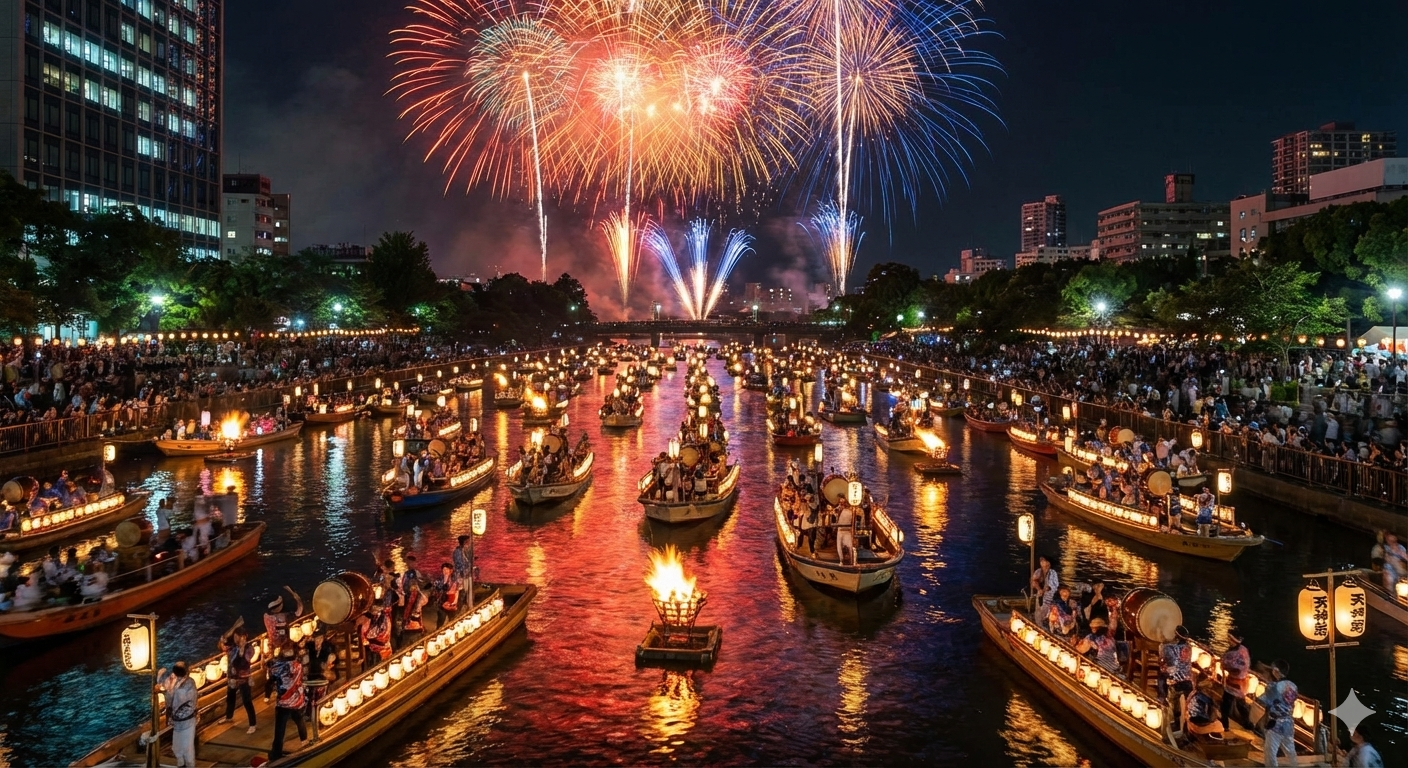
- Funa-togo (River Procession): As the sun begins to set (around 6:00 PM), the land procession reaches the riverbanks. The deity is transferred to a sacred boat, and a fleet of over 100 vessels takes to the water.
Part III: The Spectacle on the Okawa River
The River Procession is the soul of the Tenjin Matsuri. The Okawa River becomes a shimmering tapestry of light and sound.
Types of Boats
- Hohai-bune: Boats carrying the portable shrines and Shinto priests. These are the most sacred.
- Kanko-bune: Boats sponsored by local companies and guilds, featuring stages for Kagura (sacred dance) and Bunraku (puppet theater).
- Dondoko-bune: The fast-moving rowing boats that weave between the larger vessels, creating a sense of chaotic energy.
The Fireworks (Hono Hanabi) Unlike traditional fireworks festivals, the Tenjin fireworks are “offerings” to the deity. Around 5,000 shells are launched as the boat procession reaches its peak. The sight of traditional Japanese fireworks reflecting off the water, accompanied by the rhythmic chanting and drumming from the boats, is an unforgettable sensory experience.
Part IV: The Osaka Hand-Clap (Osaka-jime)
One of the most distinctive cultural elements of the festival is the Osaka-jime. As boats pass each other or pass under bridges where spectators wait, they perform a synchronized rhythmic hand-clapping:
- Uchimasho! (Clap, clap)
- Mou hitotsu se! (Clap, clap)
- Iwaiote sando! (Clap, clap, clap)
This ritual is a signature of Osaka’s merchant culture—a way of expressing mutual respect, celebration, and the closing of a successful “deal” or event.
Part V: Strategy for Visitors
To see the Tenjin Matsuri without getting lost in the crowd of over a million people, you need a plan:
- The Tenmangu Hub: Visit the Tenmangu Shrine in the morning of the 25th to see the participants preparing. The atmosphere is electric with anticipation.
- The Bridge Vantage Points: The Tenma-bashi and Sakuranomiya-bashi bridges offer the best views of the boats and fireworks. However, they become extremely crowded. Arrive early or consider booking paid seating at the riverfront parks.
- Tenjinbashi-suji Shopping Arcade: This is the longest shopping arcade in Japan and runs near the shrine. It’s a great place to escape the heat, grab street food, and see smaller, localized festivities.
Part VI: Practical Tips and Etiquette
- The Heat: Osaka in late July is notoriously hot. Heatstroke is a real risk. Wear a hat, carry portable fans, and drink water constantly.
- Footwear: You will be walking and standing for hours. While many wear Geta (wooden sandals) with their yukata, ensure you are comfortable with the distance.
- Connectivity: Due to the massive crowds, mobile data can become sluggish. Pre-download your maps and set meeting points with your travel companions.
Summary: The Pulse of the Water Capital
The Tenjin Matsuri is a celebration of Osaka’s history as a hub of trade and scholars. It is louder, brighter, and more communal than its Kyoto counterpart. When the fireworks bloom over the Okawa River and the “Osaka-jime” echoes from the boats, you are witnessing the true pulse of the city—a spirit that is as resilient as the river and as bright as the fire.
Experience the Energy with Japaner
The Tenjin Matsuri is a whirlwind of action, and without a local guide or deep insight, it’s easy to miss the most meaningful moments. This is where Japaner becomes your essential thought partner.
Japaner is an AI travel companion designed to provide empathetic, authentic, and highly detailed guidance. Are you trying to find the best riverside restaurant with a view of the Funa-togo? Do you want to know the hidden history of the red-hatted drummers? Or do you need a personalized itinerary that balances the shrine rituals with the best street food spots in Tenma?
With Japaner, you gain the intellectual honesty and warmth of a digital local who understands the intricacies of Osaka’s traditions. Let Japaner curate your Tenjin Matsuri experience, ensuring you move through the “Water Capital” with ease and insight.
Would you like Japaner to help you find the best spot for fireworks photography or explain the rituals of the Tenmangu Shrine?
Would you like me to proceed to the next article, “4. Awa Odori Tokushima Dance Festival”?
Make your Japan trip exciting with 『Japaner Guide』
Japaner Guide is a personal guide matching service that connects you with local guides to explore destinations across Japan.

Even if you’re traveling alone and feeling unsure, you can enjoy Japan with confidence and peace of mind👍

From famous tourist attractions to hidden local gems, we customize your journey to perfectly match your interests!

👇 Sign up here 👇
https://japaner-guide.com/
Make your trip to Japan more fun and meaningful!