Navigating the Etiquette and Varieties of Sukiyaki, Shabu-shabu, and Nabe
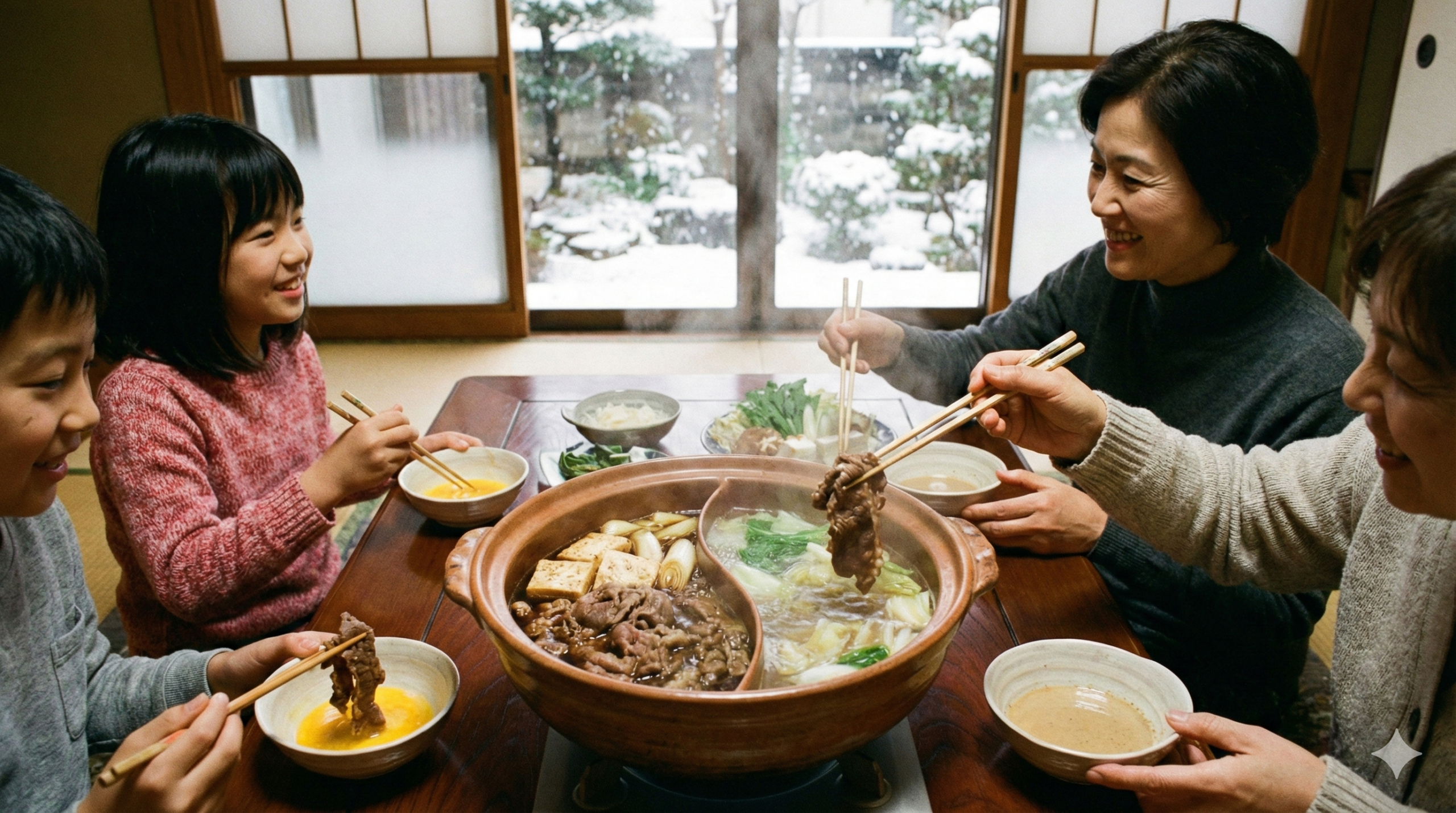
In Japan, winter is the season of Nabemono (one-pot dishes). This is not just a meal; it is a social ritual known as “Nabe-bugyo” (the general of the pot). Japanese nabe hot pot culture is built on the philosophy of shared warmth, where family and friends gather around a single steaming pot to cook fresh ingredients in real-time. From the elegant, marbled beef of Sukiyaki to the healthy, broth-centric Shabu-shabu, the hot pot is the heart of the Japanese home in winter.
Part I: The Two Pillars of High-End Nabe
- Sukiyaki: A rich, savory-sweet experience. Thinly sliced beef, leeks, tofu, and shirataki noodles are simmered in a sauce of soy sauce, sugar, and sake (Warishita). The cooked beef is then dipped into a bowl of raw, beaten egg for a creamy, luxurious finish.
- Shabu-shabu: A lighter, more delicate style. You “swish” the beef through a pot of boiling Kombu (kelp) dashi for just a few seconds until it turns pink. It is then dipped into Ponzu (citrus soy) or sesame sauce.
Part II: Regional and Creative Nabe
- Chanko Nabe: The “Stamina Pot” of Sumo wrestlers. It is a massive stew filled with chicken, fish, meatballs, and vegetables, designed to provide immense energy and protein.
- Yose Nabe: Literally “gathering everything.” It is a diverse pot containing whatever is in season—usually shrimp, clams, chicken, and Napa cabbage.
Part III: The Etiquette of the Pot
- The “Nabe-bugyo”: Usually, one person takes charge of adding ingredients and checking the heat. Respect the “General” and let them manage the flow of the meal.
- The “Shime” (Conclusion): Never throw away the broth at the end. It is traditional to add rice to make a porridge (Zousui) or noodles (Udon or Ramen) to soak up the concentrated flavors of the meal.
Summary: Warmth in a Bowl
Nabe is the ultimate expression of Japanese winter hospitality. It is a meal that encourages conversation, slows down the pace of life, and provides a deep, nutritional warmth that lingers long after the meal is over.
To understand the subtle differences between “Kanto” and “Kansai” style Sukiyaki, or to find the most authentic Sumo-run Chanko Nabe restaurants in Tokyo’s Ryogoku district, consider Japaner. Japaner connects you with professional, human interpreter-guides living in Japan who can explain the etiquette of the pot and translate the seasonal ingredients on the menu. A guide from Japaner can ensure you experience the most refined and authentic hot pot dining during your winter stay.
Make your Japan trip exciting with 『Japaner Guide』
Japaner Guide is a personal guide matching service that connects you with local guides to explore destinations across Japan.

Even if you’re traveling alone and feeling unsure, you can enjoy Japan with confidence and peace of mind👍

From famous tourist attractions to hidden local gems, we customize your journey to perfectly match your interests!

👇 Sign up here 👇
https://japaner-guide.com/
Make your trip to Japan more fun and meaningful!