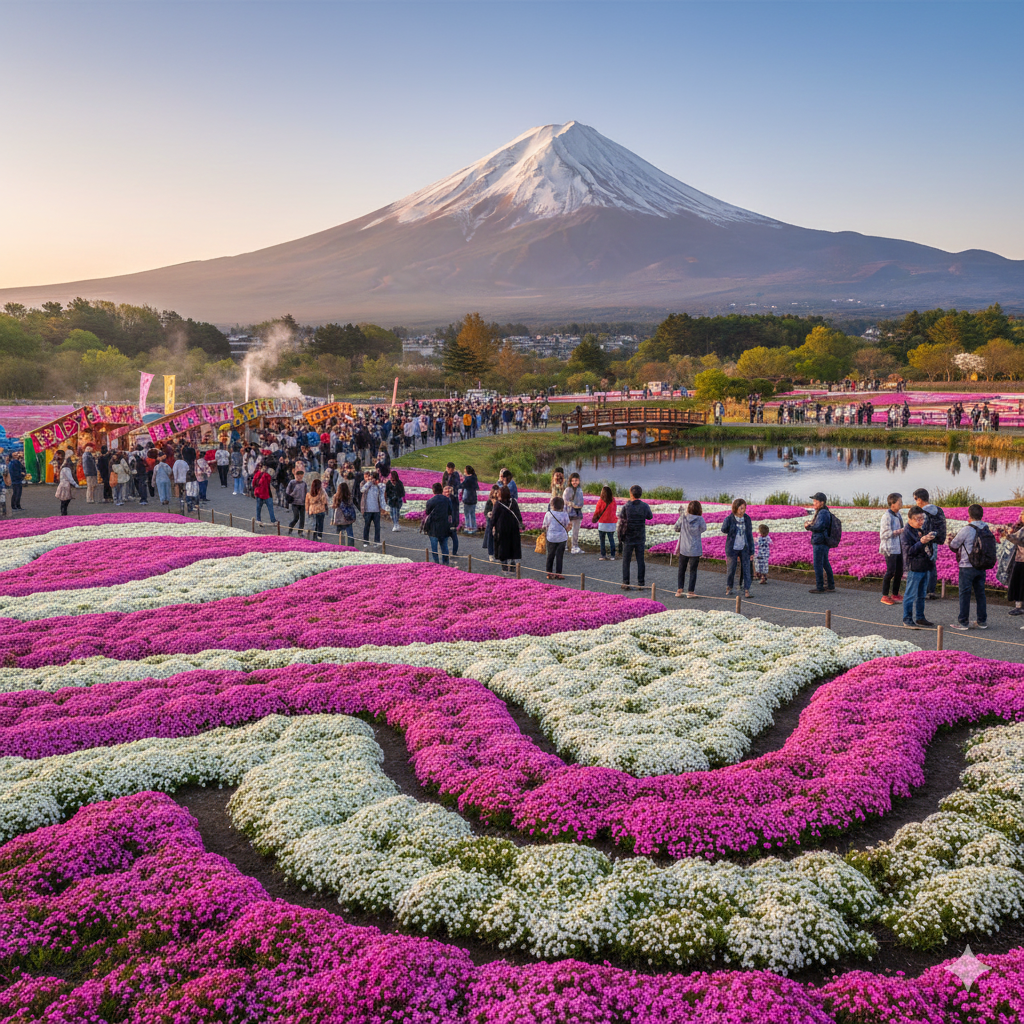
You’ve seen the photos: a breathtaking expanse of vibrant pink, purple, and white moss phlox stretching to the horizon, with the majestic Mount Fuji standing guard in the background. That, my friend, is the Fuji Shibazakura Festival, and it’s an absolute must-see if you’re visiting Japan in spring.
But here’s the thing many guides gloss over: getting there can feel like a mission, especially if you’re relying on public transport from Tokyo. “Do I take a train? Which bus? Will I even see Fuji-san?” These are the questions my guests always ask me. Don’t worry, I’ve got you covered.
I’ve guided countless visitors to this spectacular event, navigating the bus queues, the early morning starts, and the sometimes-fickle weather. Consider this your personal playbook to experiencing the Fuji Shibazakura Festival, stress-free.
What is Shibazakura, Anyway?
Before we dive into logistics, let’s appreciate what you’re seeing. Shibazakura translates to “lawn cherry” or “moss phlox.” While not true cherry blossoms (sakura), these resilient ground flowers create the same stunning effect, carpeting vast fields in an incredible array of colors. The festival showcases over 500,000 individual shibazakura plants across several varieties, creating patterns and waves of color against the dramatic backdrop of Mount Fuji. It’s an unforgettable sight.
When to Go: Timing is Everything (for Fuji and Flowers)
The festival typically runs from mid-April to late May.
- Peak Bloom: The sweet spot is usually early to mid-May. This often coincides with Japan’s “Golden Week” holidays, meaning massive crowds. If you can, aim for the last week of April or the second half of May.
- Mount Fuji Visibility: For that iconic shot with Fuji-san, early mornings are best. The air is clearest, and Fuji is less likely to be shrouded in clouds. By midday, clouds often roll in.
- Crowd Avoidance:
- Weekdays: Always choose a weekday over a weekend or public holiday if possible.
- Early Bird: Arrive right when the festival opens (usually 8:00 AM, but check the official site). This gives you a precious hour or two before the main tour buses arrive.
Getting There from Tokyo (Without a Car!)
This is the biggest hurdle for many, but totally doable with a bit of planning.
Option 1: The Direct Highway Bus (My Top Recommendation)
This is the most straightforward way.
- From Shinjuku: Take the Chuo Highway Bus from Shinjuku Expressway Bus Terminal (Busta Shinjuku) directly to the “Fuji Shibazakura Festival” bus stop. These are special seasonal buses.
- Booking: Book in advance! Especially for early morning slots on weekdays and any slot on weekends. You can book via Japan Bus Online or directly on the Fujikyu Bus website.
- Journey Time: Approximately 2.5 to 3 hours, depending on traffic.
- Why I Recommend It: No transfers, relatively comfortable, and drops you right at the festival entrance.
Option 2: Train + Local Bus (More Scenic, More Transfers)
This offers more flexibility but requires more changes.
- Train to Kawaguchiko:
- From Shinjuku: Take the JR Chuo Line Limited Express Azusa/Kaiji to Otsuki Station (approx. 1 hour).
- At Otsuki: Transfer to the Fujikyu Railway Line to Kawaguchiko Station (approx. 1 hour).
- Bus from Kawaguchiko:
- From Kawaguchiko Station, take the Fuji Shibazakura Liner bus. This special shuttle bus runs directly to the festival during its operating period.
- Tip: If you have time, explore Lake Kawaguchiko a bit before heading to the festival.
- Total Journey Time: Around 3-4 hours, not including wait times for transfers.
- Why Choose This: If you have a JR Pass, the train portion to Otsuki is covered. It also allows you to combine the festival with a visit to Lake Kawaguchiko.
Option 3: Guided Tour (Easiest, Less Flexible)
Many tour operators offer day trips from Tokyo that include the Shibazakura Festival, often combined with other attractions like Lake Kawaguchiko or a fruit picking experience.
- Pros: Everything is handled for you, comfortable coach travel.
- Cons: Fixed schedule, less time to explore at your own pace, often costs more.
- Who it’s for: Travelers who prioritize convenience and don’t mind a packed itinerary.
Inside the Festival Grounds: My Personal Tips
Once you’re there, here’s how to make the most of it:
- Head Straight for the “Fuji-Viewpoint”: Upon entering, everyone will naturally gravitate towards the main flower fields. Look for slightly elevated spots or designated photo areas that offer an unobstructed view of Mount Fuji behind the flowers. This is your priority for clear Fuji shots before the clouds roll in.
- The Dragon Garden: Don’t miss the “Ryujin Pond” and the vibrant patterns created by different colored shibazakura. There’s often a beautiful “Dragon” motif shaped by the flowers.
- Food Stalls & Local Delights: The festival also hosts the “Mount Fuji Delicious Food Festival” (Fujisan Umaimono Festa). You’ll find local specialties like:
- Hōtō Noodles: Thick, flat udon noodles in a miso-based soup with vegetables – perfect on a chilly spring day.
- Fujinomiya Yakisoba: Stir-fried noodles with a unique texture and savory sauce.
- Kōshū Wine: Sample local wines from the Yamanashi region.
- Footwear: You’ll be walking on grassy paths and potentially uneven ground. Wear comfortable shoes!
- What to Bring:
- Sunscreen & Hat: The sun can be surprisingly strong.
- Layers: Mornings can be cool, but it warms up quickly.
- Camera: Of course! A wide-angle lens is great for capturing the scale.
- Cash: Many smaller food stalls prefer cash.
Pro Tip: Embrace the Okonomiyaki & Local Crafts
When I bring guests to the festival, I always make sure they experience more than just the flowers. Just outside the main Shibazakura area, there are often pop-up stalls selling local handicrafts and produce. I’ve found beautiful handmade pottery and unique sweets that you won’t see in Tokyo. And seriously, grab a freshly grilled Okonomiyaki from one of the vendors. It’s a hearty, savory pancake that fuels you up for more flower viewing. It’s these small, local touches that truly make the trip memorable.
Conclusion: Your Pink Dream Awaits
The Fuji Shibazakura Festival is a truly magical experience, a vibrant testament to Japan’s natural beauty. Yes, it takes a little planning, especially if you’re navigating public transport. But trust me, once you see that explosion of color with Mount Fuji silently presiding over it all, every bus ride and early alarm will be completely worth it.
So, pick your travel method, set that alarm, and prepare to be utterly captivated by Japan’s incredible pink carpet.
Ready to start planning? I can help you find direct bus ticket booking links, or even suggest a full day itinerary combining the festival with other sights around Lake Kawaguchiko!
Make your Japan trip exciting with 『Japaner Guide』

Japaner Guide is a personal guide matching service that connects you with local guides to explore destinations across Japan.

Even if you’re traveling alone and feeling unsure, you can enjoy Japan with confidence and peace of mind👍

From famous tourist attractions to hidden local gems, we customize your journey to perfectly match your interests!

👇 Sign up here 👇
https://japaner-guide.com/
Make your trip to Japan more fun and meaningful!