Imagine a single, ancient tree that has witnessed a millennium of Japanese history. A tree so magnificent, its blossoms don’t just bloom—they cascade like a waterfall of pink petals. This is the Miharu Takizakura.
Located in Miharu Town, Fukushima Prefecture, the Miharu Takizakura is not just a cherry tree; it is a living legend. Estimated to be over 1,000 years old, it is one of Japan’s “Three Great Cherry Trees” and a designated National Natural Monument. But unlike city parks bursting with hundreds of trees, this is a pilgrimage to a solitary, awe-inspiring giant.
Many of my guests ask, “Is one tree worth the trip?” My answer is always: Absolutely. It’s not just a tree; it’s a monument to endurance, beauty, and the profound connection between nature and Japanese culture. Let me guide you to this ancient wonder.
A Thousand Years of Beauty: The “Waterfall Cherry”
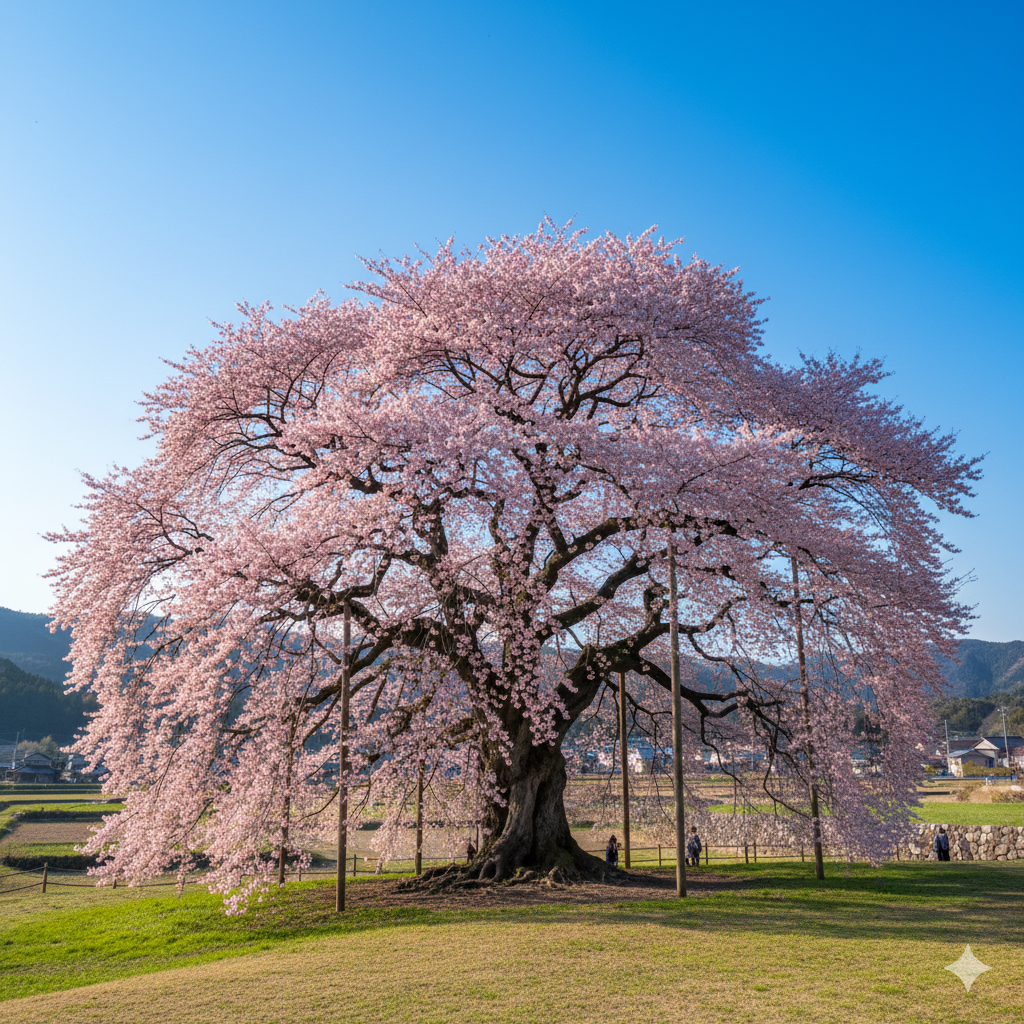
The name “Takizakura” literally means “waterfall cherry.” This isn’t just poetic license. The Miharu Takizakura is a Beni-shidarezakura (red weeping cherry tree) with an incredibly wide canopy, stretching over 25 meters (82 feet) in diameter. Its countless branches, heavy with deep pink blossoms, truly appear to pour downwards, creating the illusion of a vibrant pink waterfall.
This tree is believed to have been planted around the 9th or 10th century. It has survived wars, earthquakes, and countless seasons, standing as a silent witness to a thousand years of Japan. To stand beneath its immense, flowering branches is to feel connected to something truly eternal.
Timing Your Pilgrimage: A Small Window
Due to its location in Fukushima, the Miharu Takizakura blooms later than Tokyo or Kyoto.
- The Window: Typically mid to late April. The peak bloom often lasts for only about a week.
- The 2025 Forecast: Keep a close eye on the official Miharu Town tourism website for the precise blooming forecast, which is updated daily closer to the season. The tree’s popularity means even small changes can impact your viewing experience.
- Crowd Strategy: Arrive as early as possible (the park opens around 6:00 AM) to experience the tree in relative tranquility before the tour buses arrive.
Getting There: The Journey to Fukushima
Visiting a single, ancient tree requires a bit of planning, as it’s not directly on a Shinkansen line.
- From Tokyo to Koriyama: Take the Tohoku Shinkansen (Yamabiko or Nasuno) from Tokyo Station to Koriyama Station in Fukushima Prefecture (approx. 1 hour 20 minutes to 1 hour 40 minutes). This is covered by the JR Pass.
- From Koriyama to Miharu:
- JR Ban’etsu East Line: Take a local train from Koriyama Station to Miharu Station (approx. 15-20 minutes).
- Shuttle Bus: During the blooming season, special shuttle buses run frequently from Miharu Station directly to the Miharu Takizakura (approx. 20 minutes). These are usually paid services, so have some small yen notes ready.
- Rental Car (Optional, for flexibility): If you prefer complete flexibility and plan to explore more of Fukushima, renting a car from Koriyama Station is a good option. There is parking available near the tree, but it can fill up quickly.
Experiencing the Takizakura: More Than Just a Photo
While it’s natural to want to capture its beauty, don’t just snap a picture and leave.
- Walk Around It: The tree looks different from every angle. Walk the entire perimeter, noting how the light changes on its blossoms.
- Sit and Observe: Find a quiet spot on one of the benches and simply sit with the tree. Feel the breeze, listen to the gentle rustle of its branches, and appreciate its ancient presence.
- The Weeping Effect: Look closely at the delicate, deep pink petals that create the “waterfall” effect. These are distinct from the more common five-petal Somei Yoshino.
Pro Tip: Embrace the Miharu Local Experience
While the Takizakura is the main draw, Miharu Town itself is charming. After your visit to the tree, I often recommend my guests explore the town’s small shops and local eateries. Look for Miharu駒 (Miharu-goma), a traditional wooden toy horse, a symbol of the town.
And if time allows, visit the Miharu Hermitage (Miharu-an) nearby. It’s a serene spot that offers a deeper look into the local culture and art. These small detours enrich your experience beyond just the “famous spot” itself.
Conclusion: A Thousand Springs, A Single Memory
A journey to the Miharu Takizakura is a journey through time. It’s an opportunity to connect with a natural wonder that has graced this land for a millennium. It asks for a little more effort to reach, but the reward—the sheer scale, beauty, and history embodied in this single, magnificent tree—is an experience you will carry with you for a lifetime.
Go, witness the waterfall of a thousand springs.
Would you like me to check the live blooming status for the upcoming season, or perhaps suggest a charming local guesthouse in Miharu Town for an overnight stay?
Make your Japan trip exciting with 『Japaner Guide』

Japaner Guide is a personal guide matching service that connects you with local guides to explore destinations across Japan.

Even if you’re traveling alone and feeling unsure, you can enjoy Japan with confidence and peace of mind👍

From famous tourist attractions to hidden local gems, we customize your journey to perfectly match your interests!

👇 Sign up here 👇
https://japaner-guide.com/
Make your trip to Japan more fun and meaningful!