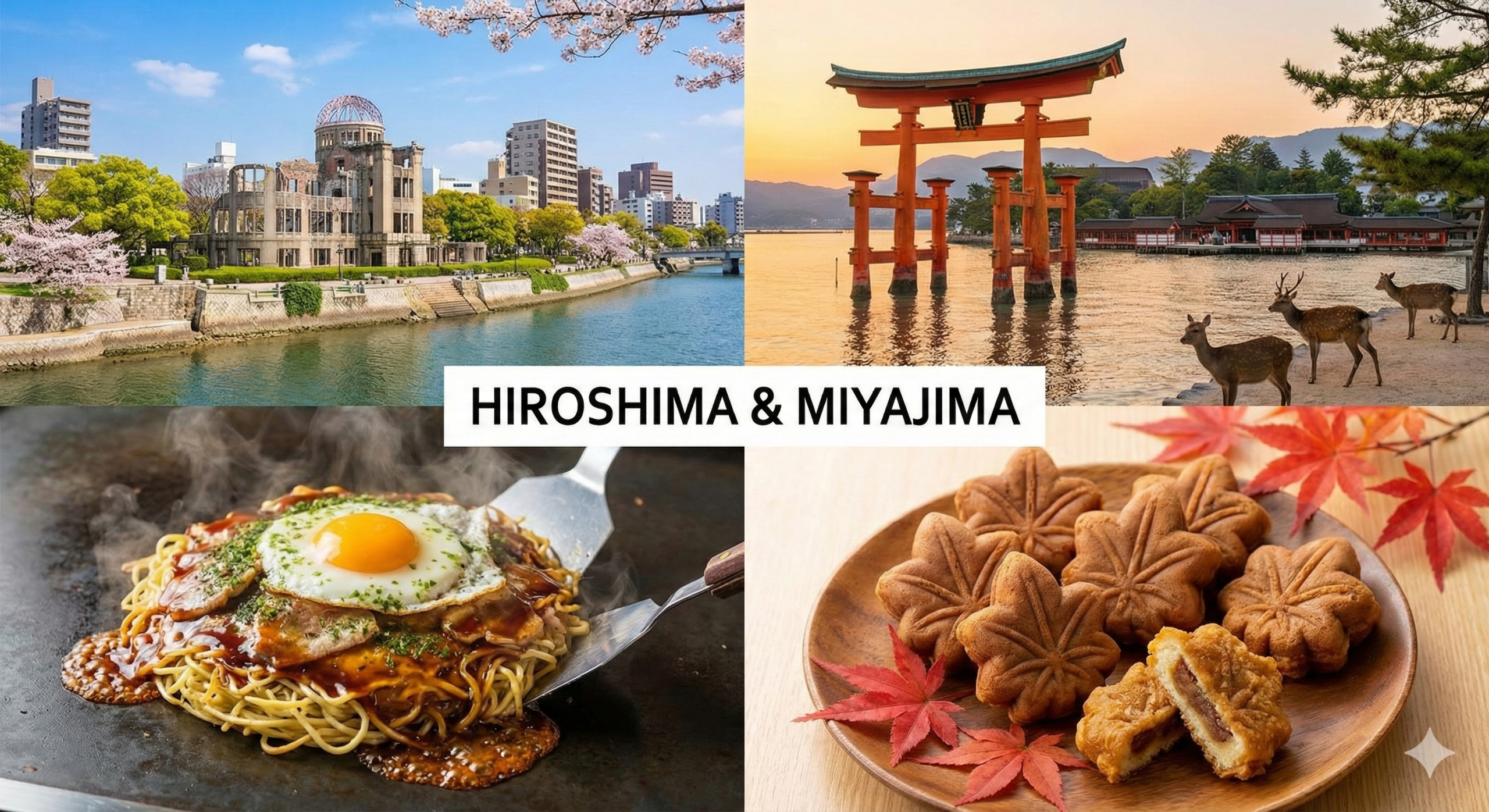
Located in western Honshu, Hiroshima is a city known worldwide for its tragic history as the first target of an atomic bomb. However, visitors today are often surprised to find not a city of sorrow, but a vibrant, green metropolis dedicated to peace and rebirth. Just a short train and ferry ride away lies Miyajima, home to one of Japan’s most iconic and spiritual views.
Together, they offer a profound travel experience that touches both the heart and the soul.
The Peace Memorial Park: A Prayer for the World
The center of the city is dominated by the Peace Memorial Park, a vast green space dedicated to the victims of the 1945 bombing and the hope for a nuclear-free world.
- The Atomic Bomb Dome (Genbaku Dome): Standing stark against the modern skyline, the skeletal ruins of the former Industrial Promotion Hall are a UNESCO World Heritage site. It has been preserved exactly as it stood after the explosion, serving as a powerful, silent witness to the destruction.
- Peace Memorial Museum: This museum provides a heartbreaking but essential look at the events of August 6, 1945. It focuses on the human stories behind the tragedy, leaving visitors with a renewed commitment to peace.
- Sadako and the Paper Cranes: The Children’s Peace Monument is surrounded by thousands of colorful paper cranes folded by children from around the world, inspired by the story of Sadako Sasaki, a young girl who folded cranes wishing for recovery from leukemia.
Miyajima: The Shrine Floating on the Sea
A 10-minute ferry ride from the mainland takes you to the sacred island of Miyajima (officially Itsukushima). For centuries, the entire island was considered a god, so the shrine was built over the water to avoid “hurting” the sacred land.
- The Floating Torii Gate: The massive vermilion Great Torii Gate appears to float on the surface of the Seto Inland Sea at high tide. It is one of the “Three Views of Japan.” At low tide, the water recedes, and you can walk across the mudflats to touch the cedar pillars of the gate.
- Itsukushima Shrine: The shrine complex is a marvel of architecture, built on pier-like structures over the water. Walking through its vermilion corridors while the tide is high feels like walking on the ocean.
Hiroshima-style Okonomiyaki: The Layered Soul Food
Hiroshima has a fierce rivalry with Osaka over Okonomiyaki (savory pancakes). The Hiroshima style is distinct and significantly more complex.
- The Technique: Unlike the Osaka style where ingredients are mixed together, Hiroshima okonomiyaki is layered. It starts with a thin crepe, followed by a mountain of cabbage, pork, and—crucially—yakisoba or udon noodles. It is topped with a fried egg and smothered in sweet sauce.
- Okonomimura: For the ultimate experience, visit Okonomimura (“Okonomiyaki Village”), a building packed with over 20 stalls cooking sizzling pancakes right in front of you on iron griddles.
Momiji Manju: A Sweet Souvenir
Miyajima is famous for its autumn foliage, which inspired the local sweet: Momiji Manju.
- These are small, maple-leaf-shaped sponge cakes filled with sweet red bean paste. Modern variations include custard, chocolate, cheese, and even deep-fried versions (Age-Momiji), which are a delicious, crispy snack to eat while exploring the island.
From the solemn reflection at the Peace Park to the mystical beauty of the floating shrine and the savory comfort of okonomiyaki, Hiroshima offers a journey of contrast and deep emotional resonance.
Make your Japan trip exciting with 『Japaner Guide』
Japaner Guide is a personal guide matching service that connects you with local guides to explore destinations across Japan.

Even if you’re traveling alone and feeling unsure, you can enjoy Japan with confidence and peace of mind👍

From famous tourist attractions to hidden local gems, we customize your journey to perfectly match your interests!

👇 Sign up here 👇
https://japaner-guide.com/
Make your trip to Japan more fun and meaningful!