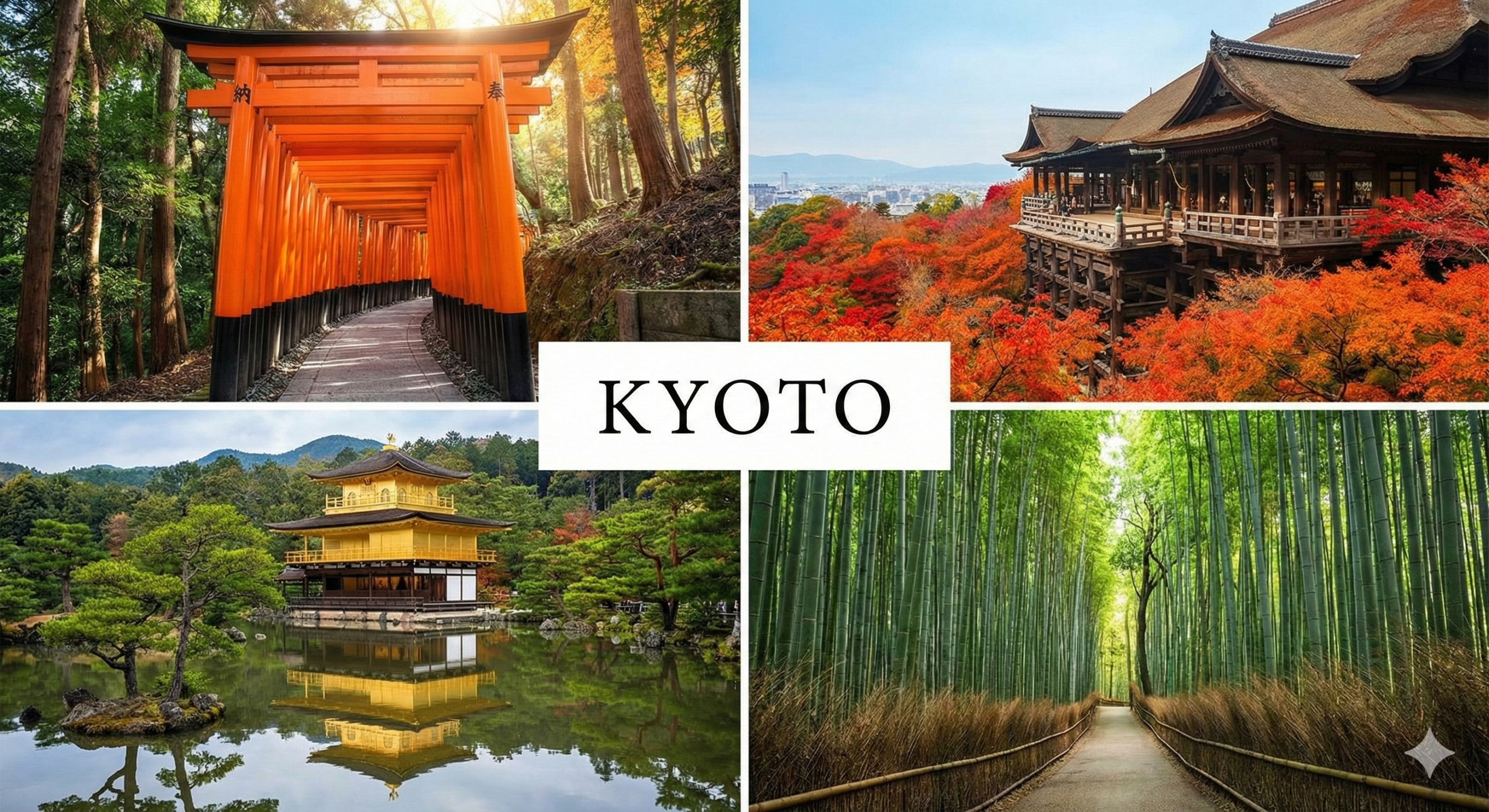
For over 1,000 years (from 794 to 1868), Kyoto was the imperial capital of Japan. It is the spiritual and cultural heart of the country, a city where the modern world seems to melt away, revealing a landscape of ancient temples, silent Zen gardens, and narrow cobblestone streets. With 17 UNESCO World Heritage sites, Kyoto is not just a city; it is a living museum of Japanese history.
It is the destination that every traveler dreams of, offering an atmosphere of refined beauty that changes dramatically with the four seasons.
Fushimi Inari Taisha: The Tunnel of 10,000 Gates
Perhaps the most iconic image of Japan is the Senbon Torii (Thousands of Torii Gates) at Fushimi Inari Taisha.
- The Vermilion Path: Dedicated to Inari, the god of rice and business prosperity, the shrine features thousands of bright orange torii gates donated by companies and individuals. They form a mystical tunnel that winds its way up Mount Inari.
- The Hike: While the lower grounds are crowded, hiking to the summit (about 2-3 hours round trip) offers a peaceful escape into the forest and stunning views of the city from the Yotsutsuji intersection.
Kiyomizu-dera: The Stage in the Sky
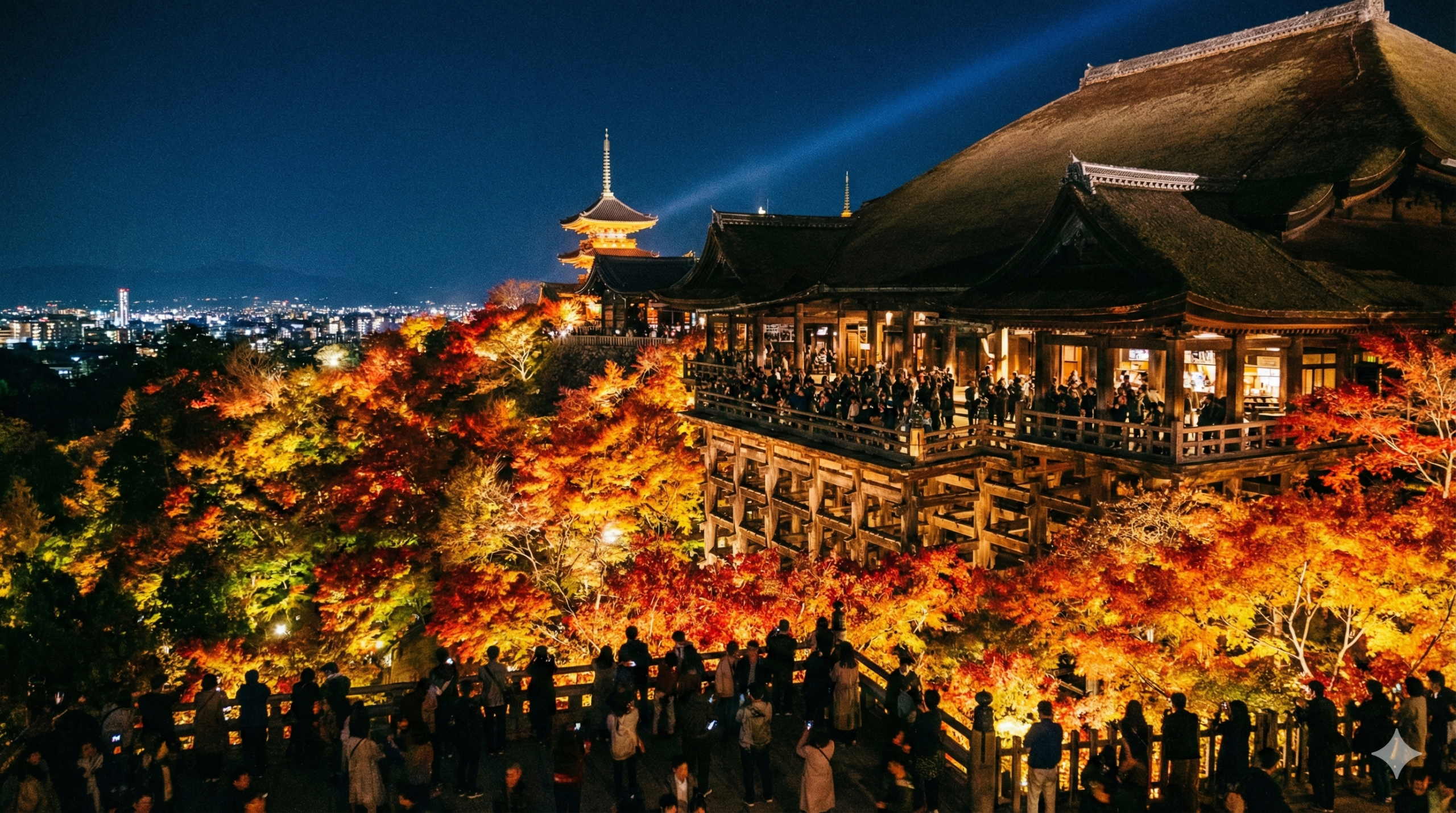
Perched on a hillside in eastern Kyoto, Kiyomizu-dera (The Temple of Pure Water) is famous for its massive wooden stage that juts out over the valley.
- The Architecture: The main hall was built without the use of a single nail. The phrase “jumping off the stage of Kiyomizu” is a Japanese idiom equivalent to “taking a leap of faith.”
- Otowa Waterfall: Below the hall flows the Otowa Waterfall, split into three streams. Visitors use long handled cups to drink the water, which is said to grant longevity, success at school, and a fortunate love life (you are supposed to choose only one!).
Kinkaku-ji: The Golden Pavilion
Kinkaku-ji is a Zen temple that defies the concept of modest simplicity. The top two floors of the pavilion are completely covered in brilliant gold leaf.
- The Reflection: The sight of the golden temple reflecting perfectly in the Kyoko-chi (Mirror Pond) is breathtaking. It was designed to visualize the Buddhist paradise on earth.
- The Phoenix: A shining golden phoenix stands on the roof, symbolizing rebirth and protection.
Arashiyama: The Sound of Bamboo
On the western outskirts of the city lies Arashiyama, a scenic district loved by nobles since the Heian period.
- The Bamboo Grove: Walking through the towering stalks of bamboo, filtering the sunlight and swaying in the wind, is an auditory and visual experience unlike any other. It is one of the most photographed spots in Japan.
- Togetsukyo Bridge: The “Moon Crossing Bridge” is the central landmark, offering stunning views of the cherry blossoms in spring and the fiery maple leaves in autumn.
Gion and Kaiseki: The Taste of Refinement
Kyoto is the home of Gion, the famous geisha district. If you are lucky, you might spot a Geiko (as they are called in Kyoto) or a Maiko (apprentice) shuffling along Hanamikoji Street in her exquisite kimono.
- Kaiseki Ryori: Kyoto is the best place to experience traditional multi-course haute cuisine. It is an art form where the taste, texture, appearance, and colors of the food are perfectly balanced with the season.
- Matcha: Nearby Uji is the premier tea-growing region. In Kyoto, you can enjoy authentic matcha parfaits, matcha tiramisu, and traditional tea ceremonies in centuries-old teahouses.
From the quiet contemplation of a rock garden to the dazzling gold of the pavilion, Kyoto is a city that demands to be savored slowly.
Make your Japan trip exciting with 『Japaner Guide』

Japaner Guide is a personal guide matching service that connects you with local guides to explore destinations across Japan.

Even if you’re traveling alone and feeling unsure, you can enjoy Japan with confidence and peace of mind👍

From famous tourist attractions to hidden local gems, we customize your journey to perfectly match your interests!

👇 Sign up here 👇
https://japaner-guide.com/
Make your trip to Japan more fun and meaningful!