Before Kyoto, there was Nara. Established in 710 as Japan’s first permanent capital (Heijo-kyo), this city is the cradle of Japanese culture, Buddhism, and art. While it is often visited as a day trip from Osaka or Kyoto, Nara possesses a timeless, rustic charm that is entirely its own.
It is a city where history is not just preserved behind glass; it roams freely in the streets in the form of over 1,000 wild deer.
Nara Park: The Domain of the Deer
The vast Nara Park is the focal point of the city, but its most famous residents are not humans.
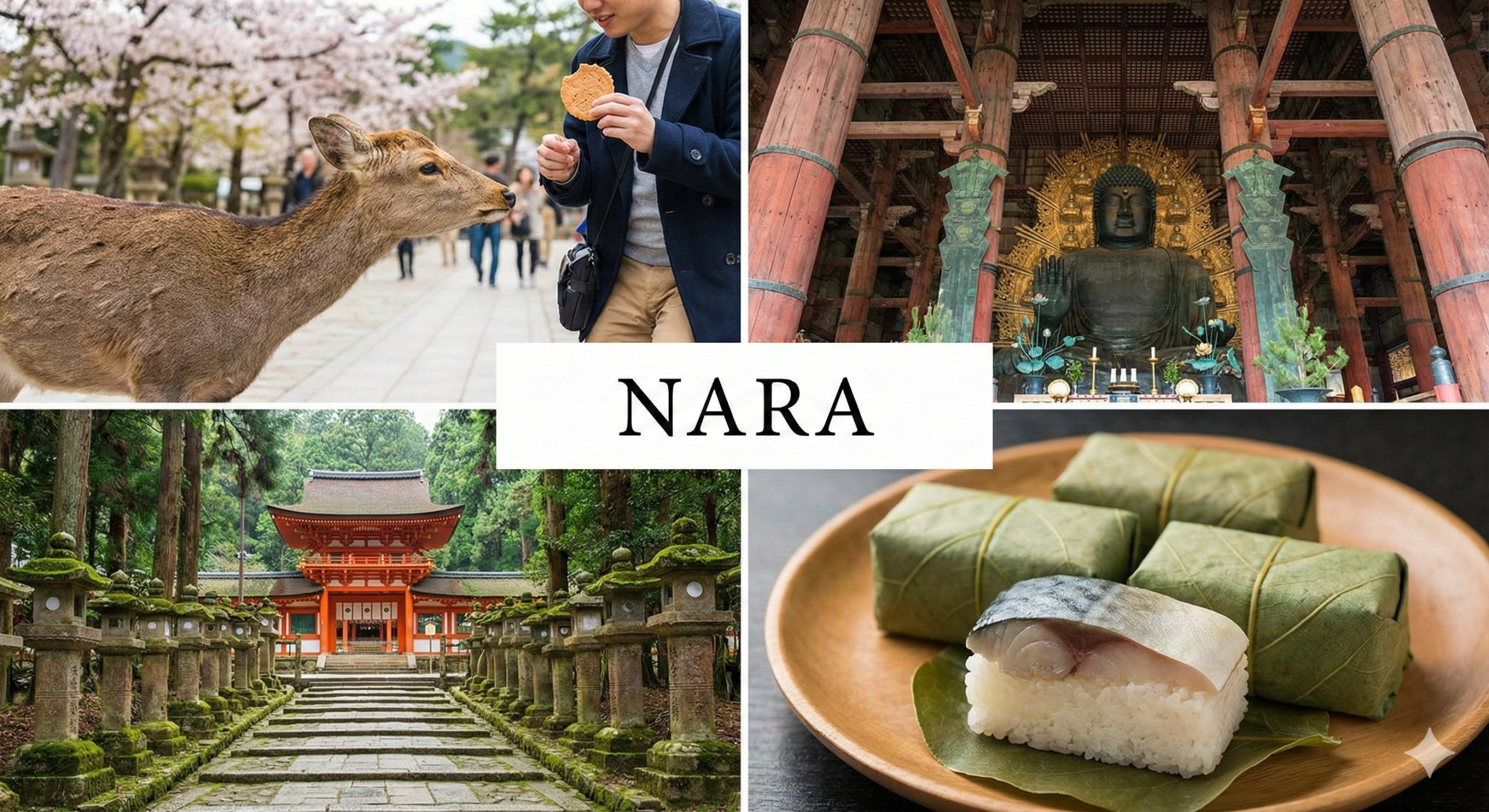
- Messengers of the Gods: According to legend, the deity of Kasuga Taisha arrived riding a white deer. Since then, the deer (shika) have been protected as divine messengers. Today, about 1,200 of them roam freely.
- Shika Senbei: You can buy packs of “deer crackers” to feed them. The deer are surprisingly polite and have learned to bow to ask for a treat. However, be warned: once they know you have food, they can become quite aggressive and persistent!
Todai-ji: The Great Eastern Temple
The sheer scale of Todai-ji is hard to comprehend until you stand before it.
- The Daibutsuden: The Great Buddha Hall is one of the world’s largest wooden buildings. It houses the Daibutsu (Great Buddha), a colossal bronze statue of Vairocana Buddha standing (or rather, sitting) over 15 meters high.
- The Nostril Pillar: Inside the hall, there is a thick wooden support pillar with a hole at its base. It is said that the hole is the same size as the Great Buddha’s nostril. Legend claims that if you can squeeze your body through it, you will be granted enlightenment (or at least good health).
Kasuga Taisha: The Shrine of Lanterns
Walking through the primeval forest to reach Kasuga Taisha is a spiritual experience.
- 3,000 Lanterns: The shrine is famous for its lanterns. Thousands of stone lanterns line the mossy approach, and hundreds of bronze lanterns hang from the eaves of the vermilion corridors.
- Mantoro Festival: Twice a year (in February and August), all the lanterns are lit, creating a mystical, flickering atmosphere that transports visitors back to the Heian period.
Nakatanidou: The Fastest Mochi Pounders
Near the Kintetsu Nara station, you will often see a crowd gathering at Nakatanidou.
- Mochitsuki: They are famous for their high-speed mochitsuki (mochi pounding). Two men pound the steaming glutinous rice with heavy wooden mallets at a terrifyingly fast rhythm, shouting to keep time. The resulting Yomogi Mochi (mugwort rice cake), filled with red bean paste and dusted with roasted soybean flour (kinako), is incredibly soft and warm.
Kakinoha-zushi: Preserved History
Nara is a landlocked prefecture, so historically, fresh fish was scarce. This led to the creation of Kakinoha-zushi.
- Persimmon Leaf Sushi: Bites of vinegared rice topped with salted mackerel or salmon are wrapped in antibacterial persimmon leaves (kakinoha). The leaves impart a subtle aroma to the sushi. It is the perfect bento to eat while sitting on a bench in Nara Park (just watch out for the deer!).
From the awe-inspiring gaze of the Great Buddha to the gentle nudge of a deer looking for a cracker, Nara offers a connection to nature and history that feels both ancient and alive.
Make your Japan trip exciting with 『Japaner Guide』

Japaner Guide is a personal guide matching service that connects you with local guides to explore destinations across Japan.

Even if you’re traveling alone and feeling unsure, you can enjoy Japan with confidence and peace of mind👍

From famous tourist attractions to hidden local gems, we customize your journey to perfectly match your interests!

👇 Sign up here 👇
https://japaner-guide.com/
Make your trip to Japan more fun and meaningful!