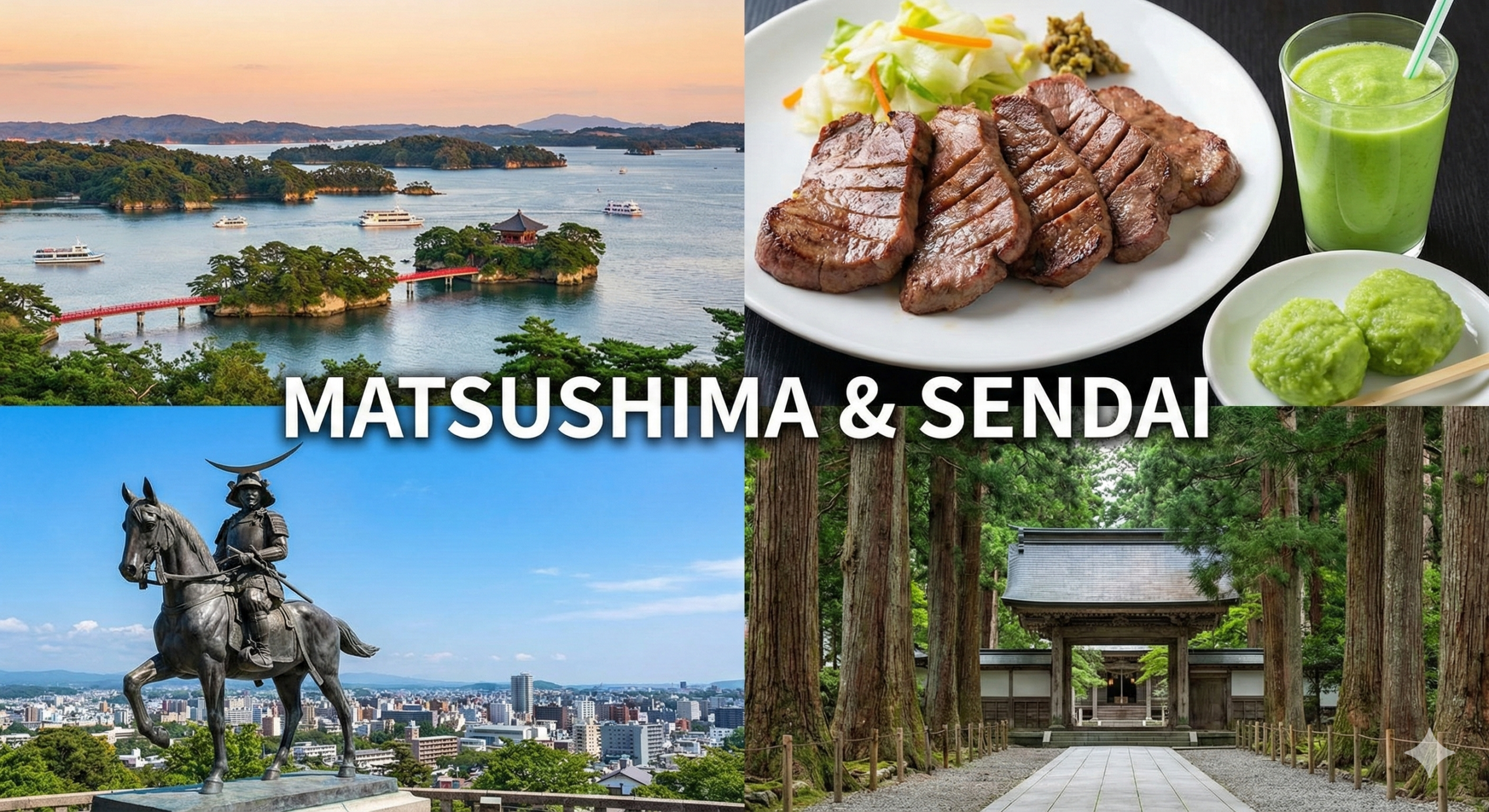
Located in the Tohoku region in northern Honshu, Sendai is known as the “City of Trees” (Mori no Miyako) for its leafy streets and lush parks. It is a modern metropolis with deep samurai roots, having been founded by the legendary warlord Date Masamune.
Just a 30-minute train ride away lies Matsushima, a bay dotted with over 260 pine-covered islets. For centuries, it has been celebrated as one of the Nihon Sankei, Japan’s three most beautiful scenic views, inspiring poets like Matsuo Basho, who was reportedly struck speechless by its beauty.
Together, they offer a perfect blend of urban energy, historical grandeur, and poetic natural landscapes.
Matsushima Bay: The View That Silenced a Poet
The best way to appreciate the scale and beauty of Matsushima is from the water.
- Sightseeing Cruise: Various cruise boats take visitors around the bay, weaving past oddly shaped islands clad in resilient pine trees. Look for famous rock formations like Niojima, which is said to look like a fierce temple guardian.
- Godaido Hall: This small wooden temple hall stands on a tiny islet right next to the pier. It is connected to the mainland by two small red bridges with gaps between the planks, designed to make you focus your mind before entering the sacred space. It is the iconic symbol of Matsushima.
Zuigan-ji: The Golden Zen Temple
A short walk from the shore is Zuigan-ji, one of the most important Zen temples in northern Japan.
- Date Masamune’s Legacy: The current buildings were reconstructed in 1609 by Date Masamune as his family temple. While the exterior is austere and simple, the interior sliding doors are lavishly decorated with gold leaf and vibrant paintings, reflecting the Momoyama period’s opulent style.
- The Approach: The temple is approached via a long, serene path lined with towering cedar trees, creating a tranquil atmosphere.
Sendai’s Samurai Spirit: Date Masamune
Back in Sendai, the spirit of the “One-Eyed Dragon” (Masamune’s nickname) is ever-present.
- Site of Aoba Castle (Sendai Castle): While the castle itself no longer stands, the stone walls and guard tower remain on a hill overlooking the city. The most famous spot is the massive bronze statue of Date Masamune on horseback, looking out over the city he built, his iconic crescent-moon helmet silhouette against the sky.
- Zuihoden: Nestled in a quiet forest is the mausoleum of Date Masamune. Like Nikko’s Toshogu, it is a dazzling display of intricate, brightly colored woodwork and gold, a stark contrast to the surrounding green nature.
The Flavors of Tohoku: Gyutan and Zunda
Sendai and Matsushima are famous for unique local delicacies.
- Gyutan (Grilled Beef Tongue): Sendai’s most famous dish. Originating after WWII, thick slices of beef tongue are seasoned with salt or miso and charcoal-grilled until tender and smoky. It is typically served as a set with barley rice, oxtail soup, and pickles.
- Zunda: A sweet green paste made from crushed edamame (young soybeans). It is traditionally eaten with mochi rice cakes (Zunda Mochi), but modern treats like the creamy Zunda Shake have become incredibly popular.
- Matsushima Oysters: The bay is famous for its delicious oysters. In winter, you can visit “oyster huts” (kakigoya) to enjoy them grilled piping hot right in front of you in an all-you-can-eat style.
From the poetic islands that have captivated artists for centuries to the hearty flavors of the northern city, a trip to Matsushima and Sendai is a journey into the heart and soul of the Tohoku region.
Make your Japan trip exciting with 『Japaner Guide』
Japaner Guide is a personal guide matching service that connects you with local guides to explore destinations across Japan.

Even if you’re traveling alone and feeling unsure, you can enjoy Japan with confidence and peace of mind👍

From famous tourist attractions to hidden local gems, we customize your journey to perfectly match your interests!

👇 Sign up here 👇
https://japaner-guide.com/
Make your trip to Japan more fun and meaningful!