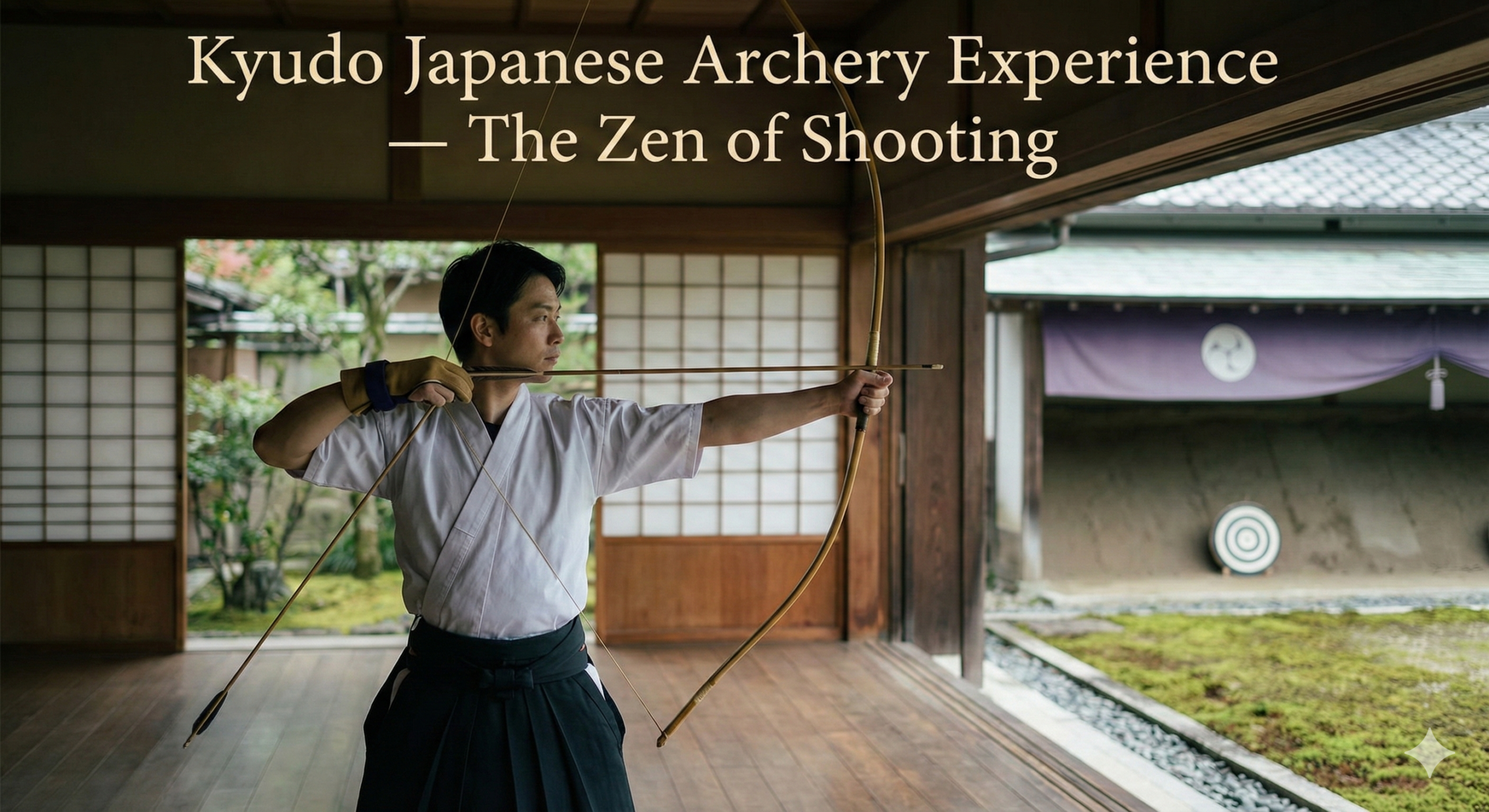
Archery exists in almost every culture, but Japanese Kyudo (The Way of the Bow) is unique. It is not merely a sport of hitting a target; it is a highly ritualized martial art often described as “standing Zen.”
For travelers seeking a deep connection with Japanese spirituality, a Kyudo experience offers a profound insight. Unlike Western archery which focuses on technical precision for the sake of score, Kyudo focuses on the perfect beauty of the form and the purity of the mind.
The Beauty of the Tools
The first thing you will notice is the equipment, which is a work of art in itself.
- The Yumi (Bow): The Japanese bow is exceptionally long (over 2 meters) and asymmetrical, with the grip located about two-thirds of the way down. Traditionally made of bamboo and wood, its elegant curve is iconic.
- The Ya (Arrow): Arrows are traditionally made of bamboo with feathers from birds of prey.
- The Glove (Yugake): Archers wear a specialized deerskin glove on their right hand, which has a hardened thumb to pull the heavy string.
Shin-Zen-Bi: Truth, Virtue, Beauty
The ultimate goal of Kyudo is not just to pierce the center of the target, but to achieve Shin-Zen-Bi (Truth, Virtue, and Beauty).
- Truth (Shin): A shot that is pure, without deceit or ego. If your mind and form are true, the arrow will naturally find the target.
- Virtue (Zen): Maintaining composure and benevolence towards others, even in competition.
- Beauty (Bi): The elegance of the archer’s movement and the dignity of their presence.
The Experience: The Eight Stages of Shooting
In a Kyudo experience class, you will be taught that shooting is a continuous flow of eight distinct movements, known as Hassetsu.
- Ashibumi: Footing. Establishing a firm foundation.
- Dozukuri: Correcting the posture.
- Yugamae: Readily the bow and fixing the arrow.
- Uchiokoshi: Raising the bow above the head.
- Hikiwake: Drawing the bow apart.
- Kai: The full draw. This is the moment of supreme unification of mind, body, and bow.
- Hanare: The release. It should not be forced; the arrow should leave as naturally as snow falling from a leaf.
- Zanshin: Remaining mind. Holding the posture and spirit even after the arrow has flown.
What to Expect in a Workshop
- Dojo Etiquette: You will learn basic dojo manners, such as bowing when entering and exiting, and moving quietly so as not to disturb others.
- Safety First: Because the bow is a weapon, safety is paramount. Instructors will guide you closely.
- The Challenge: Don’t be discouraged if you don’t hit the target! The Japanese bow is difficult to handle for beginners. The “success” of the experience lies in feeling the tension, the focus, and the serene silence of the dojo.
Kyudo is a discipline of introspection. The target is said to be a mirror of your own soul; if your mind is clouded, your aim will waver. Trying it yourself is a moving meditation that stays with you long after you leave the dojo.
Make your Japan trip exciting with 『Japaner Guide』

Japaner Guide is a personal guide matching service that connects you with local guides to explore destinations across Japan.

Even if you’re traveling alone and feeling unsure, you can enjoy Japan with confidence and peace of mind👍

From famous tourist attractions to hidden local gems, we customize your journey to perfectly match your interests!

👇 Sign up here 👇
https://japaner-guide.com/
Make your trip to Japan more fun and meaningful!