Ramen has exploded from a humble Japanese street food into a global obsession. While it is easy to find a delicious bowl on any corner in Tokyo, true aficionados know that the magic lies in the preparation.
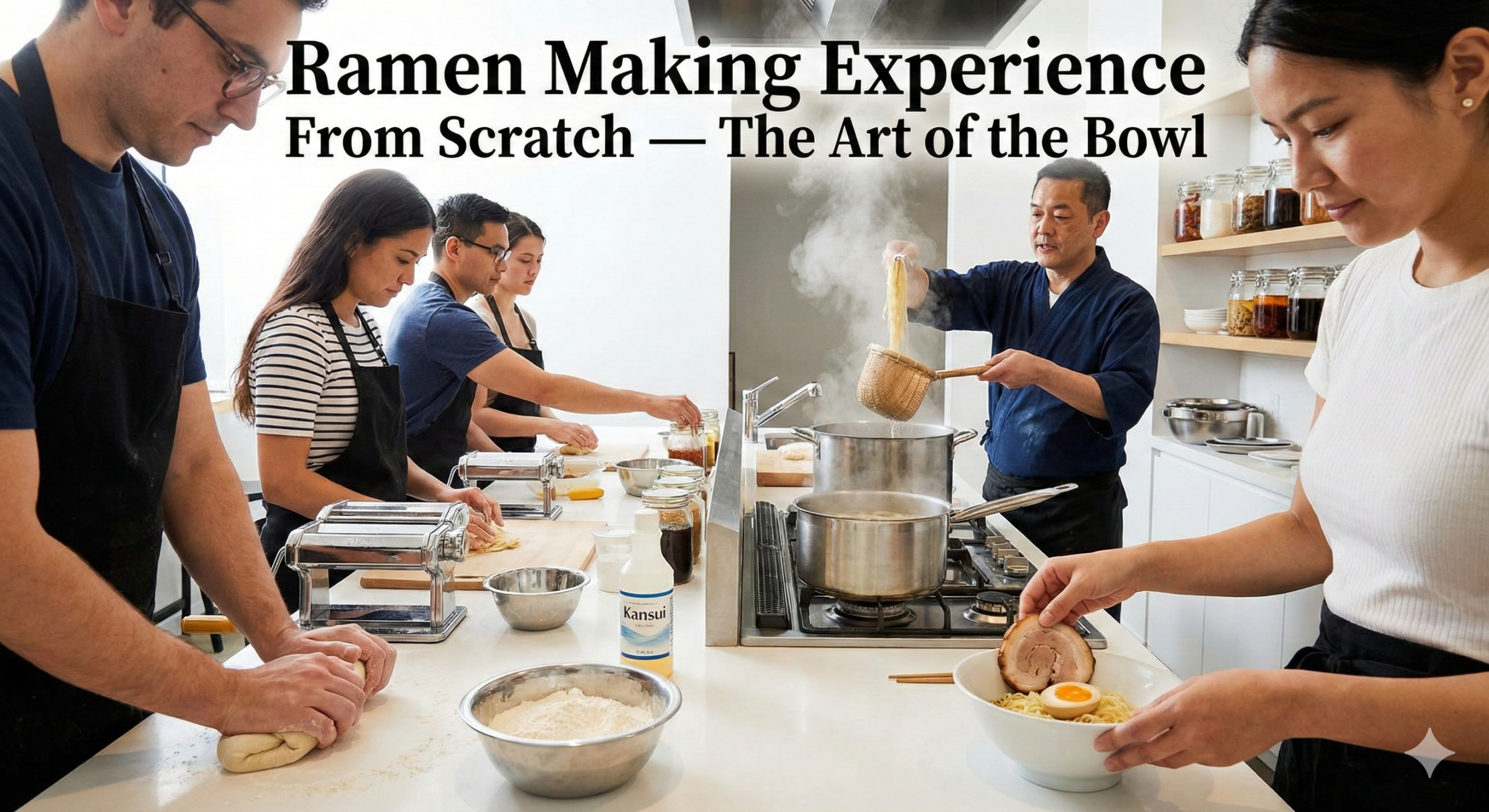
For those who want to take their love for noodles to the next level, a Ramen Making Experience is a must. Instead of just slurping, you will roll up your sleeves and learn the secrets behind the broth, the tare (seasoning), and the perfect chew of the noodles.
The Soul is in the “Kansui”
The first lesson in any ramen class is that ramen noodles are not just pasta.
- Noodle Making: You will start by mixing wheat flour with water and Kansui (an alkaline mineral water). This specific ingredient gives ramen noodles their yellowish hue and distinct elasticity.
- Kneading and Cutting: Kneading the dough requires physical effort to develop the gluten. Afterward, you will use a pasta machine or a knife to cut the noodles to your preferred thickness—thin for Hakata style, or thick and wavy for miso ramen.
The Secret Sauce: Soup and Tare
A bowl of ramen is built on two pillars: the stock and the seasoning.
- The Broth: While boiling pork bones for 12 hours might be too long for a short class, instructors often prepare the rich base beforehand or teach you how to make a lighter chicken or fish stock during the session.
- The Tare: You will learn to mix the “Tare”—the concentrated flavor base (soy sauce, miso, or salt) that defines the ramen’s character. This is often the most guarded secret of any ramen shop.
The “Te-furi” Challenge
One of the most fun parts of the experience is cooking the noodles.
- Draining the Noodles: You will use the tall, cylindrical noodle baskets (tebo). The highlight is learning the Te-furi (hand shake) technique—the dramatic downward shake used by professional chefs to drain every drop of water from the noodles before they hit the soup. It is harder than it looks and makes for a great video.
Assemble and Slurp
Finally, you assemble your bowl.
- Toppings: Layer on the Chashu (braised pork belly), bamboo shoots, green onions, and soft-boiled egg.
- Halal and Vegan Options: Recognizing the global diversity of ramen lovers, many cooking classes in Tokyo now offer Halal (using chicken instead of pork) and Vegan (using soy meat and vegetable broth) ramen making plans, making this accessible to everyone.
Eating a bowl of ramen that you made from scratch—noodles and all—is an incredibly satisfying experience that changes the way you look at this “fast food” forever.
Make your Japan trip exciting with 『Japaner Guide』

Japaner Guide is a personal guide matching service that connects you with local guides to explore destinations across Japan.

Even if you’re traveling alone and feeling unsure, you can enjoy Japan with confidence and peace of mind👍

From famous tourist attractions to hidden local gems, we customize your journey to perfectly match your interests!

👇 Sign up here 👇
https://japaner-guide.com/
Make your trip to Japan more fun and meaningful!