While Ramen is rich and heavy, Soba (buckwheat noodles) represents the lighter, healthier, and more rustic side of Japanese noodle culture. Eaten for centuries by everyone from samurai to farmers, soba is cherished for its earthy aroma and smooth texture.
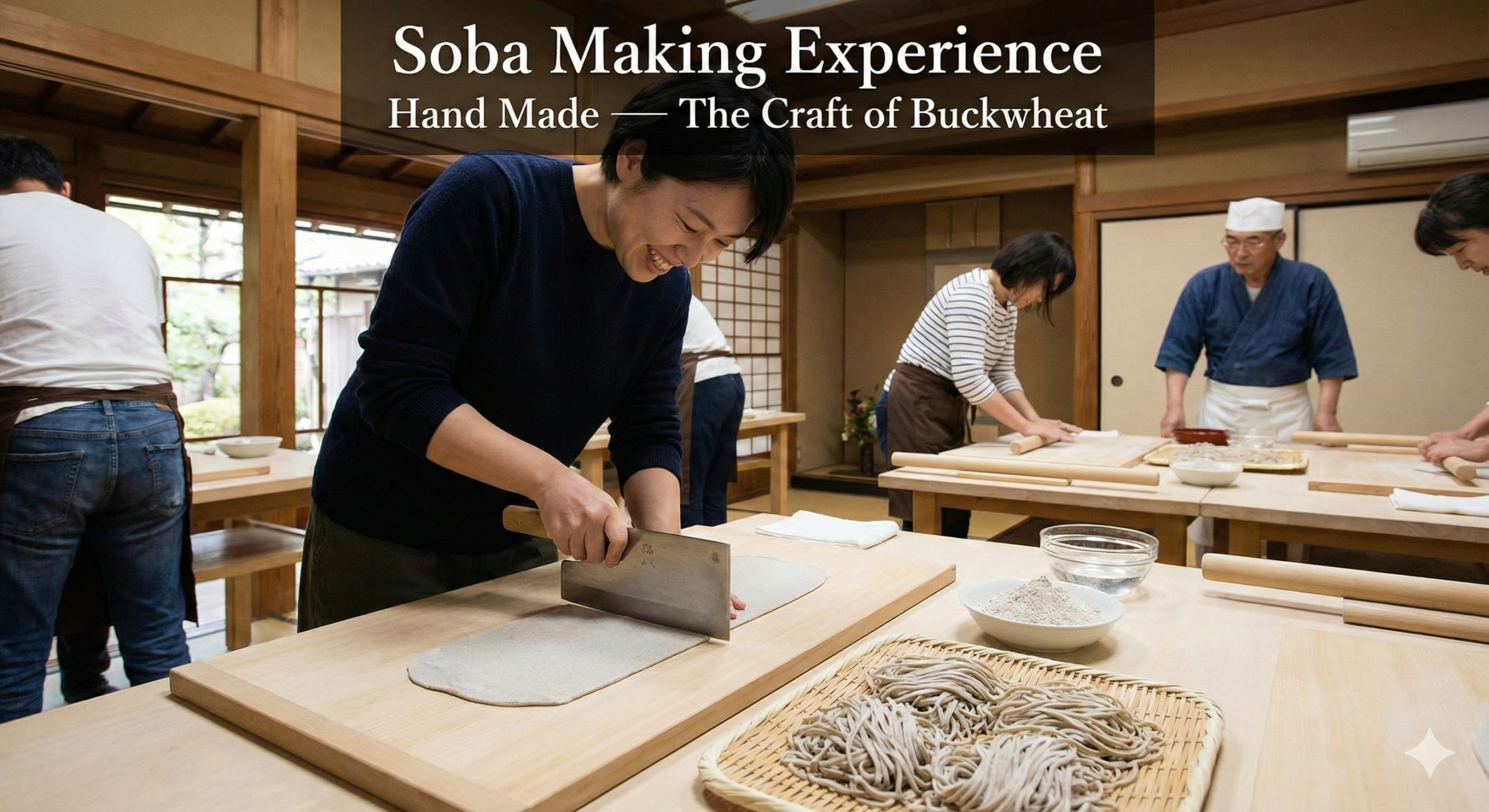
The pinnacle of this cuisine is Te-uchi Soba (hand-made soba). In a mass-produced world, learning to make noodles by hand using traditional stone mills and knives is a deeply satisfying return to basics.
The “Three Tates” of Delicious Soba
Soba connoisseurs say the secret to the best noodles lies in the “San-tate” (Three Freshnesses):
- Hikitate: Freshly ground flour.
- Uchitate: Freshly kneaded dough.
- Yudetate: Freshly boiled noodles. In a soba-making workshop, you achieve all three, resulting in a flavor that supermarket noodles simply cannot match.
The Process: A Test of Technique
Making soba looks simple, but it requires surprising precision.
- Mizumawashi (Mixing): This is the most critical step. You mix buckwheat flour with a precise amount of water. Because buckwheat has less gluten than wheat, it is crumbly and difficult to bind. You must work quickly with your fingertips to distribute the moisture evenly before the dough dries out.
- Kiku-neri (Chrysanthemum Kneading): You knead the dough to remove air bubbles. The technique involves folding the dough in a spiral pattern that resembles a chrysanthemum flower (kiku).
- Noshi (Rolling): Using a long rolling pin, you flatten the round ball of dough into a perfect square. This geometric puzzle requires even pressure to ensure the noodles are the same thickness.
- Kiri (Cutting): Finally, you use a heavy, rectangular cleaver called a Sobakiri Bocho. Using a guide board (komaita), you rhythmically slice the dough into thin strips. Beginners often end up with noodles of varying widths—some thin like thread, some wide like udon—which adds to the homemade charm!
The Reward: Slurping Your Creation
After the hard work, the instructor will boil your noodles immediately.
- The Taste: Fresh soba has a distinct, nutty fragrance. You usually eat it cold (Zaru Soba), dipped lightly in a savory soy-based sauce (tsuyu) to appreciate the texture.
- Sobayu: Don’t leave without trying this. After the meal, the restaurant will give you the hot water used to boil the noodles (Sobayu). It is thick, cloudy, and packed with nutrients. Pouring it into your remaining dipping sauce makes for a warm, comforting soup to finish the meal.
A Souvenir You Can Eat
Many workshops allow you to pack up any extra noodles to take home as a souvenir. Whether you visit a rustic workshop in the mountains of Nagano or a modern classroom in downtown Tokyo, making soba is a hands-on way to connect with Japan’s culinary heritage.
Make your Japan trip exciting with 『Japaner Guide』

Japaner Guide is a personal guide matching service that connects you with local guides to explore destinations across Japan.

Even if you’re traveling alone and feeling unsure, you can enjoy Japan with confidence and peace of mind👍

From famous tourist attractions to hidden local gems, we customize your journey to perfectly match your interests!

👇 Sign up here 👇
https://japaner-guide.com/
Make your trip to Japan more fun and meaningful!