If you think all noodles are created equal, a trip to Kagawa Prefecture will change your mind. Known as the “Udon Prefecture,” this small region on Shikoku island is the spiritual home of Sanuki Udon—thick, white noodles famous for their incredible firmness and chewy texture, known in Japanese as koshi.
While eating your way through the hundreds of local udon shops is a delight, the best way to understand the secret of that legendary chewiness is to make it yourself. A Sanuki Udon Making Experience is energetic, musical, and surprisingly physical.
The Secret Ingredient: Your Feet!
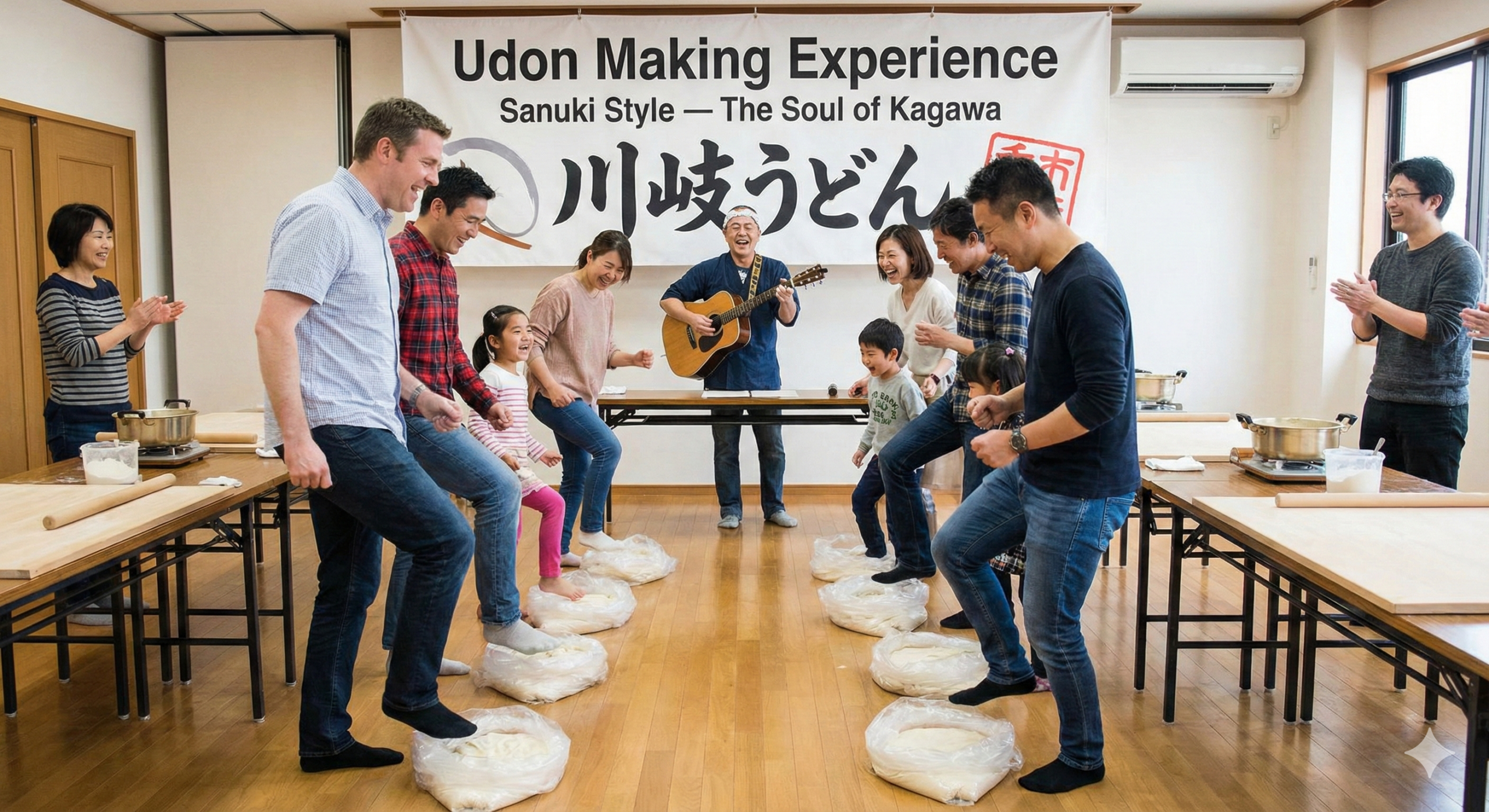
The most shocking and fun part of making Sanuki Udon is the kneading method. Unlike delicate soba or ramen dough which is kneaded by hand, udon dough is tough. To develop the strong gluten structure required for the perfect koshi, you have to use your whole body weight.
- Ashibumi (Foot Kneading): The dough is placed in a thick plastic bag on the floor. You then step onto the dough and stomp on it rhythmically.
- Dance While You Cook: In many workshops, instructors will play upbeat music (often pop songs or traditional tunes) and encourage you to dance on the dough. It is a hilarious workout that is perfect for families and groups, breaking the ice and the gluten at the same time.
Rolling and Cutting
Once the dough has been stomped flat and rested, it is time for the more delicate work.
- Noshi (Rolling): Using a wooden rolling pin, you stretch the dense dough into a large square. Because the dough is so elastic, it fights back, shrinking as soon as you stop rolling. It requires patience and power.
- Cutting: You fold the dough and use a specialized knife to cut it into thick strands. The goal is uniformity, but hand-cut noodles often have a charming variation in thickness that holds the soup beautifully.
The Taste of Success
Freshly boiled udon is unlike anything you buy in a supermarket. The outside is soft and smooth, while the core remains firm and “al dente.”
- Kamata-tama: A classic way to eat your fresh creation is Kamata-tama style. You take the hot noodles straight from the boiling pot (without rinsing in cold water), crack a raw egg over them, and add a dash of soy sauce. The heat of the noodles cooks the egg into a creamy, rich sauce.
- Tempura: Most workshops offer freshly fried tempura to accompany your meal, making for a hearty and satisfying feast.
Whether you visit the “Udon School” in Kagawa or a workshop in Tokyo, stomping your own noodles is a joyful, stress-relieving experience that ends with a delicious reward.
Make your Japan trip exciting with 『Japaner Guide』

Japaner Guide is a personal guide matching service that connects you with local guides to explore destinations across Japan.

Even if you’re traveling alone and feeling unsure, you can enjoy Japan with confidence and peace of mind👍

From famous tourist attractions to hidden local gems, we customize your journey to perfectly match your interests!

👇 Sign up here 👇
https://japaner-guide.com/
Make your trip to Japan more fun and meaningful!