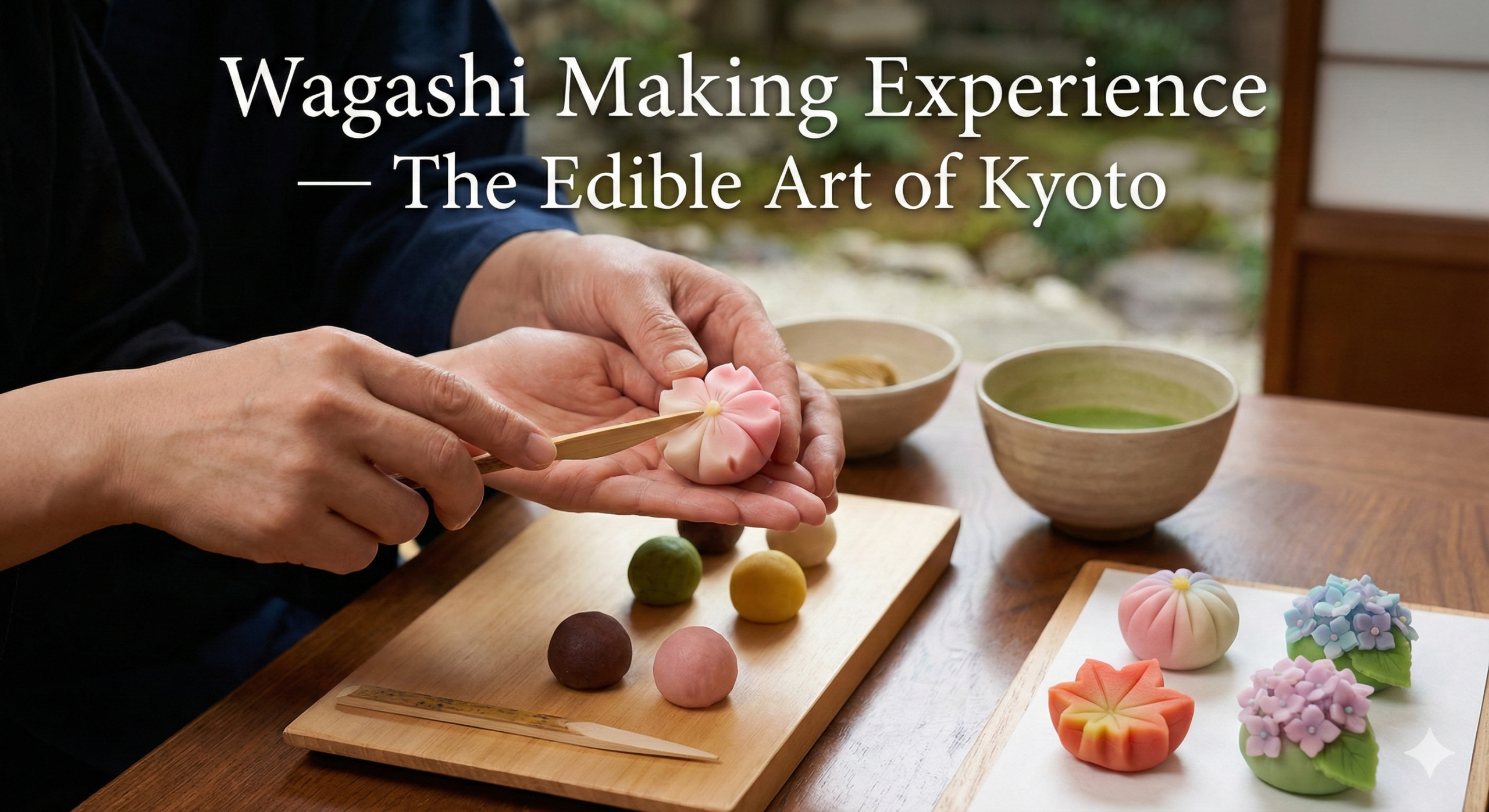
In Kyoto, sweets are not just desserts; they are edible art. Known as Wagashi, traditional Japanese confections are deeply intertwined with the changing seasons and the culture of the tea ceremony.
While they are beautiful to look at in the glass cases of old shops, creating them yourself offers a fascinating glimpse into the Japanese aesthetic of “seasons in the palm of your hand.” A Wagashi Making Experience in Kyoto allows you to learn from master artisans and craft these delicate sweets with your own fingers.
What is “Nerikiri”?
Most workshops focus on making a specific type of high-grade sweet called Nerikiri.
- The Material: It is made from white kidney bean paste mixed with sugar and a binder like yam or rice flour. The texture is smooth, soft, and pliable, similar to high-quality marzipan but less sweet and much more refined.
- The Canvas: The dough is dyed in soft pastel colors—pinks for cherry blossoms, greens for leaves, or purples for iris flowers—ready to be sculpted.
The Artisan’s Techniques
Under the guidance of a professional craftsman (shokunin), you will learn that the tools of the trade are surprisingly simple—often just a small triangular wooden stick and your own hands.
- Gradation (Bokashi): You will learn to layer two different colored balls of paste (e.g., white and pink) and wrap them together to create a seamless, soft color gradient that mimics the blush of a flower petal.
- Sculpting: Using the triangular stick, you press lines and indentations into the soft ball to create petals, veins of leaves, or the flow of water. A slight difference in pressure can change a simple round ball into a blooming chrysanthemum. It requires focus and a delicate touch.
Reflecting the Seasons
The most important rule of Wagashi is seasonality. The design you make depends entirely on the month you visit.
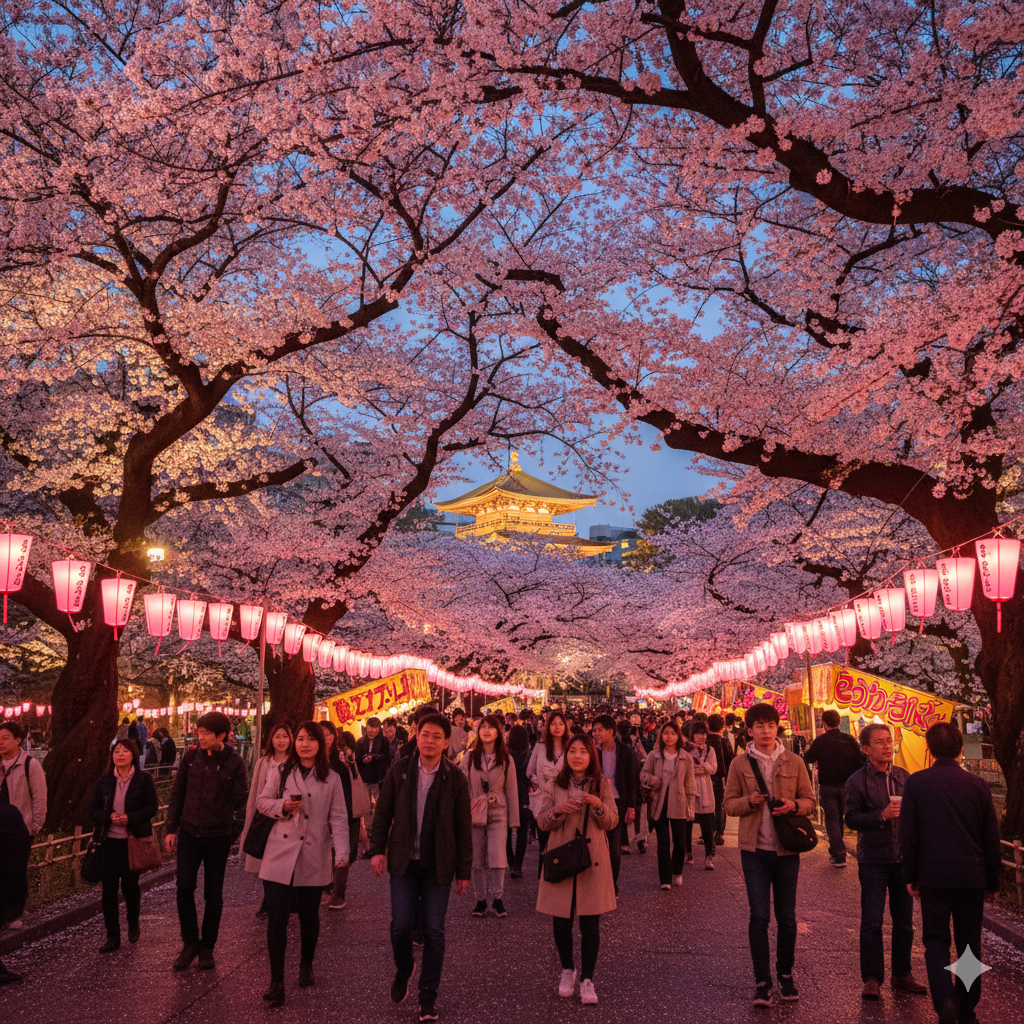
- Spring: You might shape Sakura (cherry blossoms) or Uguisu (bush warblers).
- Summer: Designs focus on coolness, like clear water ripples or goldfish.
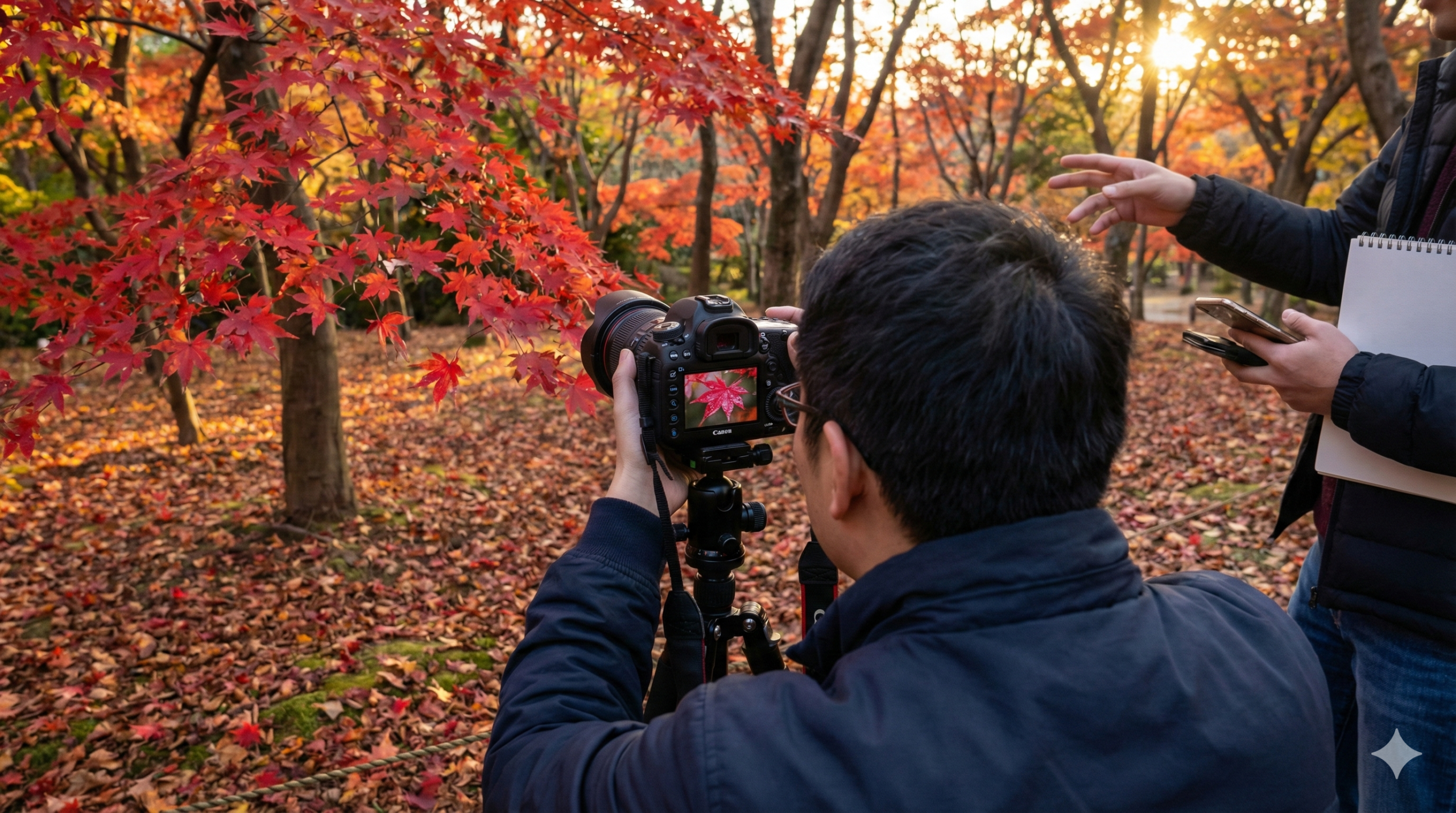
- Autumn: Maple leaves in gradients of red and orange are popular.
- Winter: You might create snow-covered camellias or pine trees.
The Perfect Pair: Matcha
The experience almost always concludes with a mini tea ceremony.
- Eat First, Then Drink: Wagashi are designed to be quite sweet to balance the bitterness of powdered green tea. You will eat your beautiful creation first, savoring the subtle flavor, and then wash it down with a bowl of hot, frothy Matcha.
Making Wagashi is a quiet, artistic activity that connects you to the deep appreciation for nature that defines Kyoto’s culture.
Make your Japan trip exciting with 『Japaner Guide』

Japaner Guide is a personal guide matching service that connects you with local guides to explore destinations across Japan.

Even if you’re traveling alone and feeling unsure, you can enjoy Japan with confidence and peace of mind👍

From famous tourist attractions to hidden local gems, we customize your journey to perfectly match your interests!

👇 Sign up here 👇
https://japaner-guide.com/
Make your trip to Japan more fun and meaningful!