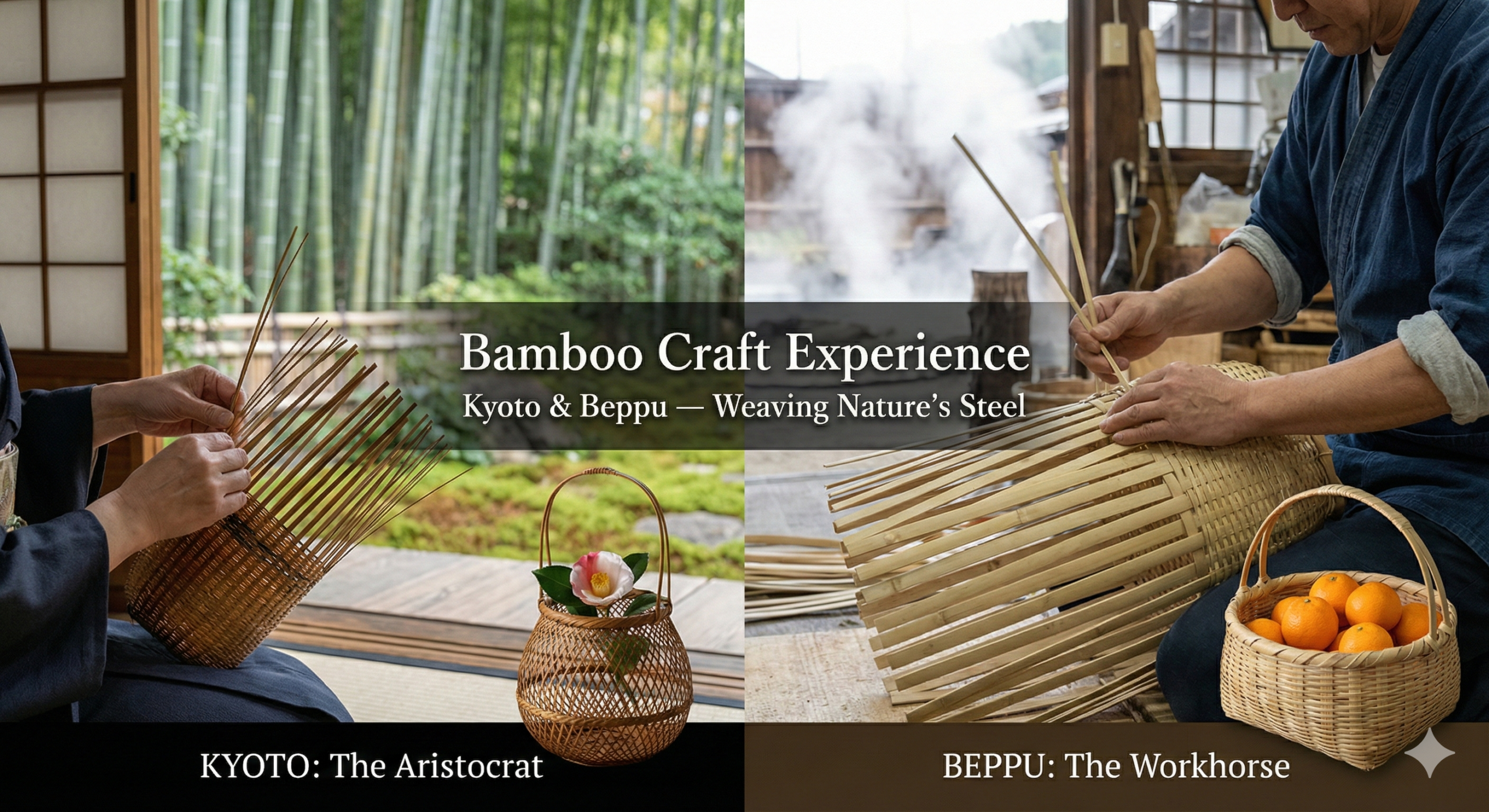
The Strongest Grass Bamboo is an icon of the Japanese landscape. It grows incredibly fast, is straighter than any tree, and possesses a unique combination of flexibility and immense strength. In Japan, bamboo craft (Takezaiku) has split into two distinct worlds: the refined, artistic baskets of Kyoto (used for tea ceremonies and flower arranging) and the practical, sturdy daily wares of Beppu (Oita Prefecture).
A Bamboo Weaving Experience is a test of geometry and patience. Unlike clay or cloth, bamboo fights back. Bending it to your will requires a firm hand and a calm mind.
The Two Capitals of Bamboo
1. Kyoto (Kyo-Bamboo): The Aristocrat
- Context: For centuries, Kyoto artisans crafted exquisite flower vases (Hanakago) and tea whisks for the imperial court and tea masters. The bamboo here is often processed to look aged and noble, such as Susutake (smoked bamboo from old farmhouse roofs).
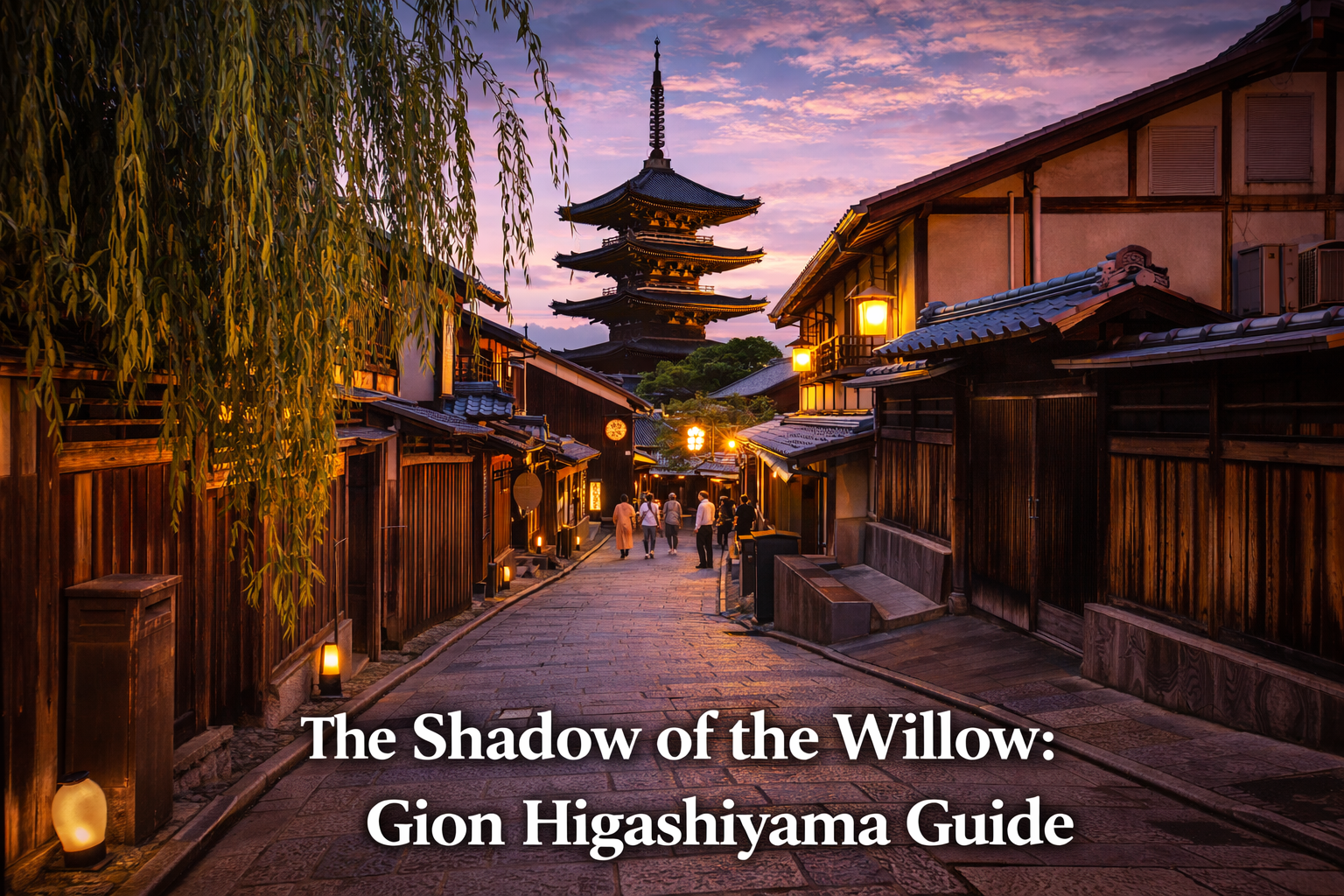
- The Experience: Workshops in Arashiyama or Higashiyama focus on elegance. You might weave a delicate flower basket or a coaster using fine, thin strips. The emphasis is on precision and the beauty of the gaps (Ma) between the weaves.
2. Beppu (Beppu-Bamboo): The Workhorse
- Context: Beppu, famous for its hot springs, produces the highest volume of bamboo crafts in Japan. Historically, tourists bought bamboo baskets to steam food in the hot spring vents (Jigoku-mushi).
- The Experience: The Beppu City Traditional Bamboo Crafts Center is a hub for learning. Here, the style is robust. You might make a sturdy fruit bowl or a “Shikainami” basket (wave pattern) that is designed to last a lifetime of daily use.
The Technique: “Mutsume-ami”
Most beginner workshops introduce you to the Mutsume-ami (Hexagonal Weave) pattern, which looks like a honeycomb.
1. The Material (Higo) You start with pre-prepared bamboo strips called Higo. Creating these strips is a master-level skill involving splitting a bamboo culm into thinner and thinner layers until they are flexible as ribbons.
- Touch: You will notice the difference between the “skin” side (glossy, hard, water-resistant) and the “flesh” side (matte, fibrous).
2. The Assembly
- The Star: You lay three strips over three others at specific angles to create a central hexagonal star.
- The Weave: You continue adding strips, weaving them over-and-under. The challenge is keeping the hexagons perfectly symmetrical. Bamboo strips are slippery; if you lose your grip, the whole structure can spring apart (explode) in an instant!
3. The Rim (Rounding) Once the flat base is woven, you must bend the strips upward to form the bowl shape. This requires heat or soaking in water to soften the fibers. You then weave a rim, often using rattan or wire to lock the shape in place.
Why It Matters
In a plastic world, holding a bamboo basket feels grounding. It is light, breathable, and warm. A self-woven basket will naturally darken to a beautiful amber color (ame-iro) over years of use, becoming a living record of your daily life.
Make your Japan trip exciting with 『Japaner Guide』
Japaner Guide is a personal guide matching service that connects you with local guides to explore destinations across Japan.

Even if you’re traveling alone and feeling unsure, you can enjoy Japan with confidence and peace of mind👍

From famous tourist attractions to hidden local gems, we customize your journey to perfectly match your interests!

👇 Sign up here 👇
https://japaner-guide.com/
Make your trip to Japan more fun and meaningful!