For many, “cherry blossoms” in Japan conjure a singular image: a fluffy, fleeting cloud of pale pink. And while that iconic vision is undeniably breathtaking, it only scratches the surface of Japan’s true sakura wonderland. With over 200 known varieties of cherry trees, the world of Japanese cherry blossoms is far richer and more diverse than most realize.
In 2026, moving beyond the generic “pink flowers” and learning to identify different varieties will transform your hanami experience. You’ll begin to appreciate the subtle differences in petal count, color, bloom time, and even the tree’s growth habit. It’s like learning to distinguish between different types of wine – suddenly, the experience becomes much more nuanced and rewarding.
As a seasoned observer of Japan’s spring, I can tell you that understanding these varieties is the key to unlocking deeper appreciation and extending your blossom-viewing season. This guide will introduce you to the most common and significant cherry blossom varieties you’ll encounter, turning you into a knowledgeable sakura connoisseur.
Why Variety Matters: Extending Your Hanami Season
One of the most valuable aspects of Japan’s diverse cherry tree population is its staggered blooming schedule. While the famous Somei Yoshino has a relatively short, synchronized peak, other varieties bloom earlier or much later.
- Early Bloomers: Catch the first blush of spring, sometimes as early as February or early March.
- Main Bloomers: Synchronized with the popular Somei Yoshino, typically late March to early April.
- Late Bloomers: Extend your hanami into mid-April or even early May, a fantastic “backup plan” if you miss the main peak.
Knowing these varieties means you can often find beautiful blossoms regardless of your specific travel dates within the spring season.
Your 2026 Sakura Spotter’s Guide: Key Varieties to Know
Let’s dive into the most prominent cherry blossom varieties you’ll encounter in Japan.
1. Somei Yoshino (ソメイヨシノ)
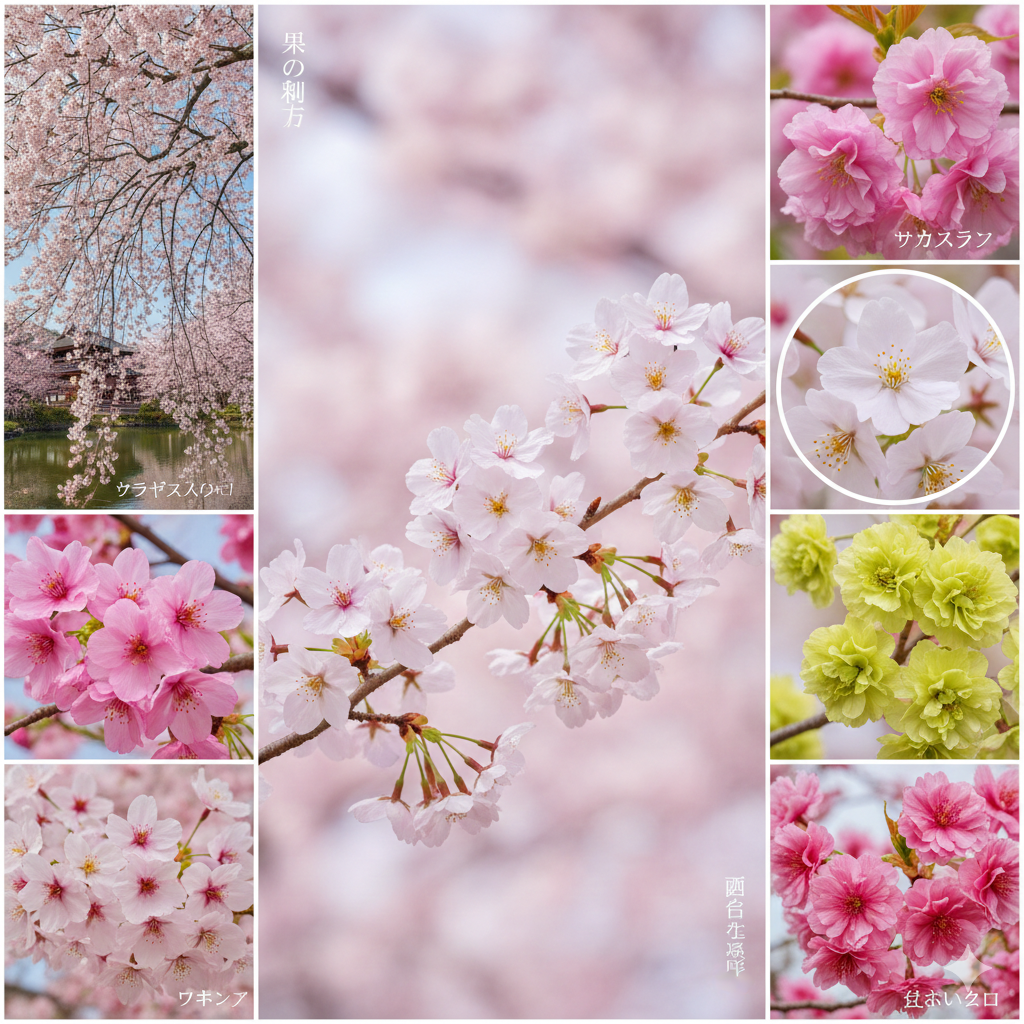
- Appearance: The quintessential Japanese cherry blossom. Five delicate, almost white petals that often have a faint pink blush at the stem. They bloom profusely, creating dense, cloud-like clusters.
- Bloom Time (2026 Estimate): Late March to early April across most of Honshu.
- Key Characteristic: They bloom before their leaves emerge, creating a spectacular pure pink effect. Their synchronized blooming and short lifespan (about 7-10 days) contribute to their profound cultural significance of mono no aware (the pathos of things).
- Where to find it: Everywhere! Ueno Park, Meguro River, Chidorigafuchi (Tokyo); Maruyama Park, Philosopher’s Path (Kyoto); Himeji Castle. They dominate the landscape.
2. Shidarezakura (シダレザクラ) – Weeping Cherry
- Appearance: Easily recognizable by its long, graceful, weeping branches that cascade downwards. Petals can be single (5 petals) or double (more than 5 petals) and range from pale pink to deep pink.
- Bloom Time (2026 Estimate): Often blooms slightly earlier or concurrently with Somei Yoshino.
- Key Characteristic: Its elegant, flowing form makes it a favorite for traditional gardens and temples. The “weeping” posture symbolizes grace and beauty.
- Where to find it: Rikugien Garden (Tokyo), Maruyama Park (Kyoto – especially its famous massive tree), Korakuen Garden (Okayama), Daigoji Temple (Kyoto).
3. Yamazakura (ヤマザクラ) – Wild Cherry
- Appearance: Considered Japan’s original native cherry tree. Five single petals, light pink, and they bloom with their new reddish-bronze leaves.
- Bloom Time (2026 Estimate): Early to mid-April.
- Key Characteristic: More resilient than Somei Yoshino, often found growing wild in mountainous regions. Their concurrent leaves give them a slightly different, more naturalistic look.
- Where to find it: Mount Yoshino (Nara) – the most famous spot, where tens of thousands blanket the mountainside.
4. Kawazu-zakura (カワヅザクラ)
- Appearance: Large, bright, vivid pink petals (five single petals).
- Bloom Time (2026 Estimate): Early bloomer, typically mid-February to early March.
- Key Characteristic: Its early and long blooming period (up to a month) makes it a popular choice for those eager to see the first signs of spring.
- Where to find it: Kawazu Town (Izu Peninsula, Shizuoka Prefecture) is the namesake and most famous location. Also found in limited spots in Tokyo (e.g., Shinjuku Gyoen) and other warmer areas.
5. Yaezakura (ヤエザクラ) – Double-Flowered Cherry
- Appearance: Distinctive for its multiple layers of petals, resembling a small pom-pom or carnation. Petal count can be 10, 20, 50, or even 100! Colors range from deep pink to pale pink and even greenish-white.
- Bloom Time (2026 Estimate): Late bloomer, typically mid-April to late April.
- Key Characteristic: Their lush, voluminous blossoms offer a grand finale to the hanami season. Because they bloom after Somei Yoshino, they are a great way to extend your trip.
- Where to find it: Japan Mint (Osaka), Shinjuku Gyoen (Tokyo), Hirosaki Castle Park (Aomori).
6. Ichiyo (イチヨウ)
- Appearance: A type of Yaezakura (double-flowered), with many light pink petals. Its unique feature is a single green pistil (leaf-like structure) emerging from the center of the flower.
- Bloom Time (2026 Estimate): Mid-April.
- Key Characteristic: The green pistil makes it easily identifiable and adds a touch of distinctiveness to its fluffy pink appearance.
- Where to find it: Shinjuku Gyoen (Tokyo) has a famous avenue of Ichiyo trees.
7. Ukon (ウコン)
- Appearance: Unique yellowish-green, double-layered petals. They often turn a slight reddish hue as they mature.
- Bloom Time (2026 Estimate): Mid-April.
- Key Characteristic: Its unusual color stands out dramatically against the more common pinks and whites, making it a favorite for photographers seeking something different.
- Where to find it: Shinjuku Gyoen (Tokyo), Imperial Palace East Garden (Tokyo).
8. Fugenzo (フゲンゾウ)
- Appearance: A late-blooming Yaezakura with large, round, dense flowers of bright pink. It often has two leaf-like pistils protruding from its center, resembling an elephant’s tusks (hence the name, related to the Buddhist deity Fugen Bosatsu riding an elephant).
- Bloom Time (2026 Estimate): Mid to late April.
- Key Characteristic: Its robust, richly colored blossoms are a stunning sight towards the end of the season.
- Where to find it: Shinjuku Gyoen (Tokyo), Hirosaki Castle Park (Aomori).
Conclusion: Your Enriched 2026 Sakura Journey
Armed with this 2026 guide, you’re now equipped to see Japan’s cherry blossom season with new eyes. No longer just a homogeneous pink cloud, it becomes a tapestry of diverse forms, colors, and bloom times. From the graceful weeping branches of Shidarezakura to the vibrant, early bloom of Kawazu-zakura and the lush, late-season spectacle of Yaezakura, each variety tells its own story of spring.
Take your time, observe closely, and let the sheer diversity of these ephemeral beauties deepen your appreciation for Japan’s most beloved flower. Your 2026 hanami will be richer for it.
Would you like me to suggest specific parks or gardens in Tokyo or Kyoto that are particularly famous for showcasing a wide variety of cherry blossoms, or provide tips on using a smartphone app to help identify blossoms in real-time?
Make your Japan trip exciting with 『Japaner Guide』

Japaner Guide is a personal guide matching service that connects you with local guides to explore destinations across Japan.

Even if you’re traveling alone and feeling unsure, you can enjoy Japan with confidence and peace of mind👍

From famous tourist attractions to hidden local gems, we customize your journey to perfectly match your interests!

👇 Sign up here 👇
https://japaner-guide.com/
Make your trip to Japan more fun and meaningful!