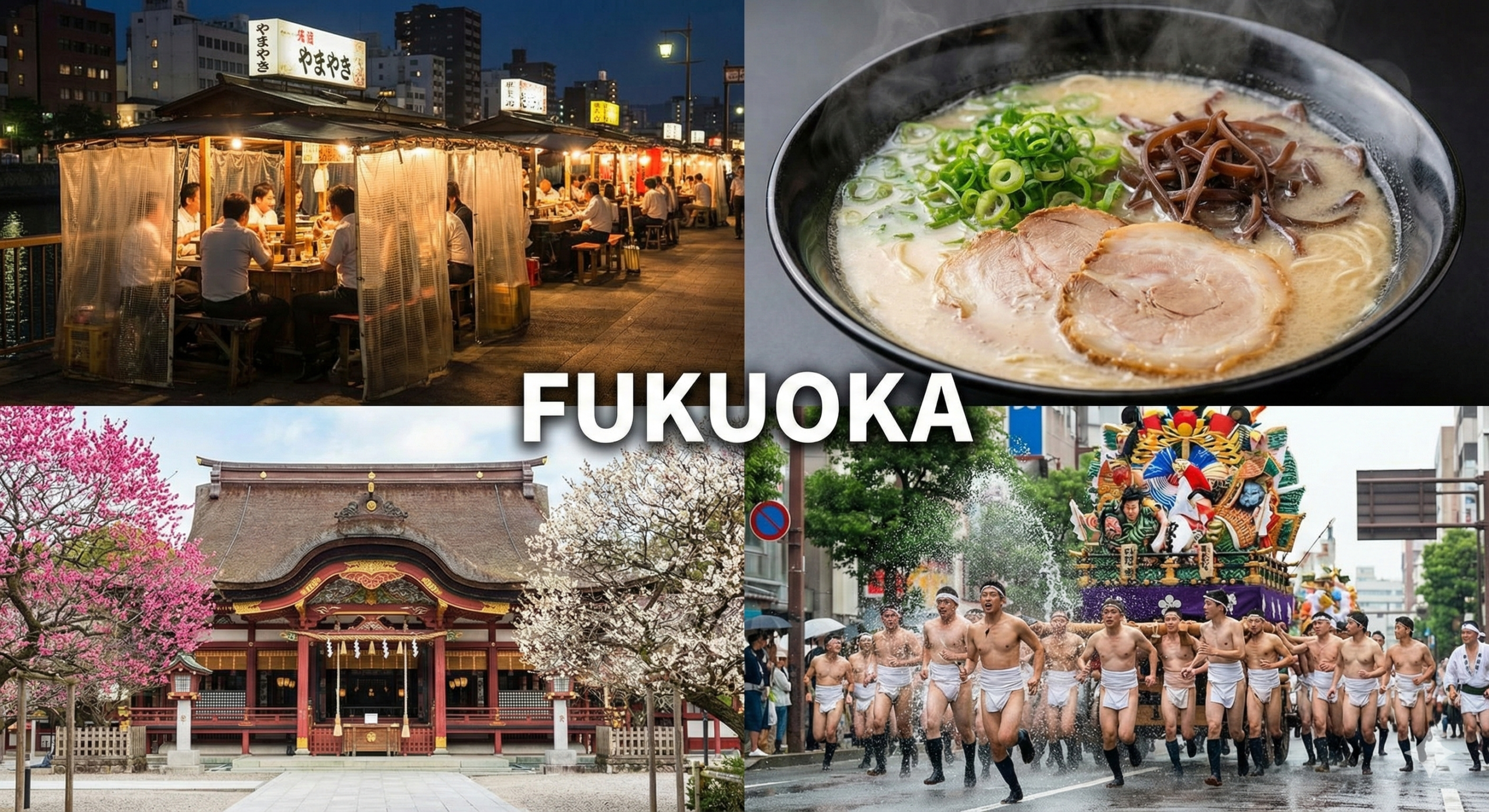
Located on the northern shore of Kyushu island, Fukuoka is Japan’s sixth-largest city and one of its most dynamic. Closer to Seoul and Shanghai than to Tokyo, it has historically served as Japan’s gateway to Asia, fostering a unique, open-minded culture. It is a compact city where vibrant urban life, deep historical roots, and sandy beaches exist side-by-side.
But above all, Fukuoka is famous for its incredible food scene, particularly its open-air street stalls.
The Yatai Culture: Dining Under the Stars
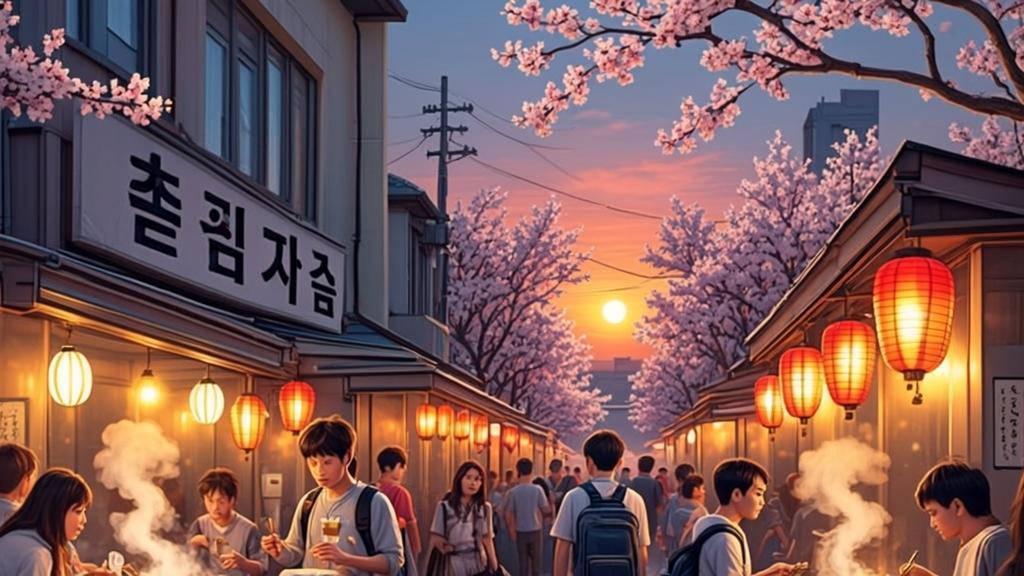
Fukuoka is the only major city in Japan that still permits a large number of traditional open-air food stalls known as Yatai.
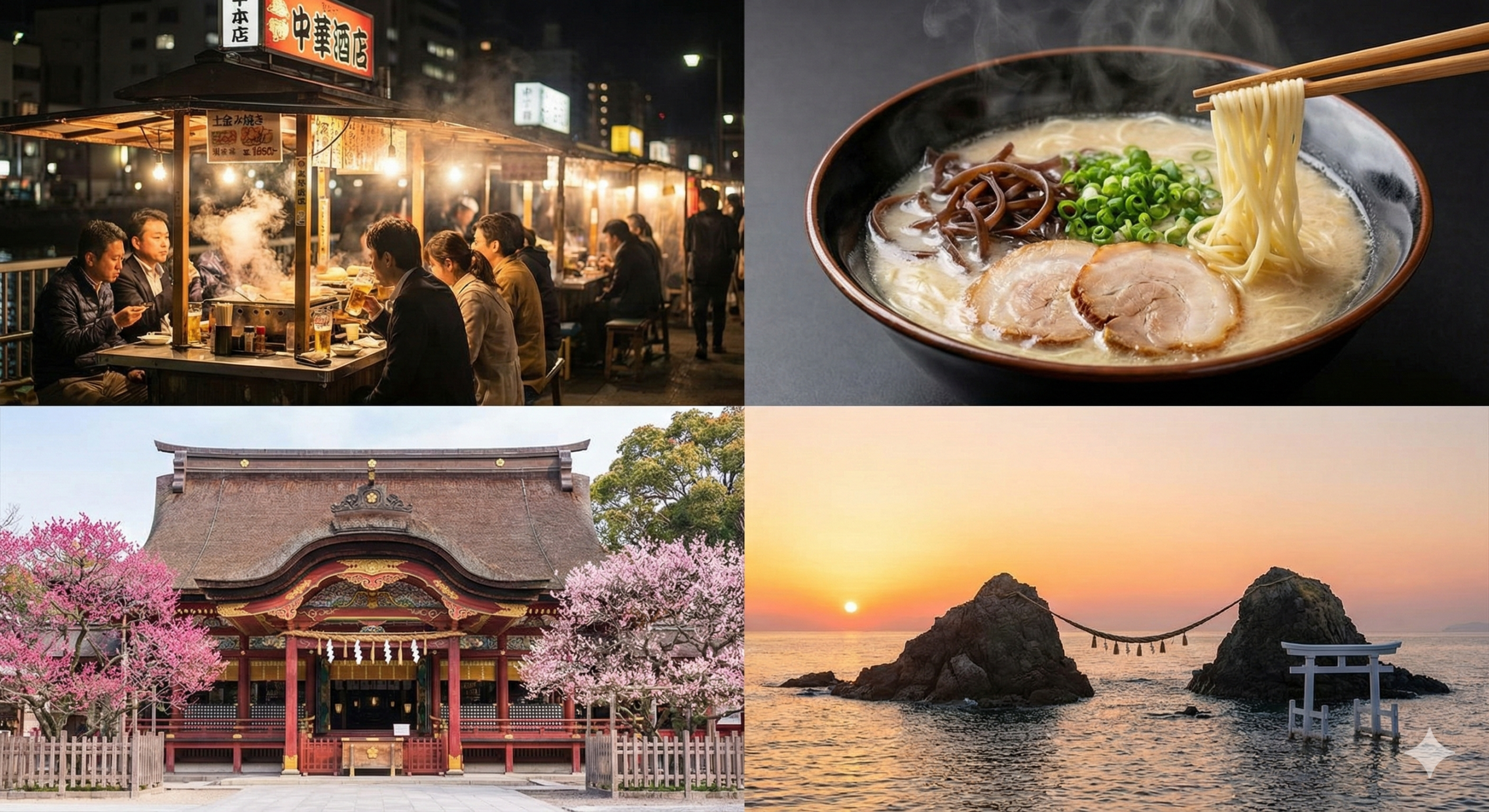
- Nakasu Island: As evening falls, over 100 yatai emerge along the riverside in the Nakasu entertainment district and other areas like Tenjin. These small, curtained stalls seat only about 8-10 people, creating an intimate atmosphere where strangers quickly become friends over sake and food.
- The Menu: While famous for Hakata Ramen (creamy pork bone soup with thin noodles), yatai serve a wide variety of dishes, including Oden (simmered ingredients), Yakitori (grilled chicken skewers), and mentaiko omelets. Hopping from one stall to another (hashigo-zake) is the quintessential Fukuoka experience.
Hakata: The Land of Ramen and Roe
Fukuoka (often referred to by its historical name, Hakata, when discussing food) has contributed two major dishes to Japanese cuisine.
- Tonkotsu Ramen: This rich, cloudy pork broth soup originated here. You can customize the firmness of your noodles (katamen for hard, yawamen for soft) and order a kaedama (refill of noodles) if you have leftover soup.
- Mentaiko: Spicy salted Pollock roe is a local obsession. It is eaten raw with rice, mixed into pasta, or baked into baguettes. Its addictive salty-spicy kick is omnipresent in souvenir shops.
Dazaifu Tenmangu: The Shrine of Learning
A short train ride to the south takes you to Dazaifu, a historic town that was once the administrative center of Kyushu.
- Dazaifu Tenmangu Shrine: Dedicated to Sugawara no Michizane, the deity of learning and calligraphy, this shrine is popular with students praying for exam success. The grounds are famous for their 6,000 plum trees, which bloom spectacularly in late winter.
- Umegae Mochi: The approach to the shrine is lined with shops selling these grilled rice cakes filled with sweet red bean paste and stamped with a plum flower crest. Eating them fresh off the grill is a must.
The Hakata Gion Yamakasa Festival
If you visit in the first half of July, you will witness the energy of the Hakata Gion Yamakasa.
- Kakiyama Floats: It is a high-speed festival where teams of men in loincloths race through the streets carrying massive, one-ton floats (kakiyama) decorated with elaborate dolls. The climax, the “Oiyama” race in the early morning of July 15th, is an explosion of energy and splashing water.
A City of Balance
Fukuoka offers a perfect balance of metropolitan convenience and a relaxed pace of life. You can shop in the massive underground malls of Tenjin, relax by the large pond in Ohori Park, or watch the sunset over the ocean at Momochi Seaside Park, all within a single day.
It is a warm, welcoming city that fills both your stomach and your spirit with its infectious energy.
Make your Japan trip exciting with 『Japaner Guide』
Japaner Guide is a personal guide matching service that connects you with local guides to explore destinations across Japan.

Even if you’re traveling alone and feeling unsure, you can enjoy Japan with confidence and peace of mind👍

From famous tourist attractions to hidden local gems, we customize your journey to perfectly match your interests!

👇 Sign up here 👇
https://japaner-guide.com/
Make your trip to Japan more fun and meaningful!