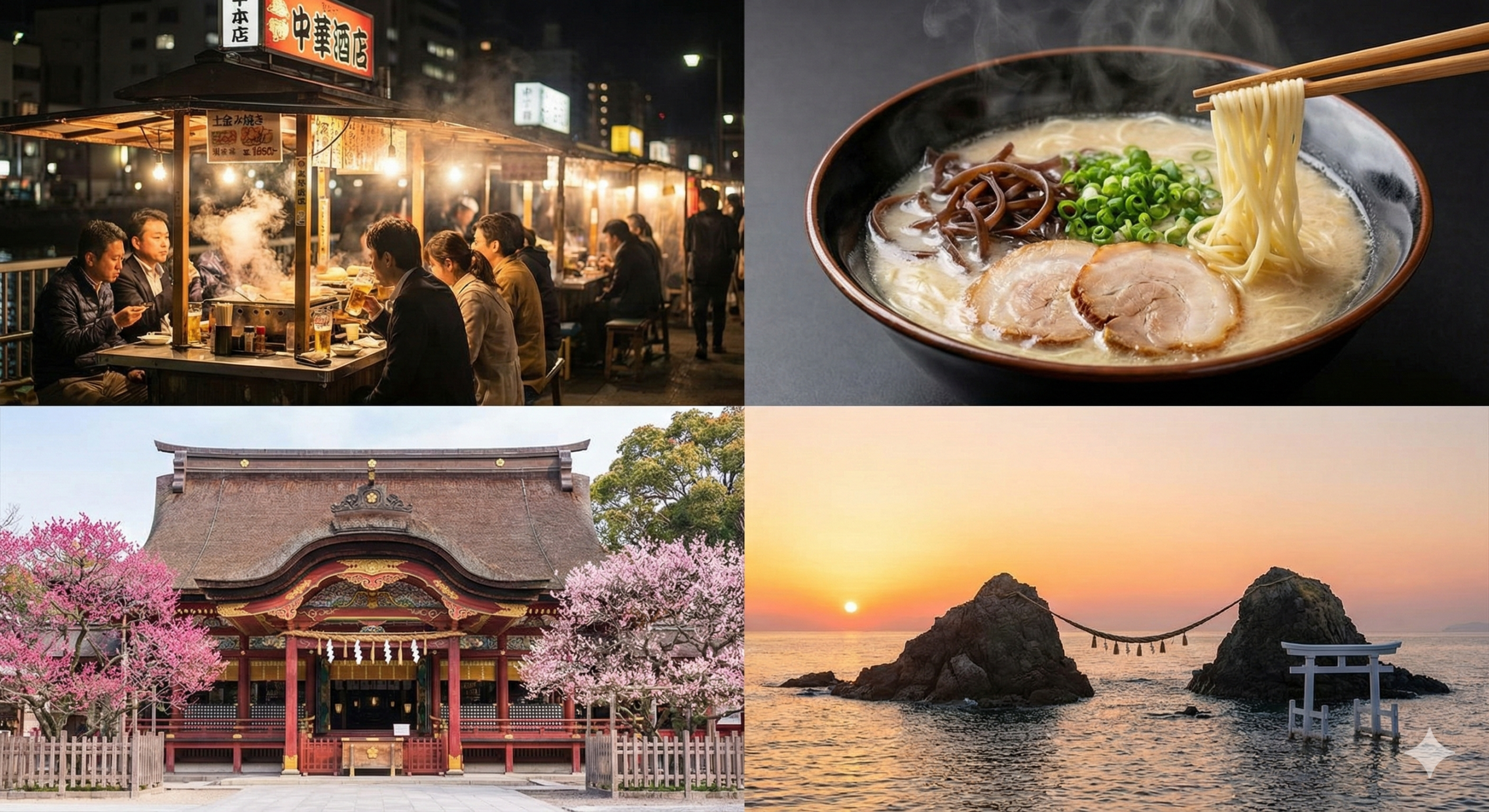
Located on the northern shore of Kyushu, Fukuoka City (often referred to by its historical central district name, Hakata) is a vibrant port city that serves as Japan’s gateway to Asia. Known for its compact size, incredibly friendly locals, and a food culture that many argue is the best in Japan, Fukuoka offers a lively urban energy that is distinct from Tokyo or Osaka.
The Yatai Culture: Japan’s Night Market
Fukuoka is the only major city in Japan that still has a thriving Yatai (open-air food stall) culture. As night falls, over 100 mobile stalls appear on the sidewalks of the Nakasu and Tenjin districts, lighting up the streets with warm lanterns.
Sitting shoulder-to-shoulder with strangers on a narrow wooden bench, sipping beer or sake, is the quintessential Fukuoka experience. The menu goes far beyond ramen; you can find yakitori (grilled chicken), oden (simmered hot pot), gyoza, and even French cuisine. It is a place where boundaries dissolve, and locals and tourists toast together deep into the night.
The Holy Land of Tonkotsu Ramen
You cannot visit Fukuoka without eating Hakata Ramen. This is the birthplace of Tonkotsu (pork bone) ramen, characterized by its cloudy, rich, milky-white broth and ultra-thin straight noodles.
- The Rules: Hakata ramen is unique. The noodles are thin, so they cook fast and get soggy quickly. Therefore, servings are smaller, and you order a Kaedama (refill of noodles) when you are halfway done with the soup. You also choose the firmness of your noodles, from Yawara (soft) to Bari-kata (very hard).
- Other Delicacies: The city is also famous for Motsunabe (beef offal hotpot rich in collagen and garlic) and Mentaiko (spicy salted cod roe), which is eaten with rice or mixed into pasta.
Dazaifu Tenmangu: The God of Learning
A short train ride from the city center takes you to Dazaifu Tenmangu, one of the most important shrines in Japan. It is dedicated to Sugawara no Michizane, the deity of learning, culture, and the arts. Millions of students flock here every year to pray for success in exams.
The approach to the shrine is lined with teahouses selling Umegae Mochi, a grilled rice cake filled with sweet red bean paste and stamped with a plum blossom pattern. Eating one fresh off the grill while walking through the shrine’s exquisite plum gardens (featuring over 6,000 plum trees) is a beloved tradition.
Itoshima: The Sunset Coast
For a change of pace, head west to the Itoshima Peninsula. Once a quiet rural area, it has become a trendy resort destination known for its stunning coastline, surf spots, and “Instagrammable” art objects.
Key spots include the Meoto Iwa (Wedded Rocks) at Futamigaura, joined by a sacred straw rope and framed by a white torii gate standing in the ocean. It is famous for its breathtaking sunsets. The area is also dotted with chic seaside cafes and bakeries, offering a relaxed, tropical vibe just outside the city.
From the steam of the ramen bowl to the sunset over the sea, Fukuoka is a city that satisfies both the stomach and the spirit.
Make your Japan trip exciting with 『Japaner Guide』
Japaner Guide is a personal guide matching service that connects you with local guides to explore destinations across Japan.

Even if you’re traveling alone and feeling unsure, you can enjoy Japan with confidence and peace of mind👍

From famous tourist attractions to hidden local gems, we customize your journey to perfectly match your interests!

👇 Sign up here 👇
https://japaner-guide.com/
Make your trip to Japan more fun and meaningful!