Navigating the Month-Long Masterpiece of Kyoto’s Tradition
The Gion Matsuri is not just a festival; it is the pride of Kyoto. Spanning the entire month of July, it is one of the “Three Great Festivals of Japan” and a UNESCO Intangible Cultural Heritage. To understand the Gion Matsuri Kyoto guide is to understand the history of Kyoto itself—a city that has turned a 9th-century ritual to combat a plague into a month-long celebration of art, community, and endurance.
The Anatomy of the Month
While the festival lasts thirty days, the energy peaks during two specific periods: the Saki-matsuri (Early Festival) and the Ato-matsuri (Later Festival).
The Yamaboko Junko (Float Processions)
The primary attraction of the Gion Matsuri is the procession of the Yamaboko floats. These massive structures, some weighing up to 12 tons and standing 25 meters tall, are pulled through the streets of Kyoto by teams of men using only ropes and wooden planks.
- Yama Floats: Smaller, often depicting scenes from Japanese folklore or Chinese history.
- Hoko Floats: Massive, “moving museums” decorated with priceless tapestries from as far away as Persia and Europe, brought to Japan during the Silk Road era.
Yoiyama: The Magical Evenings
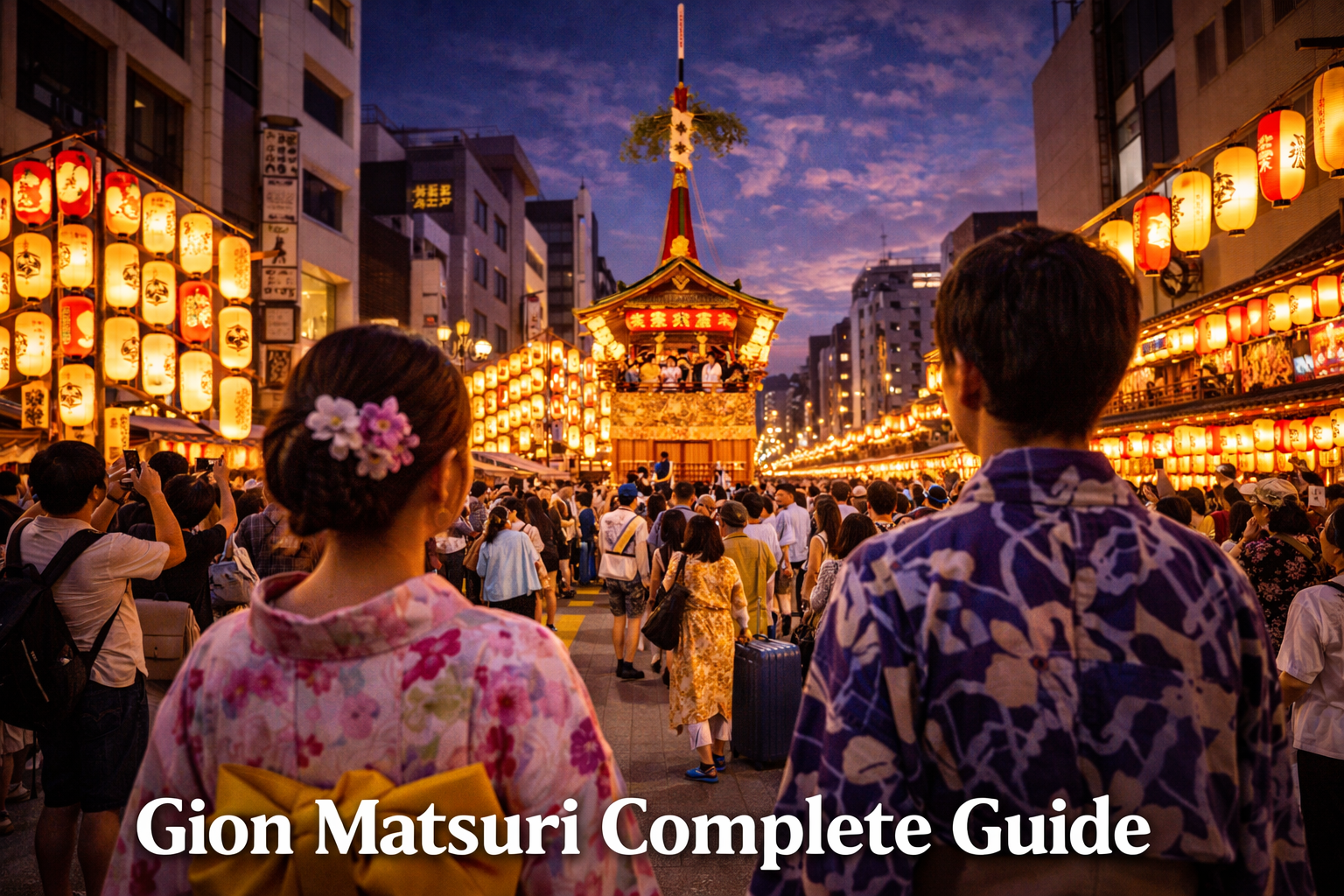
The three nights preceding each parade are known as Yoiyama. During these nights, the streets are closed to vehicles, and the floats are illuminated with traditional lanterns. The atmosphere is electric, filled with the sound of the Gion-bayashi music—a unique combination of flutes, drums, and gongs that has remained unchanged for centuries.
Hidden Gems of the Gion Matsuri
- Byobu Matsuri (Folding Screen Festival): During the Yoiyama nights, many traditional merchant houses (machiya) in the Gion district open their private doors to display their family’s heirloom folding screens and treasures. It is a rare opportunity to see inside the private world of Kyoto’s elite families.
- Chimaki Talismans: Each float sells a specific chimaki—a protective talisman made of woven bamboo leaves. Residents hang these above their doors to ward off bad luck for the coming year.
Strategic Planning for Visitors
- The “Tsuji-mawashi” Maneuver: The most dramatic moment of the parade is when the massive floats must turn a 90-degree corner. Watch the teams lay down wet bamboo slats and pull in unison to slide the giant wooden wheels.
- The Heat and Crowd Strategy: Kyoto in July is exceptionally hot. Wear a yukata, carry a folding fan (sensu), and stay hydrated. The areas around Shijo and Kawaramachi are the busiest; seeking out the floats on the quieter side streets can offer a more intimate experience.
Discover the Secrets of Kyoto with Japaner
The Gion Matsuri is thick with layers of history, family rivalry, and religious symbolism that are invisible to the naked eye. To truly appreciate why certain tapestries are used or the significance of the “Chigo” (Sacred Child) who rides the lead float, you need an expert by your side.
Japaner matches you with professional, human interpreter-guides living in Japan who understand the intricate heartbeat of Kyoto. A guide from Japaner can lead you through the maze of machiya houses, explain the meaning behind the different Gion-bayashi melodies, and help you navigate the dense crowds to find the perfect viewing spot for the parade. Don’t just watch the Gion Matsuri—understand it with the help of a local professional.
Make your Japan trip exciting with 『Japaner Guide』

Japaner Guide is a personal guide matching service that connects you with local guides to explore destinations across Japan.

Even if you’re traveling alone and feeling unsure, you can enjoy Japan with confidence and peace of mind👍

From famous tourist attractions to hidden local gems, we customize your journey to perfectly match your interests!

👇 Sign up here 👇
https://japaner-guide.com/
Make your trip to Japan more fun and meaningful!