The Samurai’s Color In the 19th century, a British chemist visiting Japan was astonished to see blue everywhere—from the work clothes of farmers to the exquisite robes of merchants. He dubbed it “Japan Blue.”
This blue comes from Indigo (Ai), a plant-based dye. While indigo is used worldwide, Tokushima Prefecture on Shikoku island is the historic center of Japanese indigo (Awa Ai). The humid climate and the flooding Yoshino River created perfect soil for growing the indigo plant. Today, visiting a Tokushima indigo studio allows you to dip your hands into the “living” vat that has defined Japanese aesthetics for centuries.
The Living Vat: “Sukumo”
Real Japanese indigo is not a chemical powder; it is alive.
- Fermentation: The leaves are dried and fermented for months to create a compost-like substance called Sukumo.
- The Vat: This sukumo is mixed with wood ash lye, lime, and sake in a deep vat. This mixture ferments, creating a bacterial culture that reduces the indigo. If you visit a traditional workshop, the smell is distinct—earthy, slightly ammonia-like, and pungent. It smells like a farm, not a factory.
The Technique: Shibori (Tie-Dye)
The experience focuses on Shibori (resist dyeing). Before dyeing, you manipulate the white fabric to prevent the dye from reaching certain parts.
- Tools: You use rubber bands, wooden clips, chopsticks, and marbles.
- Patterns:
- Kumo (Spiderweb): Pleating and binding.
- Itajime (Board Clamp): Folding the cloth and clamping it between wooden shapes to create geometric squares or triangles.
- Arashi (Storm): Wrapping cloth around a pole to create diagonal stripes.
The Magic Moment: Oxidation
The dyeing process itself is magical.
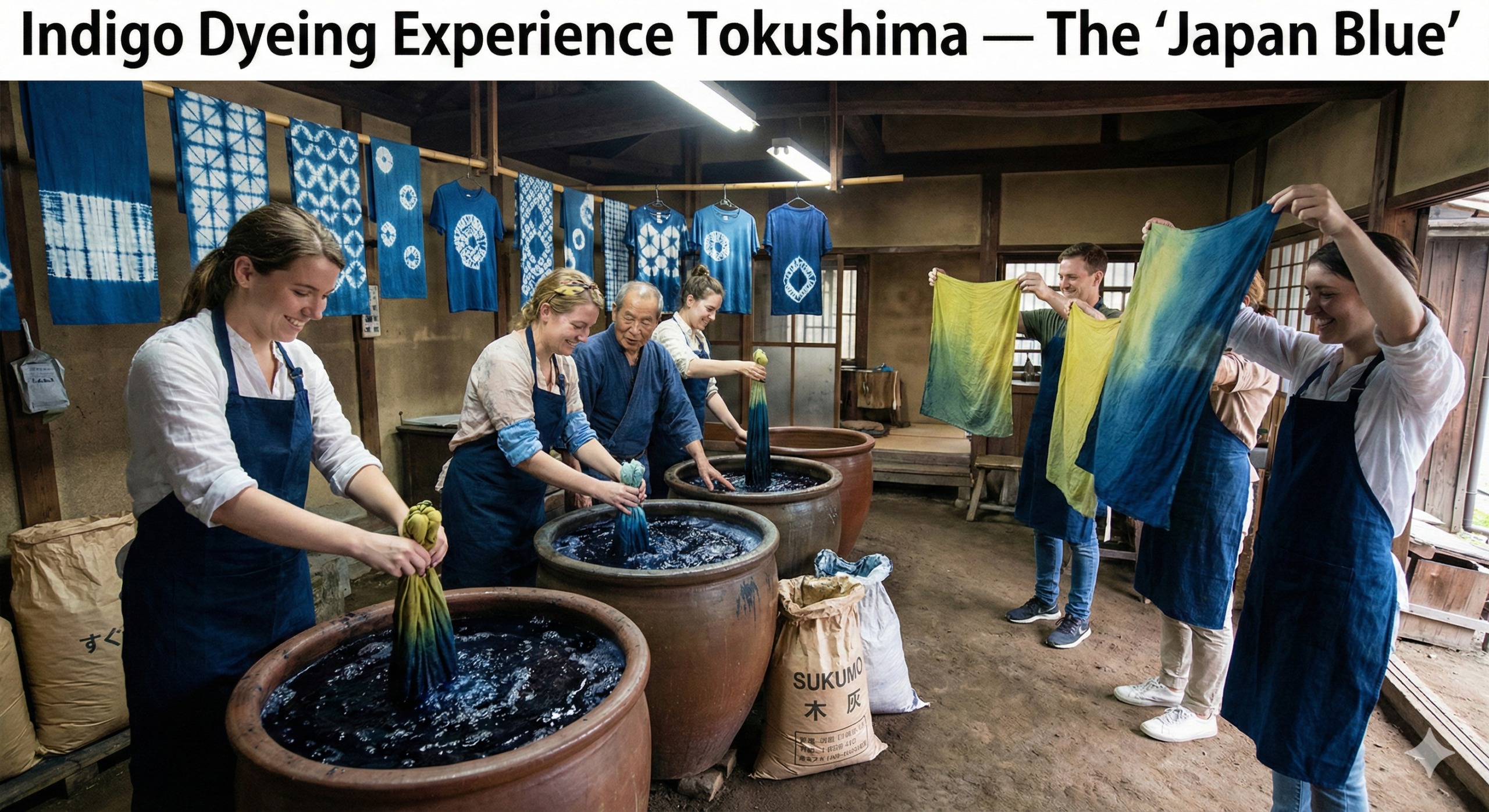
- Dipping: You submerge your fabric into the dark, inky vat. You must massage the fabric gently to ensure the dye penetrates.
- Green to Blue: When you pull the fabric out, it is not blue; it is yellowish-green.
- Breathing: As the dye hits the oxygen in the air, a chemical reaction occurs. Within seconds, you watch the fabric transform from green to vibrant turquoise, and finally to deep indigo blue. You repeat this dipping and airing process multiple times to achieve a darker shade (Kachi-iro).
Why Indigo?
Indigo was loved by Samurai not just for its beauty, but for its function. It is naturally antibacterial and insect-repellent. Wearing an indigo shirt is not just a fashion statement; it is wearing a piece of practical history.
Make your Japan trip exciting with 『Japaner Guide』

Japaner Guide is a personal guide matching service that connects you with local guides to explore destinations across Japan.

Even if you’re traveling alone and feeling unsure, you can enjoy Japan with confidence and peace of mind👍

From famous tourist attractions to hidden local gems, we customize your journey to perfectly match your interests!

👇 Sign up here 👇
https://japaner-guide.com/
Make your trip to Japan more fun and meaningful!