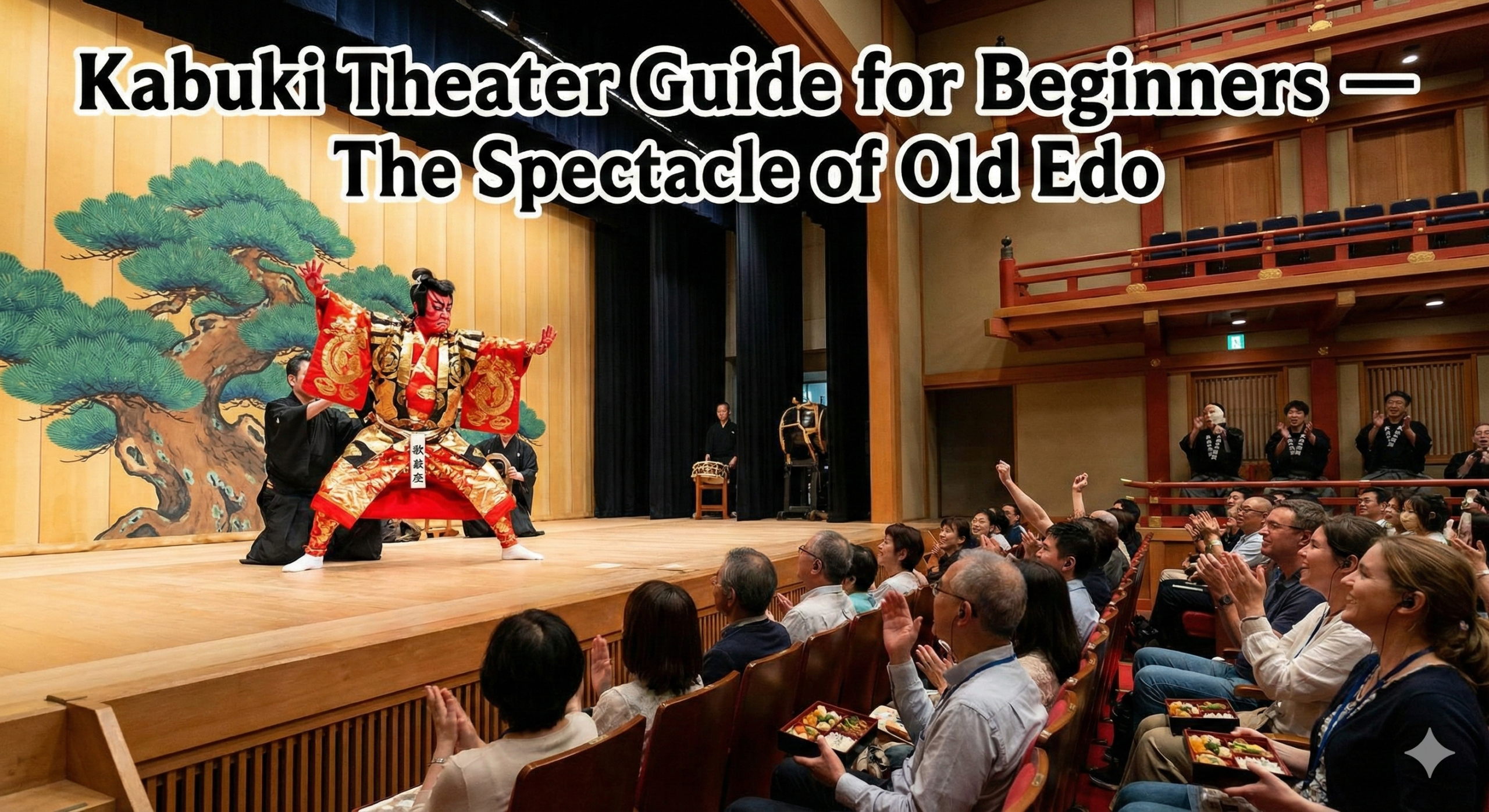
If Noh is a quiet black-and-white ink painting, Kabuki is a vibrant, explosion of color. Originating in the Edo period as entertainment for the common people, Kabuki is bold, loud, and dynamic. It features elaborate costumes, dramatic stage mechanics, and a unique style of acting that has captivated audiences for centuries.
For first-time visitors, the experience can be overwhelming, but with a few tips, it becomes an unforgettable dive into Japanese pop culture of the past.
Kabuki-za: The Home of Kabuki
The premier place to see a performance is the Kabuki-za Theatre in Ginza, Tokyo.
- Architecture: The building itself is a masterpiece, resembling a massive castle or temple with traditional tiled roofs, standing in stark contrast to the modern skyscrapers of Ginza.
- The Atmosphere: Unlike the solemn silence of Noh, Kabuki is lively. The audience laughs, cries, and eats bento boxes during intermissions.
Key Elements to Watch For
- Mie (The Pose): During a climactic moment, the actor will freeze, cross his eyes, and strike a dramatic pose. This is called Mie. It serves as a “close-up” in a movie, heightening the tension. When you see this, it is customary to applaud.
- Kumadori (Makeup): The actors wear distinct face paint. Generally, red lines indicate a hero with passion and justice, while blue lines indicate a villain or an evil spirit.
- Onnagata: All roles, including women, are played by men. These actors, known as Onnagata, spend their lives perfecting feminine movements and speech, creating an idealized form of beauty that transcends gender.
Support for Beginners
You do not need to understand old Japanese to enjoy the show.
- Earphone Guide: This is essential for non-Japanese speakers (and even many Japanese!). You can rent a headset that provides a real-time commentary in English, explaining the plot, the history of the actors, and the meaning behind the costumes as the play progresses.
- Single Act Tickets (Hitomaku-mi): A full Kabuki program can last 4-5 hours. For beginners, purchasing a ticket for just a single act (usually 60–90 minutes) is a popular and affordable way to experience the art form without committing to a full day. (Note: Please check current availability as this system is sometimes adjusted).
The “Omuko” Shouts
During the performance, you might hear people shouting from the back seats. This is called Omuko. Expert fans shout the actor’s house name (yago) at precise moments to cheer them on. It is a unique form of audience participation that adds to the rhythm of the play.
Make your Japan trip exciting with 『Japaner Guide』

Japaner Guide is a personal guide matching service that connects you with local guides to explore destinations across Japan.

Even if you’re traveling alone and feeling unsure, you can enjoy Japan with confidence and peace of mind👍

From famous tourist attractions to hidden local gems, we customize your journey to perfectly match your interests!

👇 Sign up here 👇
https://japaner-guide.com/
Make your trip to Japan more fun and meaningful!