Often called “Little Kyoto,” Kanazawa is a city that rivals the ancient capital in traditional beauty but possesses a distinct, rugged charm of its own. Located on the Sea of Japan coast in Ishikawa Prefecture, Kanazawa was the seat of the Kaga Domain, the second wealthiest feudal domain in Japan after the Shogun’s own. This immense wealth led to the development of high culture, sophisticated crafts, and arguably the most beautiful garden in the country.
Escaping destruction during WWII, the city retains much of its historical architecture, allowing visitors to walk through streets that have remained unchanged for centuries.
Kenrokuen: A Garden of Six Sublimities
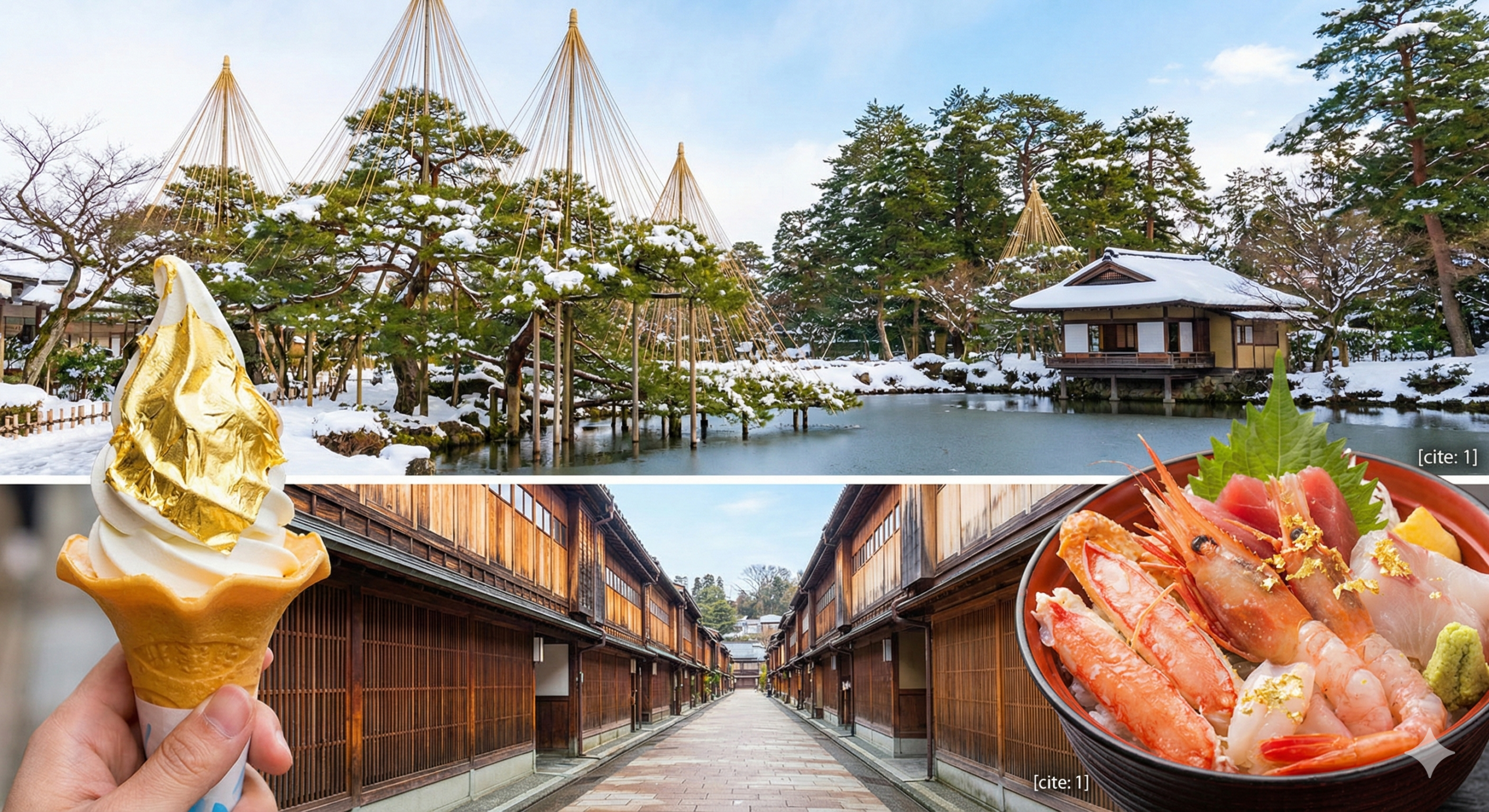
No visit to Kanazawa is complete without strolling through Kenrokuen, classified as one of the “Three Great Gardens of Japan” . The name means “Garden of the Six Sublimities,” referring to the six attributes of a perfect landscape: spaciousness, seclusion, artifice, antiquity, water courses, and panoramas.
The garden is breathtaking in every season, but winter offers a unique spectacle known as Yukitsuri (snow hanging). Gardeners use ropes attached to the tops of pine trees to support the branches in a conical shape, protecting them from the heavy, wet snow of the region. This geometric web of ropes against a snowy backdrop is the defining image of winter in Kanazawa.
Higashi Chaya District: The Geisha Quarters
Step back into the Edo period in the Higashi Chaya District . This area is lined with traditional wooden teahouses (chaya) featuring beautiful lattice fronts (kimusuko). It was, and still is, a place where Geisha entertain guests with music and dance.
Today, many of these buildings have been converted into chic cafes and souvenir shops. This is the best place to try Kanazawa’s famous Gold Leaf Soft Serve Ice Cream—a cone wrapped in a full sheet of real, edible gold leaf. It is a flashy, photogenic treat that symbolizes the city’s wealth.
Kanazawa’s Gold Leaf Tradition
Kanazawa literally means “Marsh of Gold,” and true to its name, the city produces 99% of Japan’s domestic gold leaf (kinpaku) . The humid climate is perfect for beating gold into sheets as thin as 1/10,000th of a millimeter. Beyond ice cream, you can find gold leaf applied to lacquerware, cosmetics, and even facial masks. Visitors can also experience applying gold leaf patterns to chopsticks or small plates at various workshops around the city.
Omicho Market: Kanazawa’s Kitchen
For food lovers, Omicho Market is a must-visit . Established in the early 18th century, this bustling covered market is packed with roughly 200 stalls selling fresh seafood and local produce.
The star here is the Snow Crab (Kano-gani) and sweet shrimp. The best way to enjoy the market is to order a Kaisendon (seafood rice bowl) at one of the restaurants inside. The bowls are often overflowing with fresh sashim, topped with gold leaf for that extra Kanazawa touch.
With its blend of samurai history, intricate crafts, and incredible seafood, Kanazawa offers a rich and luxurious cultural experience that feels worlds away from modern Tokyo.
Make your Japan trip exciting with 『Japaner Guide』

Japaner Guide is a personal guide matching service that connects you with local guides to explore destinations across Japan.

Even if you’re traveling alone and feeling unsure, you can enjoy Japan with confidence and peace of mind👍

From famous tourist attractions to hidden local gems, we customize your journey to perfectly match your interests!

👇 Sign up here 👇
https://japaner-guide.com/
Make your trip to Japan more fun and meaningful!