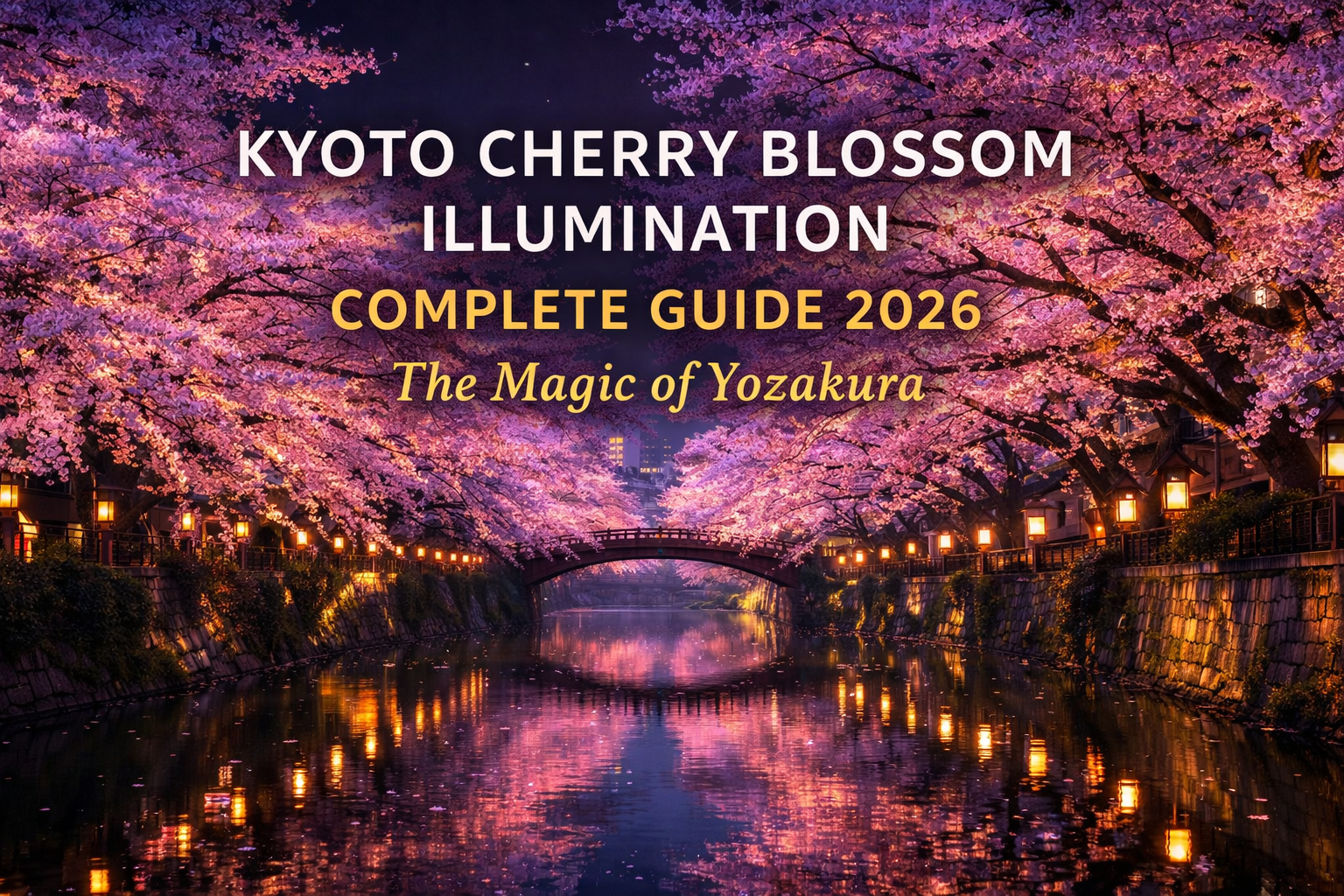
If you think Kyoto is beautiful during the day, wait until the sun sets.
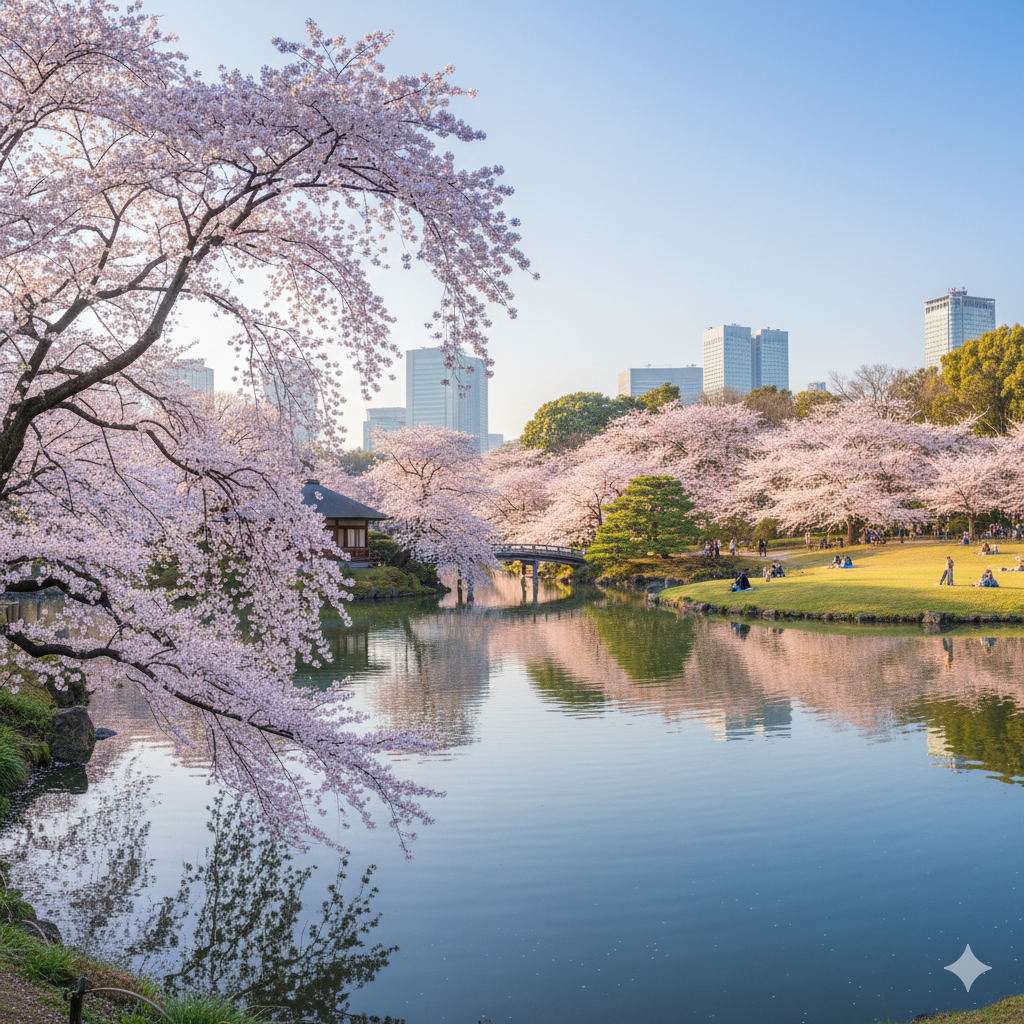
In Japan, viewing cherry blossoms at night is called Yozakura. It is not simply “seeing trees in the dark.” It is a carefully choreographed cultural event where ancient temples, quiet canals, and historic castles are transformed by professional lighting design into something ethereal—almost otherworldly.
For the 2026 season, Kyoto’s illuminations are expected to be more spectacular than ever, with new digital projection mappings blending 1,000-year-old history with modern art. But there is a catch: because night viewing is only available for a short window (usually 6:00 PM to 9:30 PM), the crowds can be intense.
As a local guide, I’ve navigated these crowds hundreds of times. This guide will help you choose the right spots, book your tickets in advance, and strategically time your visits so you can experience the magic of Kyoto’s night blossoms without the stress.
The “Must-See” Icons: Kyoto’s Big Three Illuminations
If it is your first time in Kyoto for the 2026 sakura season, these are the three spots that define the “Kyoto Night” experience.
1. To-ji Temple: The Tallest Pagoda and the Mirror Pond
To-ji Temple is home to Japan’s tallest wooden pagoda, a five-story masterpiece that serves as the symbol of Kyoto. During the spring illumination, the entire garden is lit up, but the star is the massive Beni-shidare-zakura (weeping cherry tree) named “Suda-zakura.”
- The View: The reflection of the illuminated pagoda and the pink weeping branches in the “Hyotan-ike” pond is arguably the most famous photo in Japan.
- 2026 Strategy: To-ji is located near Kyoto Station, making it the perfect first stop when you arrive in the city. The lines here move surprisingly fast because the garden is quite large.
- Insider Tip: Walk to the far side of the pond. Most people crowd the entrance view, but the back of the pond offers the perfect symmetrical reflection with fewer heads in your shot.
2. Kiyomizu-dera: The Blue Beam of Light
Kiyomizu-dera is a UNESCO World Heritage site and perhaps the most iconic temple in Japan. During the night viewing, a powerful blue beam of light (representing the mercy of Kannon) is projected from the temple across the sky over Kyoto.
- The View: Standing on the “Wooden Stage” looking back toward the main hall, surrounded by over 1,000 glowing cherry trees, is a spiritual experience.
- 2026 Strategy: This is the most crowded spot in the city. Do not arrive at 6:00 PM. Instead, arrive around 8:15 PM. Most of the tour groups have left for dinner by then, and the atmosphere becomes much more peaceful before the 9:00 PM last entry.
- Insider Tip: The walk down through Sannenzaka and Ninenzaka after the illumination is just as magical. The stone streets are lit by lanterns, and the crowds are thin.
3. Nijo Castle: NAKED Sakura Festival 2026
For a mix of history and cutting-edge technology, Nijo Castle is unbeatable. Every year, the creative collective “NAKED” produces a projection mapping festival that turns the castle walls and the cherry orchards into an interactive art gallery.
- The View: Digital petals “fall” onto the 400-year-old stone walls, and the inner moat is often turned into a digital river of light. It is much more “high-energy” than the temples.
- 2026 Strategy: You must book tickets online in advance. For 2026, they are expected to implement time-slot entries to manage crowds.
- Insider Tip: Wear comfortable shoes. The path through the castle grounds is surprisingly long (about 1.5km), and the ground is uneven gravel.
The Local Favorites: Atmospheric and Artistic
If you want a more intimate experience away from the massive queues of Kiyomizu-dera, these locations offer deep atmosphere and local charm.
4. Maruyama Park: The “Queen” of Night Sakura
Located right next to Yasaka Shrine in Gion, Maruyama Park is the center of Kyoto’s hanami party culture. The centerpiece is the “Gion Shidare-zakura,” an enormous weeping cherry tree that looks like a waterfall of light at night.
- The Atmosphere: This is where the locals go. There are small food stalls (yatai) and tables set up under the trees where you can drink beer or sake and eat yakitori.
- 2026 Strategy: There is no entry fee! It’s an open park. It’s the perfect place to go for an hour before or after a dinner in Gion.
- Insider Tip: Look for the tables with red carpets. These belong to the temporary “sakura cafes.” If you buy a drink or a snack, you can sit and enjoy the view in comfort.
5. Kodai-ji Temple: The Zen Garden of Light
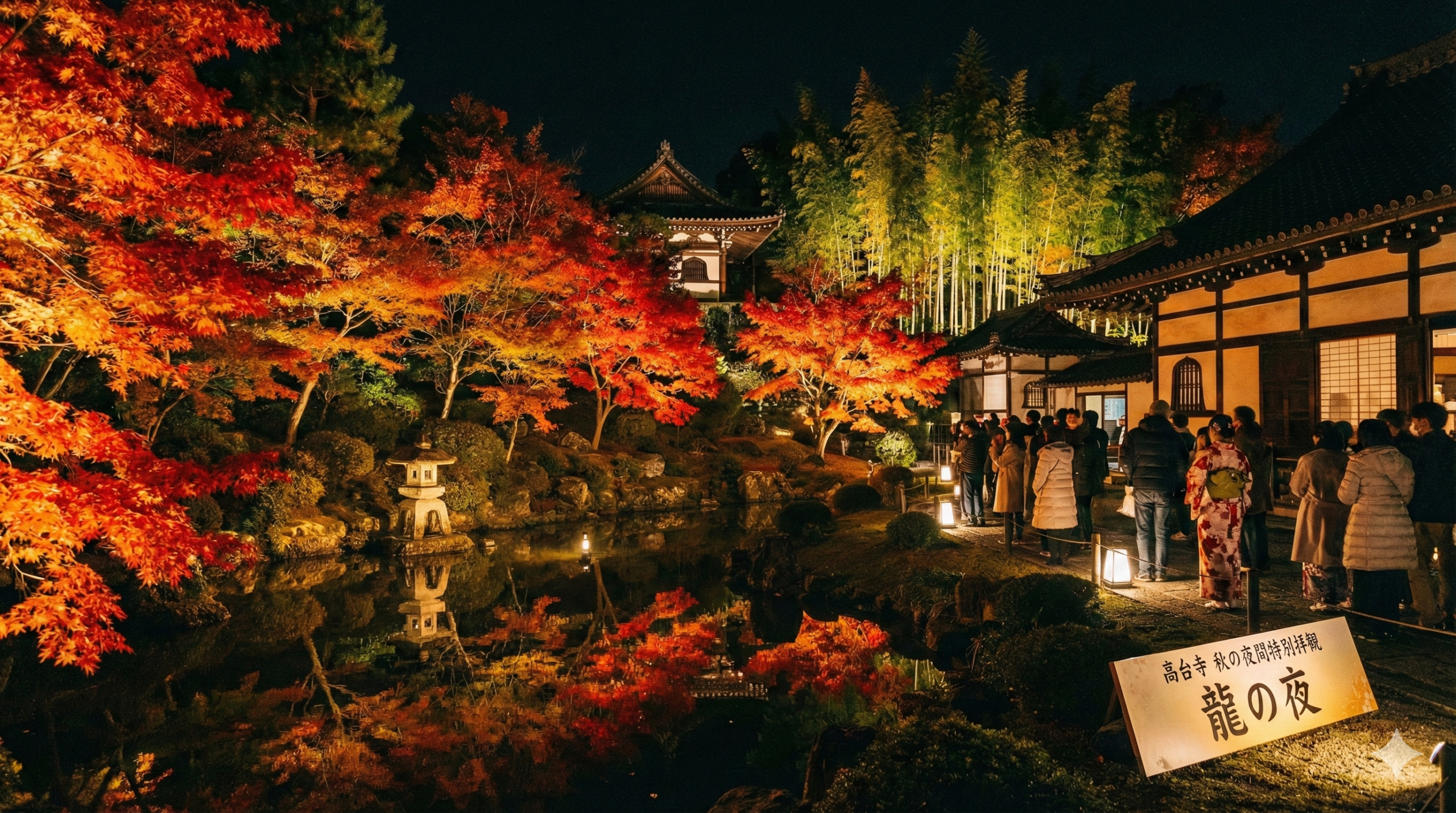
Kodai-ji was built by the widow of Toyotomi Hideyoshi, and it is known for its exquisite Zen gardens. Their spring illumination is famous for its artistic use of light in the dry rock garden.
- The View: They often use modern lighting to turn the white sand of the Zen garden into a “sea” with waves made of light. The bamboo grove at the end of the path is also beautifully lit.
- 2026 Strategy: It is located halfway between Yasaka Shrine and Kiyomizu-dera. It makes a perfect “middle stop” for a night walking tour.
- Insider Tip: Don’t rush through the bamboo grove. The contrast between the pink blossoms at the start and the towering green bamboo at the end is one of Kyoto’s best sensory transitions.
16. Hirano Shrine: The “Sakura Shrine”
Hirano Shrine has been famous for its cherry blossoms since the 10th century. It has 60 different varieties of trees, meaning the bloom period lasts much longer than at other sites.
- The Atmosphere: It feels more like a neighborhood festival than a tourist attraction. The night market here is fantastic, with dozens of stalls selling traditional snacks.
- 2026 Strategy: This is in the north of Kyoto, near Kinkaku-ji. It’s a bit of a trek from the center, which means fewer international tourists.
- Insider Tip: This is the best place to see the Saki-gake variety—a tree that was bred specifically at this shrine.
Strategic Planning for the 2026 Season
When to Go: The 2026 Calendar
Based on early 2026 meteorological patterns, the Kyoto illuminations are expected to run from March 20th to April 10th, 2026.
- Early Bloom (March 20–25): Focus on To-ji and Hirano Shrine (earlier varieties).
- Peak Bloom (March 27–April 3): This is when every site is open. Expect the biggest crowds.
- Late Bloom (April 4–10): Focus on Heian Shrine and Ninna-ji (late-blooming Omuro cherries).
The “Golden Rule” of Timing
Kyoto’s night illuminations generally open at 6:00 PM. Do not join the line at 5:30 PM. You will spend an hour standing in the cold.
- The Second Wave: Arrive at 8:00 PM. Most temples allow entry until 9:00 PM and stay open until 9:30 PM. The last 60 minutes are always the quietest and most beautiful.
What to Wear (The “Spring Trap”)
This is the mistake I see my guests make every year. While the days are warm (15-18°C), the temperature in Kyoto drops sharply once the sun goes down. It can easily dip to 5°C (41°F) by 8:00 PM.
- The Japanar Advice: Bring a light down jacket that can be folded into a small bag, and wear a scarf. Standing still in a temple garden at night is much colder than walking during the day.
2026 Logistics: Tickets and Transport
- Advance Tickets: For Nijo Castle and Kodai-ji, check their official websites in February 2026. Online booking will save you 30-40 minutes of waiting at the ticket booth.
- Transportation: Do not use buses at night during sakura season. They get stuck in “Sakura Traffic” and are incredibly crowded. Use the Subway (Karasuma or Tozai lines) or the Keihan Railway whenever possible. For Kiyomizu-dera, take the subway to Gojo or the Keihan to Kiyomizu-Gojo and walk up the hill.
- The “No-Tripod” Rule: Almost all Kyoto temples ban the use of tripods during night illuminations to prevent accidents in the dark. Bring a camera with good “In-Body Image Stabilization” (IBIS) or a smartphone with a high-quality Night Mode.
Conclusion: A Night You Won’t Forget
Kyoto’s cherry blossoms are beautiful, but they are also a lesson in Mono no aware—the appreciation of the fleeting nature of things. Seeing them illuminated against the dark sky makes them feel even more precious, as if you are catching a glimpse of a dream before it disappears.
Whether you choose the high-tech projections of Nijo Castle or the quiet reflection of the pagoda at To-ji, make sure to take at least one night during your 2026 trip to put your camera away for five minutes. Breathe in the cool Kyoto air, smell the faint scent of the blossoms, and simply be present.
Would you like me to create a customized “One-Night Itinerary” for your specific hotel location in Kyoto so you can see the best spots without wasting time on travel?
Make your Japan trip exciting with 『Japaner Guide』
Japaner Guide is a personal guide matching service that connects you with local guides to explore destinations across Japan.

Even if you’re traveling alone and feeling unsure, you can enjoy Japan with confidence and peace of mind👍

From famous tourist attractions to hidden local gems, we customize your journey to perfectly match your interests!

👇 Sign up here 👇
https://japaner-guide.com/
Make your trip to Japan more fun and meaningful!