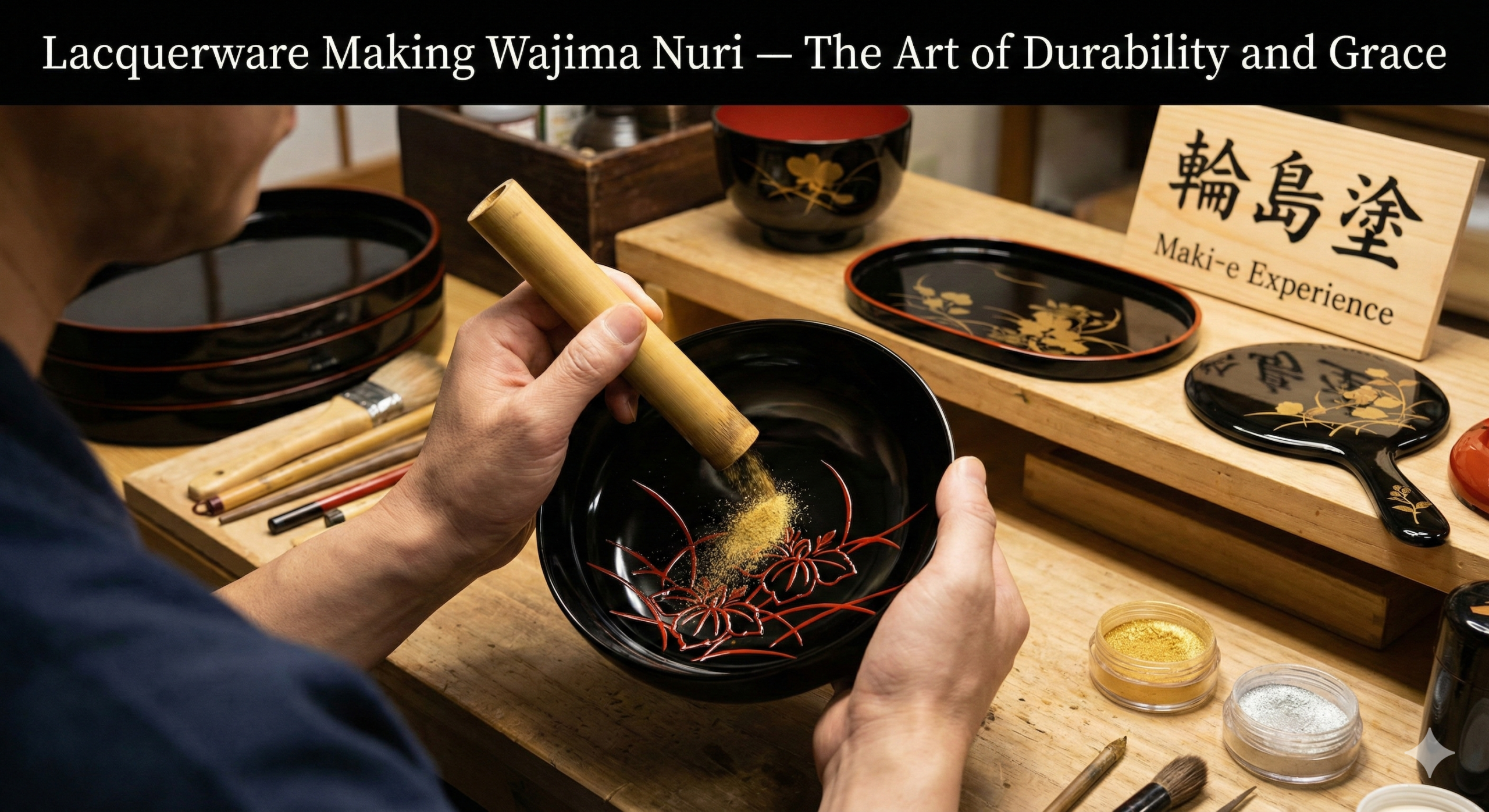
“Japan” means Lacquer Just as porcelain is known as “china,” lacquerware was historically known in the West simply as “japan.” It is a craft that defines the Japanese aesthetic: deep, lustrous black or vermilion surfaces that feel warm and soft to the touch, yet are incredibly durable.
Among all lacquerware styles, Wajima-nuri (from Wajima city on the Noto Peninsula) is the king. Known for its laborious process involving over 100 steps and the mixing of local diatomaceous earth (jinoko) into the undercoat for extra strength, Wajima lacquerware is built to last centuries.
(Note: While the Noto Peninsula was affected by the 2024 earthquake, the spirit of Wajima artisans remains strong. Supporting the industry through workshops in Kanazawa or buying products is a vital way to help the region recover. Experiences described below are typical of the Ishikawa/Kyoto lacquer tradition, widely available to tourists).
The Experience: Maki-e (Sprinkled Picture)
Because producing the lacquer base takes months, the experience for tourists focuses on the final, most artistic step: Maki-e. This is the technique of painting a design with wet lacquer and then sprinkling gold or silver powder onto it before it dries.
1. The Canvas You will choose a base item—usually a soup bowl, a hand mirror, or a tray. These are already coated with multiple layers of cured, polished lacquer. Touch it; it feels organic and skin-like, unlike cold plastic or glass.
2. Painting with Urushi Using a super-fine brush made of mouse or cat hair, you paint your design using Red Lacquer (Bengara-urushi) as the “glue.”
- The Challenge: Lacquer is thick and viscous, like honey. Drawing fine lines requires a steady hand and breath control. If you make a mistake, you can wipe it off with oil, but you have to work within a timeframe.
3. The Sprinkling This is where the magic happens. While the red lines are still wet, you take a bamboo tube (funzutsu) filled with fine gold or silver powder.
- The Tap: You gently tap the tube to dust the powder over your wet drawing.
- The Transformation: As you brush away the excess powder, your red lines miraculously turn into gleaming gold. The powder sticks only to the wet lacquer.
4. Curing (The Humidity Chamber) Real lacquer (Urushi) is made from the sap of a poison oak-like tree. It does not “dry” by evaporation; it cures by absorbing moisture from the air.
- Note: Finished pieces usually need to stay in a humid box (Muro) for a few days to harden completely. Most workshops will arrange to ship the finished product to your hotel or home address later, or use a substitute “cashew lacquer” which dries faster for same-day takeaway (common in beginner workshops).
Why Wajima-nuri Matters
Participating in a lacquer workshop connects you to a tradition of sustainability. Lacquerware is natural, repairable (Kintsugi is the art of repairing it with gold), and gets more beautiful with use. It is the antithesis of disposable culture. Owning a piece you decorated yourself is a reminder to cherish everyday objects.
Make your Japan trip exciting with 『Japaner Guide』

Japaner Guide is a personal guide matching service that connects you with local guides to explore destinations across Japan.

Even if you’re traveling alone and feeling unsure, you can enjoy Japan with confidence and peace of mind👍

From famous tourist attractions to hidden local gems, we customize your journey to perfectly match your interests!

👇 Sign up here 👇
https://japaner-guide.com/
Make your trip to Japan more fun and meaningful!