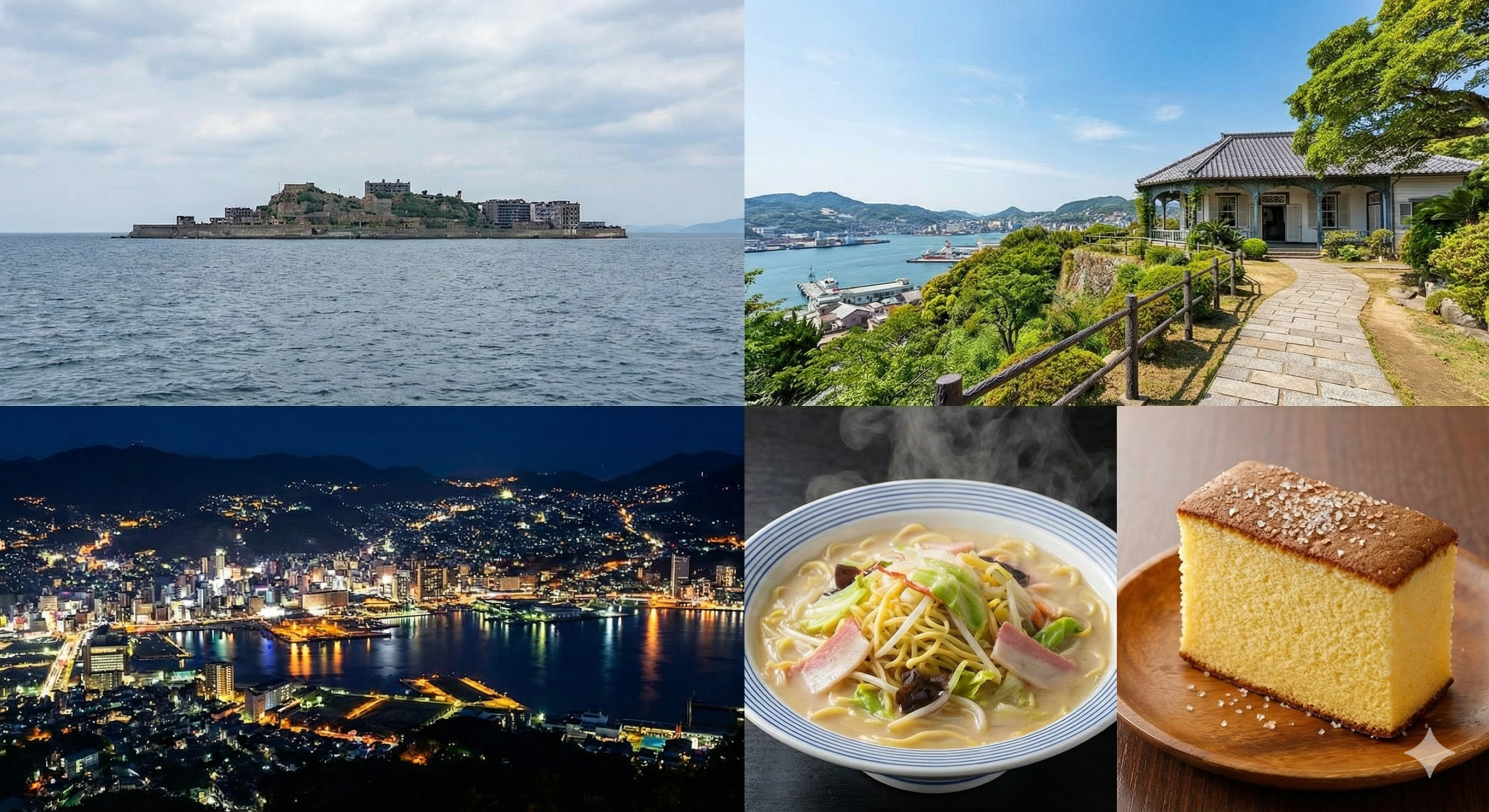
Located on the jagged western coast of Kyushu, Nagasaki is perhaps the most culturally distinct city in Japan. For over 200 years during Japan’s era of isolation (Sakoku), Nagasaki was the only window to the outside world, trading with the Dutch and Chinese. This unique history has created a city that feels like a blend of East and West, with Catholic churches perched on hillsides, Chinese temples in the valleys, and a culinary culture found nowhere else.
It is a “City of Slopes,” where houses cling to steep mountainsides overlooking a magnificent harbor, creating a landscape that is often compared to San Francisco or Naples.
Gunkanjima: The Battleship Island
A short boat ride from Nagasaki Port takes you to one of the most hauntingly beautiful sites in the world: Hashima, commonly known as Gunkanjima (Battleship Island).
Once a bustling coal mining facility with the highest population density on Earth, the island was completely abandoned in 1974. Today, it stands as a concrete ghost town floating in the sea. The crumbling apartment blocks and sea walls, shaped like a battleship, offer a stark, cinematic glimpse into Japan’s rapid industrialization. It gained worldwide fame as the inspiration for the villain’s lair in the James Bond movie Skyfall.
Glover Garden and the Western Slopes
To experience the romantic, exotic side of Nagasaki, visit Glover Garden. Located on a hill with a sweeping view of the harbor, this open-air museum features beautiful Western-style mansions built by foreign merchants in the 19th century.
The oldest wooden Western-style building in Japan, the Former Glover House, is said to be the setting for the opera Madame Butterfly. Nearby stands the Oura Church, Japan’s oldest standing church and a National Treasure, dedicated to the 26 Martyrs of Japan. It is a poignant symbol of the region’s deep and often tragic history of “Hidden Christians” who practiced their faith in secret for centuries.
The “10 Million Dollar” Night View
Nagasaki is officially recognized as having one of the “New Three Major Night Views of the World” (alongside Monaco and Shanghai).
Taking the ropeway up Mount Inasa (Inasayama) at dusk is essential. Because the city is built like an amphitheater around the bay, the lights of the houses rising up the mountains create a 3D panorama that feels like you are standing in the middle of a galaxy of lights.
A Melting Pot of Flavors
Nagasaki’s food is a direct reflection of its trading history.
- Nagasaki Champon: A hearty noodle dish created by a local Chinese restaurant to feed hungry students cheap, nutritious food. Thick noodles are cooked directly in a rich soup made from pork, chicken, and seafood, loaded with cabbage, bean sprouts, and pink kamaboko.
- Castella: Brought by Portuguese missionaries in the 16th century, this moist, sweet sponge cake has evolved into a premium Japanese confection. The best Castella has large crystals of coarse sugar (zarame) on the bottom, adding a delightful crunch.
- Turkish Rice (Toruko Rice): A quirky local favorite that combines tonkatsu (pork cutlet), pilaf rice, and spaghetti napolitan all on one plate.
From the ruins of industry to the sweetness of sponge cake, Nagasaki offers a travel experience that is rich, melancholic, and undeniably beautiful.
Make your Japan trip exciting with 『Japaner Guide』
Japaner Guide is a personal guide matching service that connects you with local guides to explore destinations across Japan.

Even if you’re traveling alone and feeling unsure, you can enjoy Japan with confidence and peace of mind👍

From famous tourist attractions to hidden local gems, we customize your journey to perfectly match your interests!

👇 Sign up here 👇
https://japaner-guide.com/
Make your trip to Japan more fun and meaningful!