Nestled in the mountains of Tochigi Prefecture, about two hours north of Tokyo, lies Nikko. It is a destination so magnificent that there is a famous Japanese saying: “Nikko wo mizu shite ‘kekkō’ to iu nakare” (“Don’t say ‘magnificent’ until you’ve seen Nikko”).
Nikko is a place of dramatic contrasts. It is home to Japan’s most lavishly decorated shrine—the final resting place of the most powerful shogun in history—surrounded by a National Park of serene lakes, thundering waterfalls, and wild monkeys.
Toshogu Shrine: The Gold of the Samurai
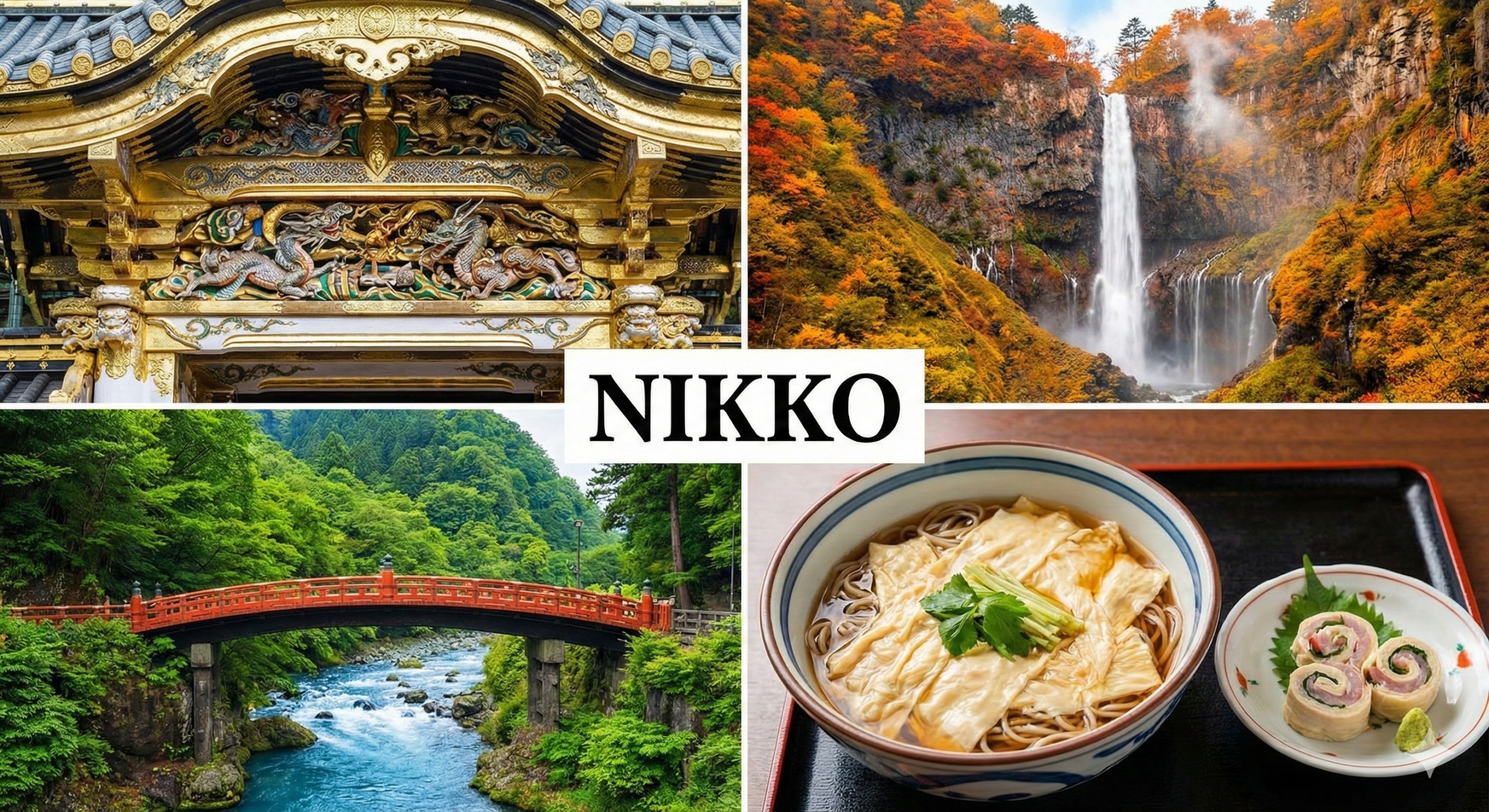
Unlike the minimalist Zen aesthetic seen in Kyoto, Nikko Toshogu Shrine is an explosion of color, gold leaf, and intricate carvings. It is the mausoleum of Tokugawa Ieyasu, the warlord who unified Japan and started the Edo period.
- Yomeimon Gate: Often called the “Sunset Gate” because one could gaze at its beauty until the sun goes down without getting bored. It is covered in over 500 detailed carvings of mythical beasts, dragons, and sages.
- The Three Wise Monkeys: On the facade of the Sacred Stable, you will find the famous carving of the three monkeys: “See no evil, speak no evil, hear no evil.” They represent the Buddhist approach to raising a child.
- The Sleeping Cat (Nemuri-neko): A small, peaceful carving of a sleeping cat that guards the entrance to Ieyasu’s tomb. It is said to symbolize an era of peace where even cats can sleep without worry.
Okunikko: The Nature Above the Clouds
Beyond the shrines, the road winds up the mountains to Okunikko, a highland resort area.
- Irohazaka Winding Road: To get there, you must travel up the Irohazaka, a road with 48 hairpin turns, each named after a character in the ancient Japanese alphabet. In autumn, this road offers some of the most spectacular fall foliage views in Japan.
- Kegon Falls: Ranked as one of Japan’s three most beautiful waterfalls, the water from Lake Chuzenji plunges nearly 100 meters down a cliff face. In winter, the falls can freeze solid, creating a stunning ice sculpture.
- Lake Chuzenji: A scenic lake at the foot of Mount Nantai. It was formed by a volcanic eruption 20,000 years ago and serves as a cool retreat during the hot Japanese summers.
Shinkyo Bridge: The Sacred Crossing
Before entering the shrine area, you are greeted by the Shinkyo Bridge.
- This vermilion lacquered bridge arches gracefully over the Daiya River. Legend says it was formed by two giant snakes to help a priest cross the river. Against the backdrop of green forests or autumn red leaves, it is one of the most picturesque spots in Nikko.
Yuba: The Delicate Taste of Gold
Because Nikko has so many temples and shrines, its cuisine is rooted in Shojin Ryori (Buddhist vegetarian cuisine). The star ingredient is Yuba (tofu skin).
- What is it? When making tofu, a thin film forms on the surface of the boiling soy milk. This skin is carefully lifted off to make yuba.
- How to eat it: In Nikko, you can eat it in every form imaginable: raw Sashimi Yuba (silky and creamy), fried in huge rolls, served in hot soba noodles, or even as Yuba Manju (steamed buns). It has a delicate, subtle flavor that absorbs the taste of the broth it is served in.
From the overwhelming detail of the golden gates to the roaring silence of the frozen waterfalls, Nikko offers a journey that satisfies both the lover of history and the lover of the wild.
Make your Japan trip exciting with 『Japaner Guide』
Japaner Guide is a personal guide matching service that connects you with local guides to explore destinations across Japan.

Even if you’re traveling alone and feeling unsure, you can enjoy Japan with confidence and peace of mind👍

From famous tourist attractions to hidden local gems, we customize your journey to perfectly match your interests!

👇 Sign up here 👇
https://japaner-guide.com/
Make your trip to Japan more fun and meaningful!