Japanese Soul Food If sushi is the refined art of Japanese cuisine, Okonomiyaki is its hearty, fun-loving soul. Often described as a “Japanese savory pancake” or “Japanese pizza,” the name literally translates to “grilled (yaki) as you like (okonomi).” It is a dish that encourages customization, social interaction, and a hearty appetite.
However, for any traveler visiting Japan, there is a fierce culinary debate that cannot be ignored: Osaka Style vs. Hiroshima Style. These two cities, separated by about 300 kilometers, have developed completely different philosophies on how this dish should be prepared. Participating in an Okonomiyaki cooking class is not just about learning a recipe; it is about stepping into the ring of this delicious rivalry and deciding for yourself which style reigns supreme.
Osaka Style (Kansai Style): The “Mixed” Masterpiece
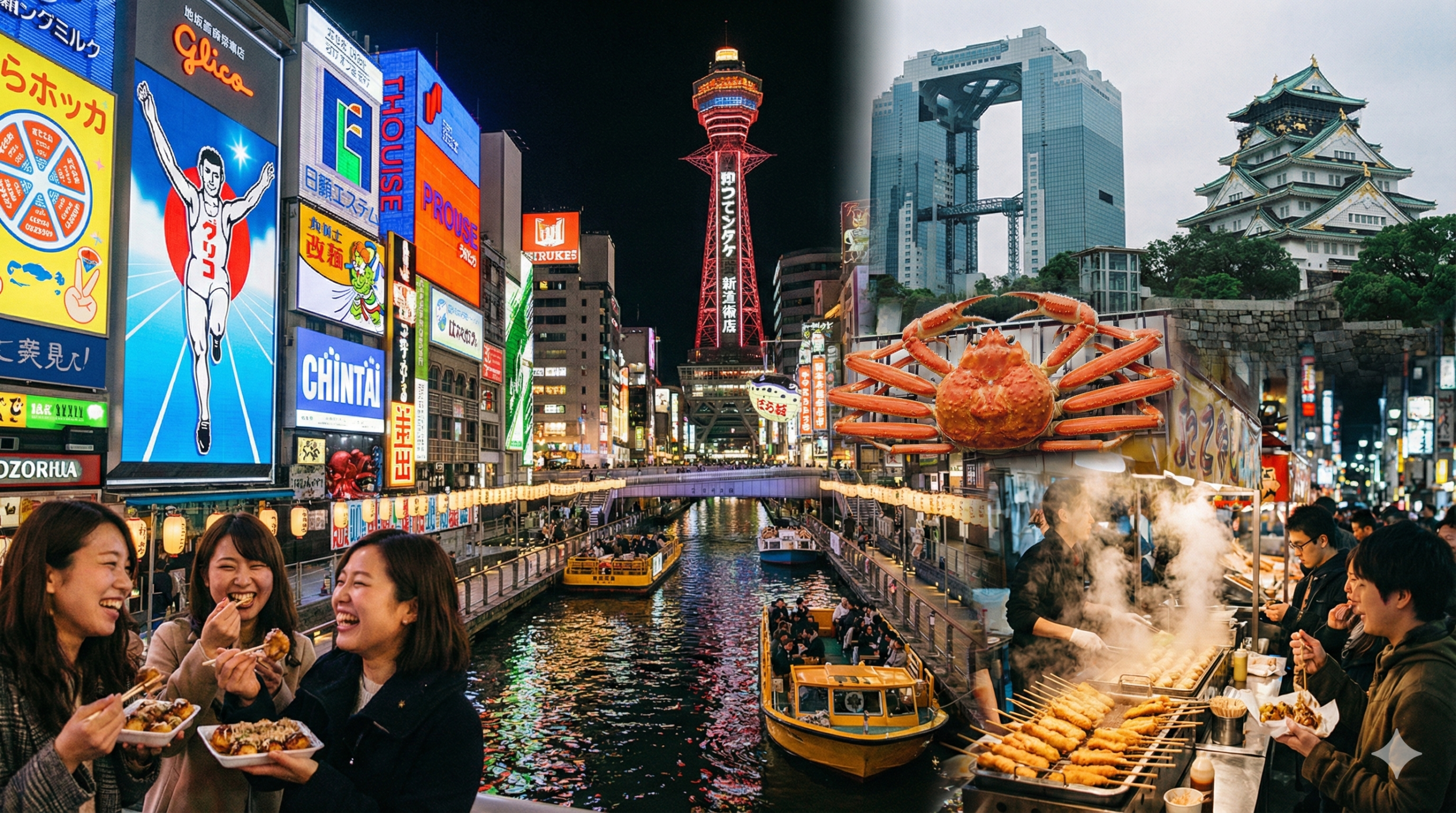
Osaka is known as the “Kitchen of Japan,” and Okonomiyaki is its flagship dish. The Osaka style is the version most commonly found in Japanese restaurants worldwide.
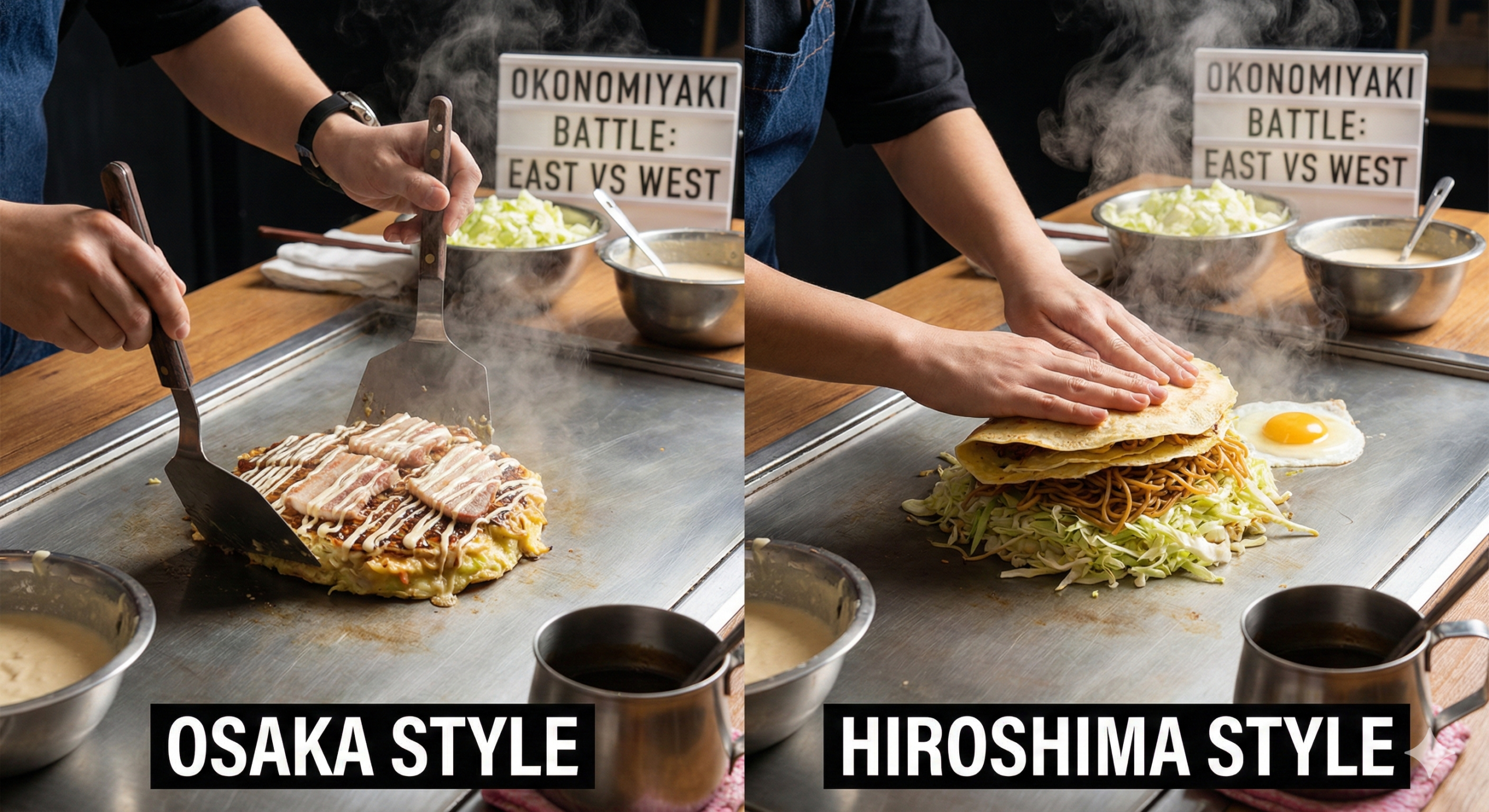
The Philosophy: The defining characteristic of Osaka style is mixing. The batter—made from flour, grated nagaimo (yam) for fluffiness, dashi stock, and eggs—is mixed together with shredded cabbage and other ingredients in a bowl before it hits the hot iron griddle (teppan).
The Making Process: In a cooking class, you will learn the “air-incorporating” technique.
- The Mix: You combine the batter, generous amounts of cabbage, tempura scraps (tenkasu), pickled red ginger (beni shoga), and green onions in a bowl. The key is to mix rapidly to whip air into the batter, ensuring a fluffy texture.
- The Shape: You pour the mixture onto the griddle and shape it into a perfect circle, about 2cm thick. Strips of pork belly are laid on top.
- The Flip: This is the moment of truth. Using two large metal spatulas (kote), you must flip the thick pancake in one decisive motion. Hesitation leads to breakage!
- The Finish: Once cooked, it is slathered in sweet, rich Okonomiyaki sauce, Japanese mayonnaise (often squeezed in decorative patterns), dried green seaweed (aonori), and bonito flakes (katsuobushi) that dance from the heat.
The Taste: Osaka okonomiyaki is thick, soft, and doughy in the best way possible. It is a comforting, integrated flavor bomb where every bite contains a bit of everything.
Hiroshima Style: The “Layered” Architect
Travel west to Hiroshima, and the dish transforms into a feat of culinary engineering. In Hiroshima, they will staunchly tell you that their version is the original, and mixing the ingredients is heresy.
The Philosophy: Hiroshima style is all about layering. Ingredients are never mixed. They are stacked vertically on the grill, cooked through steaming, and mounted on top of noodles.
The Making Process: Making Hiroshima okonomiyaki is significantly more difficult and requires professional guidance.
- The Base: You start by spreading a thin, crepe-like circle of batter on the grill.
- The Mountain: On this thin base, you pile a massive mound of shredded cabbage—often three to four times the amount used in Osaka style—along with bean sprouts and pork belly.
- The Flip & Steam: The entire tower must be flipped. This requires speed and confidence. Once flipped, the cabbage steams inside the crepe casing, becoming sweet and tender.
- The Noodles: While the stack steams, you grill a portion of Yakisoba noodles (or Udon) on the side. The cabbage stack is then lifted and placed on top of the noodles.
- The Egg: Finally, an egg is cracked onto the grill, flattened, and the entire noodle-cabbage-crepe stack is placed onto the egg.
- The Sauce: It is flipped one last time, heavily sauced, and garnished.
The Taste: Hiroshima okonomiyaki is complex. You experience distinct textures: the crispy noodles, the soft sweetness of the steamed cabbage, the savory pork, and the rich egg. It is a substantial meal, often eaten directly from the grill using the spatula.
Comparison Summary
| Feature | Osaka Style | Hiroshima Style |
| Structure | Mixed together (Integrated) | Layered (Stacked) |
| Noodles | Usually none (sometimes Modern-yaki) | Essential (Yakisoba or Udon) |
| Cabbage | Chopped fine, mixed in batter | Shredded, steamed in a pile |
| Difficulty | Beginner-friendly | Intermediate/Advanced |
| Vibe | Fluffy & Comforting | Complex & Hearty |
Why Join a Class?
While eating at a restaurant is fun, taking a class offers deeper insight.
Souvenir Skill: Unlike sushi, okonomiyaki is easy to recreate at home with ingredients found in most Western supermarkets (substituting the yam with baking powder if needed).
Cultural Context: Instructors often explain the post-war history of the dish, born from a scarcity of rice and an abundance of flour aid.
Technique: Learning how to use the kote (spatula) correctly is a skill that takes practice.
Make your Japan trip exciting with 『Japaner Guide』

Japaner Guide is a personal guide matching service that connects you with local guides to explore destinations across Japan.

Even if you’re traveling alone and feeling unsure, you can enjoy Japan with confidence and peace of mind👍

From famous tourist attractions to hidden local gems, we customize your journey to perfectly match your interests!

👇 Sign up here 👇
https://japaner-guide.com/
Make your trip to Japan more fun and meaningful!