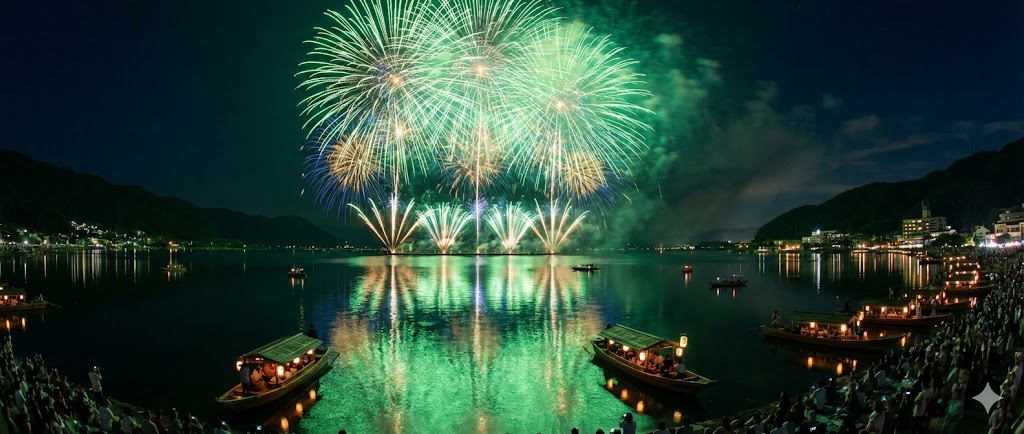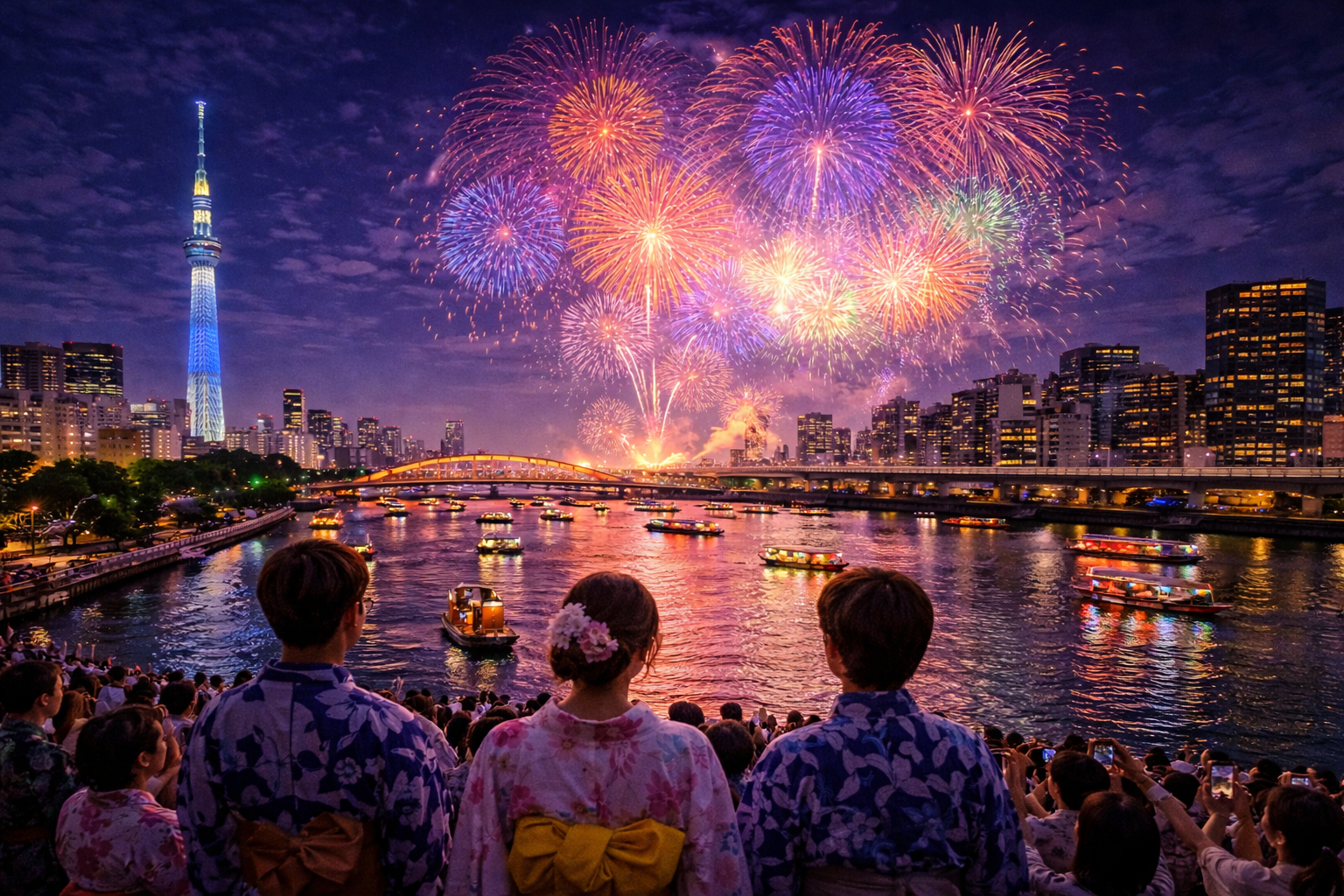
When the sun sets over the concrete jungle of Tokyo on the last Saturday of July, a collective hush falls over the millions gathered along the banks of the Sumida River. Suddenly, a whistle pierces the air, followed by a thundering boom that rattles the windows of nearby skyscrapers. The sky erupts into a kaleidoscope of gold, crimson, and emerald. This is the Sumida River Fireworks Festival (Sumida-gawa Hanabi Taikai), the oldest and most prestigious fireworks display in Japan.
For Tokyoites, this event is the definitive marker of summer. It is a massive, city-wide celebration where ancient tradition meets the cutting-edge backdrop of the Tokyo Skytree. Drawing over a million spectators, it is also one of the most challenging events to navigate. This exhaustive guide provides everything you need to know to master the Sumida River Fireworks—from its deep historical roots to the secret vantage points that only locals know.
Part I: The History of the Sumida Fireworks – A Prayer for Life
The Sumida River Fireworks Festival is not merely a show; it is a ritual of resilience. Its origins date back to 1733, during the Edo Period. At that time, Japan was suffering from a severe famine and a devastating cholera outbreak that claimed thousands of lives.
The reigning Shogun, Tokugawa Yoshimune, inaugurated the festival (then called Ryogoku Kawabiraki) as a way to appease the spirits of the dead and to pray for the eradication of the plague. Fireworks were launched to provide a moment of beauty and hope for the grieving citizens of Edo (old Tokyo).
The Legend of “Kagiya” and “Tamaya” If you attend a fireworks show in Japan today, you might hear people shouting “Kagi-ya!” or “Tama-ya!” as the shells explode. This tradition started at the Sumida River. These were the names of the two rival pyrotechnic guilds of the Edo period. Spectators would shout the name of the guild whose display they found most impressive. While the Kagiya guild still exists today, the shouts remain a tribute to the competitive spirit that pushed Japanese pyrotechnics to become the world-class art form it is today.
Part II: The Layout – Two Venues, 20,000 Shells
The festival is unique because it is split into two distinct launch sites along the river, providing a continuous barrage of light for nearly 90 minutes.
1. The First Venue (Dai-ichi Kaijo)
Located between Sakura-bashi Bridge and Kototoi-bashi Bridge.
- The Focus: This is where the prestigious fireworks competition takes place. The top pyrotechnic companies from across Japan bring their most innovative “Art Shells.” You will see complex patterns like “moving insects,” “flowers blooming in layers,” and even “characters” or “emojis” rendered in fire.
- Volume: Approximately 9,500 shells.
2. The Second Venue (Dai-ni Kaijo)
Located between Komagata-bashi Bridge and Umaya-bashi Bridge.
- The Focus: This site is closer to the Ryogoku area and focuses on high-volume, rapid-fire creative displays known as “Starmines.” It is intense, colorful, and designed to fill the sky completely.
- Volume: Approximately 10,500 shells.
Part III: The Art of the Japanese Firework (Hanabi)
To appreciate the Sumida River display, you must understand that Japanese fireworks, or Hanabi (literally “Fire-Flowers”), are designed to be viewed as individual works of art. Unlike Western displays that often focus on a synchronized rhythm with music, Japanese fireworks prioritize the perfect sphere and the color change.
The Four Pillars of Quality:
- Rounding (Kyoku): The explosion must form a perfect, symmetrical circle.
- Color (Shoku): The transition from one color to another must be instantaneous and uniform across all “stars” (the small pellets of gunpowder).
- Extinguishing (Kie): All points of light must disappear at the exact same moment. A lingering ember is considered a flaw.
- The Sound: The “thump” should be felt in the chest, a deep resonance that signifies the power of the shell.
Part IV: Survival Strategy – How to Actually See the Show
With over a million people crowding into a relatively small area of Asakusa and Mukojima, the Sumida River Fireworks is a logistical challenge. Here is your strategic roadmap:
1. The “Free” Sidewalk View (The Walk-Through) Most of the streets near the river are designated as “moving viewing areas.” You cannot sit down or stand still; police will usher you forward. While this sounds difficult, it is actually the most common way to see the show. You get a few minutes of incredible views as you cross a bridge or a major intersection, then you keep moving.
2. The Public Parks (The Early Bird Strategy) Parks like Sumida Park (on both sides of the river) are prime locations. However, people begin staking out spots with blue tarps at dawn. If you choose this route, one member of your party must stay with the tarp all day. It is a test of endurance in the Tokyo heat.
3. Shioiri Park (The “Safe” Distance) Located further north in Minami-Senju, this park is less crowded than Asakusa. The fireworks will look smaller, but you can actually sit down, have a picnic, and enjoy the show with much less stress.
4. The Tokyo Skytree (The Sky View) The Skytree offers a special lottery for tickets to view the fireworks from the observation deck. It is a surreal experience to look down or across at the explosions. However, the lottery is highly competitive, and tickets are expensive.
5. Rooftop Hotels and Restaurants Many hotels in Asakusa (like the Asakusa View Hotel) and restaurants with river views sell “Fireworks Packages.” These must be booked months in advance and can cost upwards of 50,000 yen per person. It is the ultimate luxury way to enjoy the night.
Part V: Cultural Essentials – Yukata and Street Food
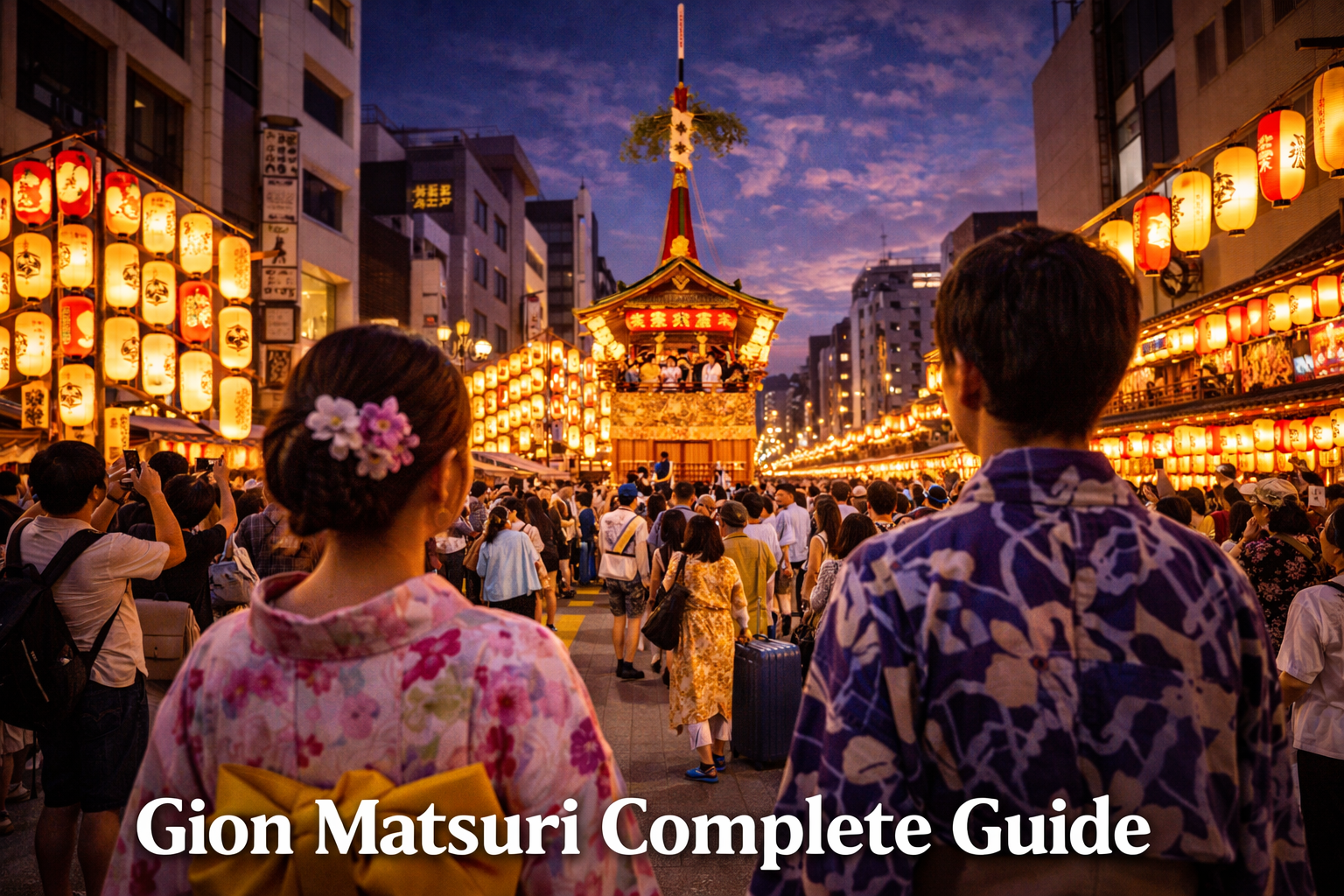
The Dress Code: Yukata The Sumida fireworks is the fashion event of the summer. Tens of thousands of people wear Yukata. It adds to the festive atmosphere and makes for incredible photos against the backdrop of the illuminated Skytree.
- Pro Tip: Wear comfortable shoes. Traditional Geta sandals can cause blisters if you are walking the “moving viewing areas” all night. Many locals pair their yukata with stylish sneakers for this specific event.
The Feast: Festival Food The streets of Asakusa become a massive open-air kitchen.
- Choco-Banana: A frozen banana dipped in chocolate and sprinkles.
- Kyuuri-no-Asazuke: A chilled cucumber on a stick, lightly pickled. It is surprisingly refreshing in the humid heat.
- Yakisoba: The smell of sizzling sauce on the griddle is the “aroma” of the Sumida festival.
Part VI: Practical Tips for a Stress-Free Night
- The Train Situation: Asakusa Station, Oshiage Station, and Ryogoku Station will be unimaginably crowded. Buy your return ticket or charge your IC card (Suica/Pasmo) before you arrive. After the show, expect to wait 60–90 minutes just to enter the station.
- Restrooms: Public restrooms have lines that can take 30 minutes or more. Plan your hydration carefully and know the locations of convenience stores, though many will restrict restroom use during the peak hours.
- Mobile Data: With a million people in one spot, cell towers often bottleneck. Do not rely on Google Maps or real-time messaging to find your friends. Set a clear meeting point and time before you get close to the river.
- Trash: There are very few trash cans. Carry a small bag to take your waste back to your hotel.
Summary: A Night of Resilient Beauty
The Sumida River Fireworks Festival is more than a display of light; it is the soul of Tokyo. It represents the city’s ability to recover from tragedy and celebrate life. As the final “Grand Finale” shells fill the sky with gold and the Skytree changes its lighting to match the mood, you feel a connection to the millions of people who have stood on these same banks for nearly 300 years, looking up in awe.
Navigate the Spectacle with Japaner
The Sumida River Fireworks Festival is perhaps the most difficult event in Tokyo to navigate without local knowledge. Between the “moving viewing areas,” the complex train redirects, and the competition for spots, a first-time visitor can easily spend the night looking at the back of someone’s head instead of the sky. This is where Japaner becomes your essential thought partner.
Japaner is an AI-powered travel companion designed to provide empathetic, authentic, and highly tactical guidance. Do you need a map of the lesser-known side streets in Sumida Ward where the Skytree doesn’t block the view? Are you looking for a restaurant in Asakusa that still has a balcony table available? Or do you need a step-by-step guide on how to enter the Tokyo Skytree ticket lottery?
With Japaner, you gain the intellectual honesty and warmth of a Tokyo expert. Let Japaner curate your fireworks experience, ensuring you find the perfect vantage point and navigate the crowds like a seasoned local.
Would you like Japaner to find a hotel with a fireworks view or provide a walking route that avoids the heaviest crowds?
Would you like me to proceed to the next article, “7. Nagaoka Fireworks Top 3 in Japan”?
Make your Japan trip exciting with 『Japaner Guide』
Japaner Guide is a personal guide matching service that connects you with local guides to explore destinations across Japan.

Even if you’re traveling alone and feeling unsure, you can enjoy Japan with confidence and peace of mind👍

From famous tourist attractions to hidden local gems, we customize your journey to perfectly match your interests!

👇 Sign up here 👇
https://japaner-guide.com/
Make your trip to Japan more fun and meaningful!