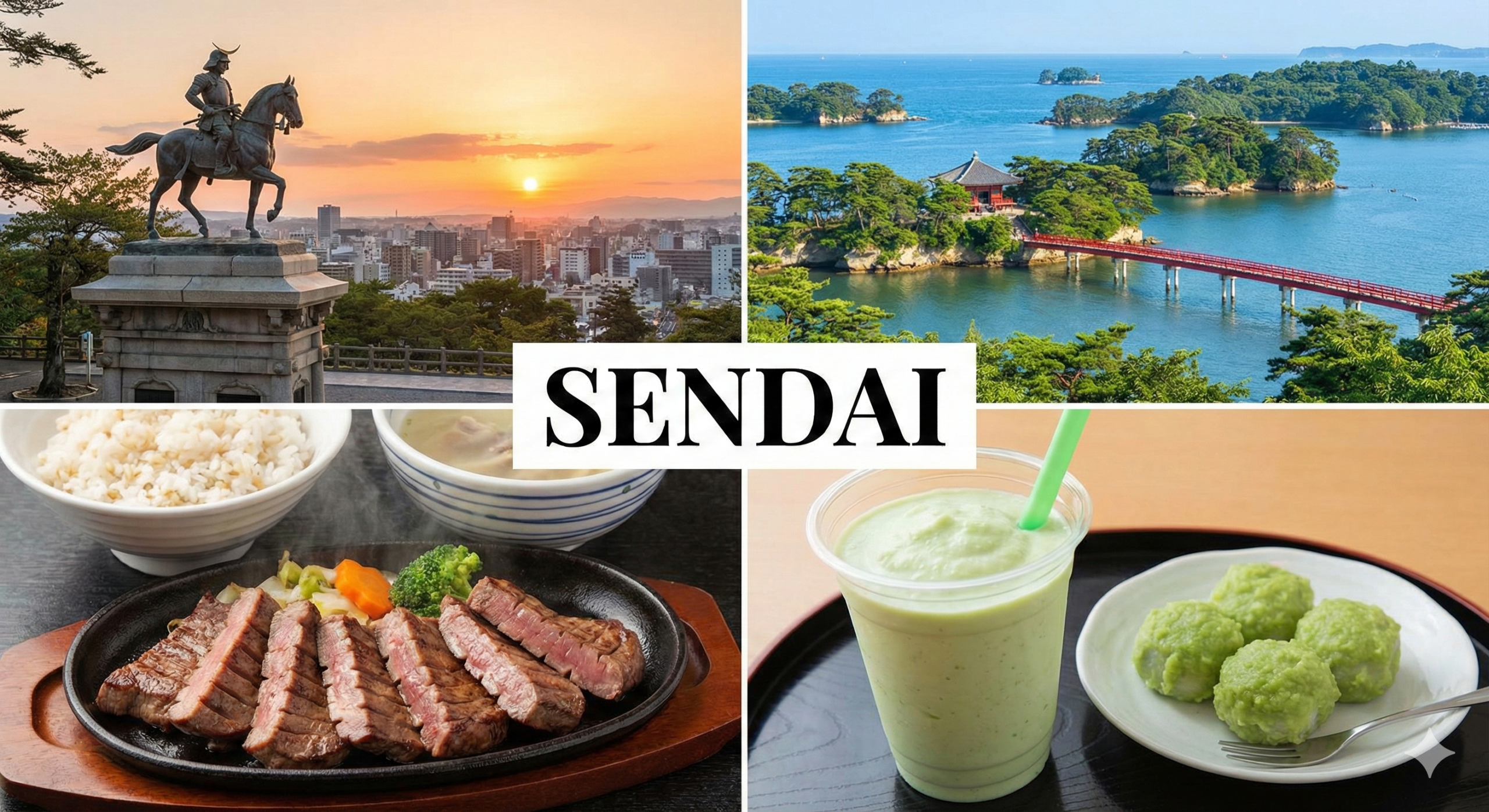
Located about 1.5 hours north of Tokyo by Shinkansen, Sendai is the largest city in the Tohoku region. Known as the “City of Trees” (Mori no Miyako), it is a modern metropolis that harmonizes beautifully with nature, deeply influenced by the legacy of one of Japan’s most legendary samurai lords. Just a short train ride away lies Matsushima, a bay so beautiful it is ranked as one of the Three Views of Japan.
The Legacy of the One-Eyed Dragon
Sendai was founded in 1600 by Date Masamune, a powerful feudal lord known as the “One-Eyed Dragon” (Dokuganryu) because of his missing right eye. He was a brilliant tactician, a patron of the arts, and a fashion icon (the word date in Japanese still means “stylish” or “flashy”).
- Zuihoden: This is the mausoleum of Date Masamune. Nestled in a forest of towering cedar trees, the architecture is dazzlingly ornate, featuring vivid colors and intricate woodwork similar to Nikko Toshogu. It reflects the flamboyant style Masamune loved.
- Aoba Castle Site: While the castle itself no longer stands, the stone walls and guard tower remain. The site features the iconic Equestrian Statue of Date Masamune overlooking the city. It is the perfect spot for a panoramic view of Sendai’s skyline.
Matsushima: One of Japan’s Three Best Views
For centuries, poets and artists (including the famous haiku master Basho) have been captivated by Matsushima Bay. The bay is dotted with over 260 small islands covered in pine trees (matsu), creating a serene, ink-painting-like landscape.
- The Sightseeing Cruise: The best way to appreciate the islands is by boat. The 50-minute cruise weaves through the bay, offering close-up views of islands with unique shapes, such as Niojima (which looks like a guardian statue).
- Godaido Hall: A small temple hall perched on a small islet, connected to the mainland by wonderful red bridges with gaps in the floorboards (so you can see the ocean below—intended to brace your nerves before entering the sacred ground).
- Zuiganji Temple: The family temple of the Date clan. After walking through an avenue of cedar trees, you find a Zen temple that was built to be a fortress, with “nightingale floors” that chirp when walked upon to warn of intruders.
Gyutan: A Meaty Delicacy
Sendai is synonymous with Gyutan (Grilled Beef Tongue).
- The Origin: The dish was created in Sendai after WWII as a way to use leftover parts of beef. It is typically served as a set meal: thick, tender slices of tongue grilled over charcoal, accompanied by barley rice (mugi-meshi) and ox-tail soup. It has a rich, savory flavor and a satisfying texture that is quite different from thin-sliced yakiniku tongue.
Zunda: The Green Sweet
Another local obsession is Zunda—a sweet green paste made from crushed edamame (young soybeans).
- Zunda Mochi: The traditional way to eat it is over mochi rice cakes.
- Zunda Shake: In recent years, the Zunda Shake (a vanilla shake blended with zunda paste) has become a viral hit. It is creamy, refreshing, and has a unique nutty sweetness.
The Tanabata Festival
If you visit in August (August 6–8), you will witness the Sendai Tanabata Festival. It is one of the grandest festivals in Japan, where the downtown shopping arcades are decorated with thousands of massive, colorful streamers made of Japanese paper (washi). Walking through the forests of paper streamers fluttering in the summer breeze is a magical experience.
From the stylish legacy of the samurai to the scenic islands and unique flavors, Sendai offers a rich and resilient spirit that defines the Tohoku region.
Make your Japan trip exciting with 『Japaner Guide』
Japaner Guide is a personal guide matching service that connects you with local guides to explore destinations across Japan.

Even if you’re traveling alone and feeling unsure, you can enjoy Japan with confidence and peace of mind👍

From famous tourist attractions to hidden local gems, we customize your journey to perfectly match your interests!

👇 Sign up here 👇
https://japaner-guide.com/
Make your trip to Japan more fun and meaningful!