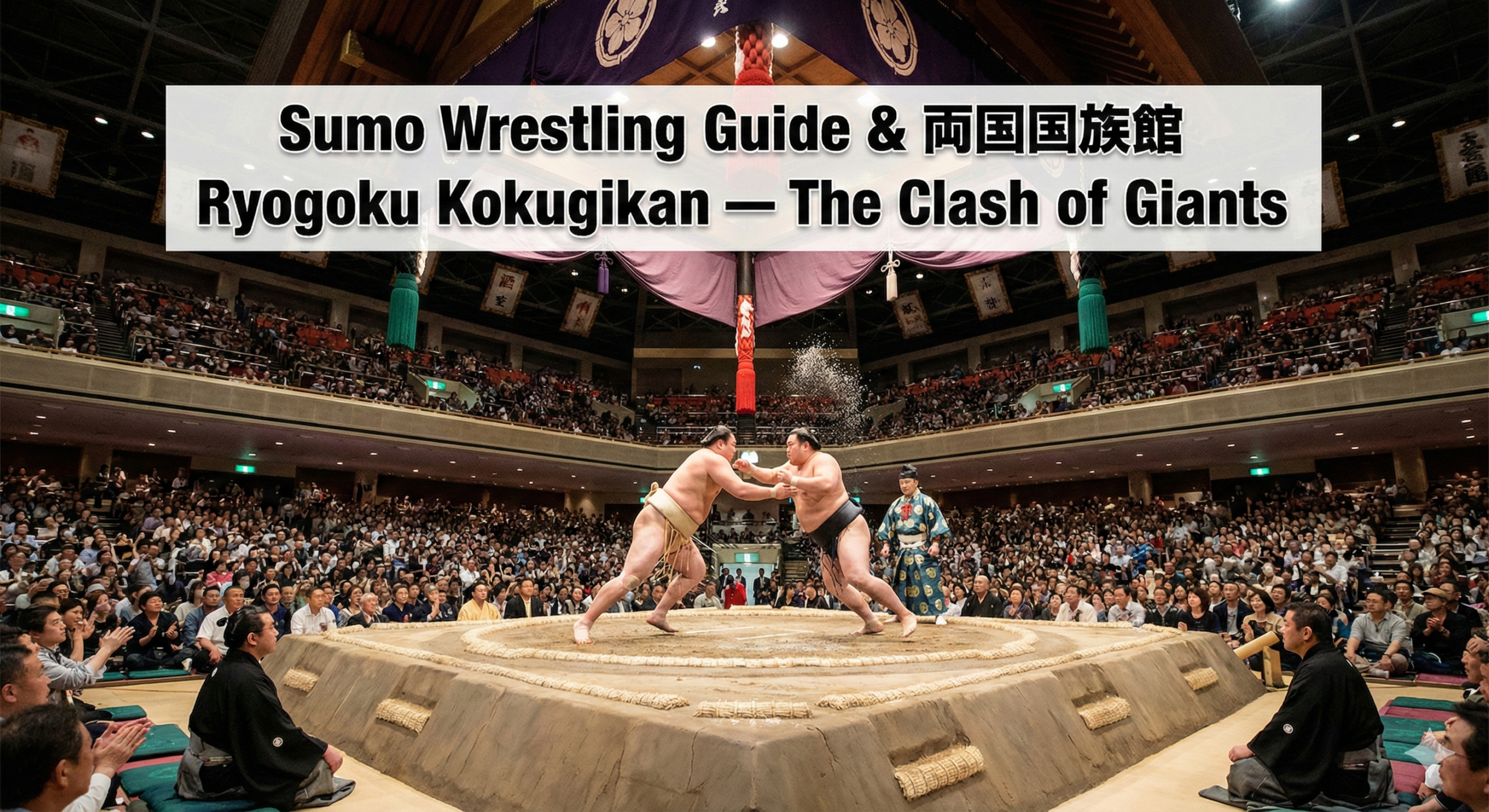
Sumo is not just a sport; it is a sacred ritual with over 1,500 years of history. Originally performed to entertain the Shinto gods and ensure a bountiful harvest, it remains Japan’s national sport, filled with salt purification, ceremonial stomping, and intense physical clashes.
For visitors in Tokyo, watching a tournament at the Ryogoku Kokugikan is the ultimate cultural spectacle.
The Sacred Ring: Ryogoku Kokugikan
Located in the Ryogoku district of Tokyo, the Kokugikan is the spiritual home of professional Sumo.
- The Dohyo: The wrestling ring is made of clay and sand. Above it hangs a roof modeled after a Shinto shrine, emphasizing the sport’s religious roots.
- The Schedule: Grand Tournaments (Honbasho) are held six times a year across Japan. Three of them—January, May, and September—take place here in Tokyo at the Kokugikan. Each tournament lasts for 15 days.
Choosing Your Seat
Tickets go on sale about a month before the tournament and sell out extremely fast. There are three main types of seating:
- Ringside Seats (Tamari-seki): These are the prestigious seats right next to the clay ring. You are so close that you can hear the wrestlers breathing and the slap of skin on skin. Warning: There is a risk of a 150kg wrestler falling on you! Eating and drinking are prohibited here.
- Box Seats (Masu-seki): The most traditional way to watch. These are small square areas separated by steel pipes where you sit on cushions (zabuton) on the floor. Shoes must be removed. It fits up to four people, but can be tight for adults with long legs.
- Arena Seats (Chair Seats): Located on the second floor, these are standard stadium chairs. They are more affordable and comfortable for those not used to sitting on the floor, though the view is from a distance.
How to Watch a Bout
A Sumo day starts early in the morning with lower-ranked wrestlers, but the stadium fills up around 4:00 PM when the top division (Makuuchi) wrestlers enter.
- Salt Throwing: Before the match, wrestlers throw handfuls of salt into the ring to purify it. The amount of salt thrown can sometimes excite the crowd.
- Shikiri (The Stare-down): The wrestlers squat and glare at each other, building psychological tension.
- Tachiai (The Charge): In a split second, they launch at each other. Most matches are over in under 10 seconds, making every moment explosive.
The Taste of Sumo: Chanko Nabe
You cannot leave Ryogoku without trying Chanko Nabe.
- The Wrestler’s Stew: This is the massive hot pot dish that wrestlers eat daily to build bulk. It is packed with vegetables, tofu, meat, and fish in a rich broth.
- Where to Eat: You can buy a bowl of chanko at the stadium basement during the tournament. Alternatively, the streets around Ryogoku station are lined with chanko restaurants, many owned by retired wrestlers.
Etiquette and Cheers
- “Yoi-sho!”: When a wrestler stomps his leg during the pre-match ritual, the audience shouts “Yoi-sho!” in unison. Joining in is a great way to feel part of the crowd.
- Manners: While eating and drinking (including alcohol) are a big part of the fun in the box seats, be respectful during the bouts.
Make your Japan trip exciting with 『Japaner Guide』
Japaner Guide is a personal guide matching service that connects you with local guides to explore destinations across Japan.

Even if you’re traveling alone and feeling unsure, you can enjoy Japan with confidence and peace of mind👍

From famous tourist attractions to hidden local gems, we customize your journey to perfectly match your interests!

👇 Sign up here 👇
https://japaner-guide.com/
Make your trip to Japan more fun and meaningful!