Navigating the Living Museum of Japan’s Ancient Capital
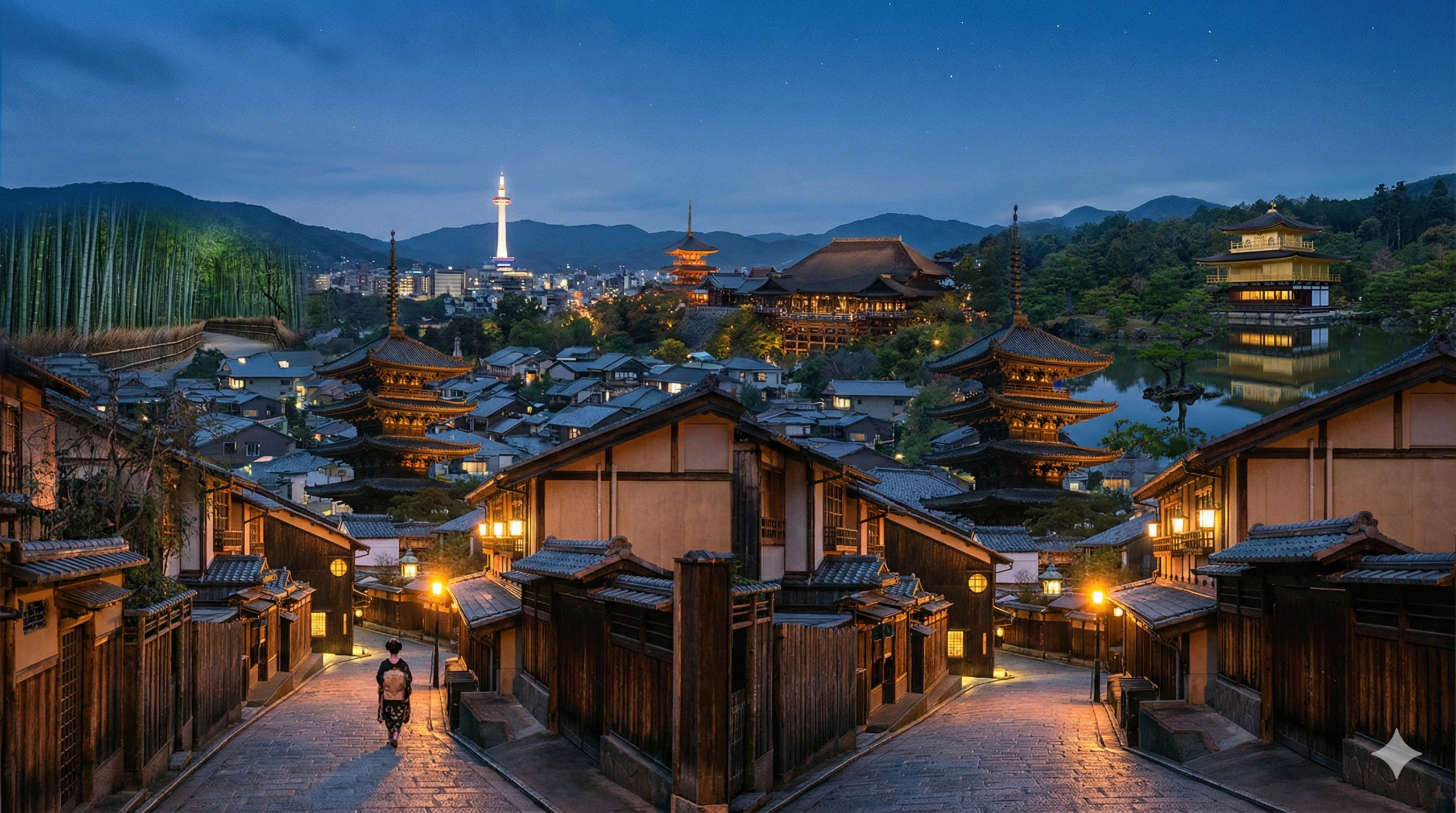
Kyoto is not just a city; it is the spiritual and cultural heart of Japan. For over a thousand years, it served as the Imperial capital, and today it remains home to over 1,600 Buddhist temples, 400 Shinto shrines, and 17 UNESCO World Heritage sites. The Kyoto sightseeing guide is a journey through layers of time, where the clicking of a Geiko’s wooden sandals in Gion mingles with the high-tech hum of the Kyoto Shinkansen station. To master Kyoto is to understand the balance between the “Open” (the massive wooden temples) and the “Hidden” (the private moss gardens and centuries-old teahouses).
Part I: The Four Quadrants of Kyoto
Kyoto is organized in a grid pattern modeled after the ancient Chinese capital of Chang’an. Tactical travelers should divide the city into these four major zones to maximize efficiency.
| Region | Vibe & Atmosphere | Key Highlights |
| Eastern (Higashiyama) | The “Classic” Kyoto. Narrow stone streets and dense temples. | Kiyomizu-dera, Yasaka Shrine, Gion district. |
| Western (Arashiyama) | Natural beauty and bamboo forests at the mountain foot. | Bamboo Grove, Tenryu-ji, Togetsukyo Bridge. |
| Northern (Kitayama) | Aristocratic retreats and the most famous “Zen” sights. | Kinkaku-ji (Gold Pavilion), Ryoan-ji (Rock Garden). |
| Southern (Fushimi) | The realm of sake, rice, and thousands of red gates. | Fushimi Inari-taisha, Sake brewing district. |
Part II: The Zen of Timing and Etiquette
Kyoto’s beauty is delicate and highly dependent on the season.
- The “Early Bird” Strategy: Kyoto is the most popular destination in Japan. To see the Bamboo Grove or Fushimi Inari without thousands of people, you must arrive by 7:00 AM.
- The “Temple Fatigue” Prevention: Do not try to see more than three major temples in one day. Instead, choose one “Icon” and spend the rest of your time exploring the surrounding neighborhoods and traditional craft shops.
- Religious Etiquette: Many Kyoto temples prohibit photography inside the main halls. Always look for the “No Camera” signs to show respect to the resident monks and worshippers.
Part III: Tactical Logistics
- The Bus vs. Subway Dilemma: Kyoto’s subway system is limited (only two lines). While buses go everywhere, they are often caught in heavy traffic. Use the subway or the private Keihan/Hankyu lines to get as close as possible to your destination, then switch to a bus or a 15-minute walk.
- Kyoto Station Hub: This futuristic glass building is a destination in itself. Head to the 10th-floor “Ramen Koji” (Ramen Alley) to try styles from across Japan, and use the “Skyway” for a free view of the Kyoto Tower.
Summary: The Realm of the Refined
Kyoto is a city that requires patience and a slow pace. It is a place where the history of Japan is written in wood, stone, and the meticulous arrangement of garden moss.
To unlock the doors of exclusive “referral-only” teahouses or to navigate the complex bus routes to the northern mountains of Ohara, consider Japaner. Japaner matches you with professional, human interpreter-guides living in Japan who are experts in Kyoto’s deep history. A guide from Japaner can design a personalized route that bypasses the tourist bottlenecks and provides the cultural context needed to truly understand the Zen philosophy behind the city’s gardens.
Make your Japan trip exciting with 『Japaner Guide』
Japaner Guide is a personal guide matching service that connects you with local guides to explore destinations across Japan.

Even if you’re traveling alone and feeling unsure, you can enjoy Japan with confidence and peace of mind👍

From famous tourist attractions to hidden local gems, we customize your journey to perfectly match your interests!

👇 Sign up here 👇
https://japaner-guide.com/
Make your trip to Japan more fun and meaningful!