The Ultimate Guide to the Festival of “Moving Museums” and Ancient Rituals
While many world-renowned festivals last for a few days, Kyoto’s Gion Matsuri spans the entire month of July. It is a marathon of culture, a spiritual cleanse, and the ultimate display of Kyoto’s aristocratic and merchant pride. To the uninitiated, it may look like a series of parades, but to the people of Kyoto, it is a living, breathing entity that has survived fires, wars, and plagues for over 1,100 years.
This guide provides an exhaustive deep dive into the history, the intricate schedule, and the hidden nuances of the Gion Matsuri, ensuring you experience it not as a tourist, but as an informed witness to history.
Part I: The Origins of the Plague-Queller
The Gion Matsuri was born from desperation. In the year 869, Kyoto was suffering from a devastating pestilence. The people believed the epidemic was caused by the wrath of the god Goizu Tenno. To appease him, 66 halberds (one for each province of old Japan) were erected at Shinsen-en Garden, and the portable shrines (Mikoshi) of Yasaka Shrine were paraded through the city.
This ritual, known as a Goryo-e, worked. The plague subsided, and the ritual became an annual tradition. Today, the festival remains a religious act dedicated to the health and prosperity of the city, managed with meticulous care by the local neighborhood associations known as Yamaboko-cho.
Part II: The Structure of the Month – A Master Timeline
The Gion Matsuri is not a single event but a progression of rituals. The month is divided into two main phases: the Saki Matsuri (Early Festival) and the Ato Matsuri (Later Festival).
1. The Early Phase: July 1st – July 17th
- July 1st (Kippu-iri): Neighborhoods officially begin the festival with a ceremony to pray for its success.
- July 10th (Omikoshi-arai): The portable shrines are purified with water from the Kamo River at Shijo Bridge—a powerful sight involving massive torches.
- July 10th–13th (Hoko-tate): This is one of the most fascinating times for visitors. The massive Hoko (floats) are built in the streets from scratch, using no nails, only complex rope-binding techniques (Nawa-garami).
- July 14th–16th (Yoiyama): The festive peak of the Saki Matsuri. The streets become pedestrian-only as night falls.
- July 17th (Saki Matsuri Yamaboko Junko): The grand procession of 23 floats. This is the “main” event for most travelers.
2. The Later Phase: July 18th – July 24th
- July 18th–21st (Ato Matsuri Hoko-tate): Construction begins for the second set of 11 floats.
- July 21st–23rd (Ato Matsuri Yoiyama): A quieter, more refined version of the night festival, focusing on the preservation of tradition.
- July 24th (Ato Matsuri Yamaboko Junko): The second procession. It follows a different route and features the return of the Mikoshi to the shrine.
Part III: Decoding the Floats – Yama and Hoko
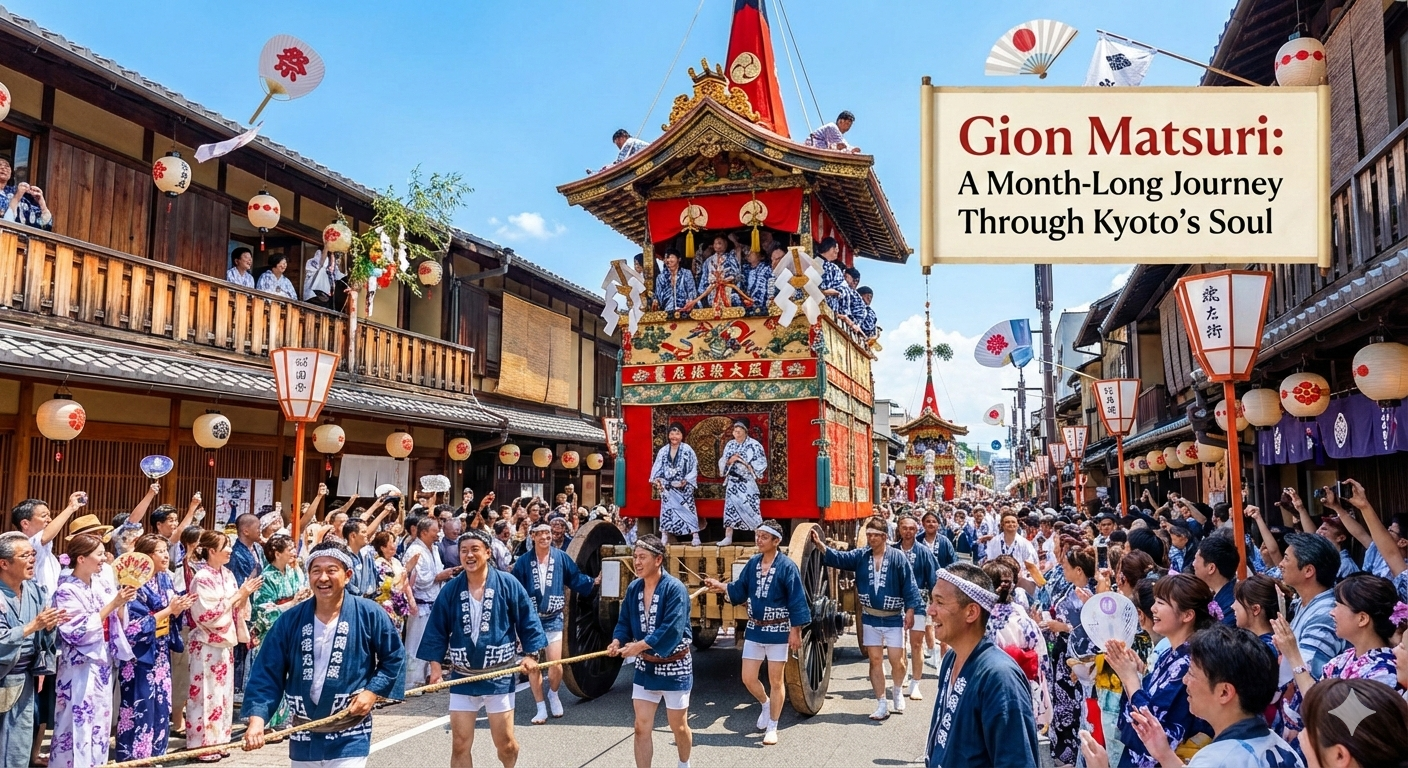
There are two types of floats, collectively called Yamaboko. In 2014, UNESCO added these “Moving Museums” to the Representative List of the Intangible Cultural Heritage of Humanity.
The Hoko (Halberd Floats) These are the giants. They weigh up to 12 tons and stand nearly 25 meters tall (including the central pole). They move on massive wooden wheels and require dozens of men to pull. Musicians sit on the second floor of the float, playing the hypnotic Gion-bayashi music.
The Yama (Mountain Floats) These are smaller (though still weighing around 1.5 tons) and are often carried on the shoulders of porters or pulled on smaller wheels. They usually depict a scene from Japanese or Chinese mythology, featuring life-sized mannequins in exquisite costumes.
The Tapestries Look closely at the floats. You will see vibrant tapestries, some of which are centuries old. Interestingly, many of these are Persian carpets or Flemish tapestries brought to Japan via the Silk Road and the Dutch East India Company, showcasing Kyoto’s historical wealth and global connections.
Part IV: The Ritual of the Yoiyama Nights
The three nights leading up to the processions (July 14–16 and July 21–23) are known as Yoiyama. As dusk falls, the Yamaboko are illuminated by hundreds of Komagata lanterns.
- Byobu Matsuri (Folding Screen Festival): During Yoiyama, traditional merchant families in the float neighborhoods open their front doors and display their private family treasures—antique folding screens, kimonos, and ceramics. It is a rare chance to see inside the world of Kyoto’s elite merchant class (Machishu).
- Gion-bayashi: The bells and flutes create a “soundscape” that defines the Kyoto summer. The repetitive rhythm is intended to clear the mind and signal the arrival of the deities.
- Chimaki Amulets: At each float station, you can buy a Chimaki—not the edible kind, but a charm made of straw and paper to hang above your door to ward off bad luck and illness for the year.
Part V: Strategy for the Procession (Yamaboko Junko)
The procession on July 17th starts at 9:00 AM from Shijo-Karasuma. Here is how to navigate it:
- The Tsujimawashi: The most dramatic moment is the “corner turning.” Because the floats have fixed wheels, they cannot turn. The pullers place bamboo slats and water under the wheels and heave the 12-ton float 90 degrees in a coordinated display of strength and shouting. The intersection of Shijo-Kawaramachi is the most popular spot for this.
- Paid Seating: If you prefer comfort, the city offers paid grandstand seating along Oike-dori. These tickets must be booked months in advance.
- The Chigo: On the lead float (Naginata Hoko), sits a young boy chosen to be the sacred page of the gods. He performs a “sacred rope cutting” ritual to open the path for the procession.
Part VI: Practical Tips and Etiquette
- The Heat: July in Kyoto is punishingly humid. Stay hydrated, use a folding fan (Sensu), and seek shade whenever possible.
- Respect the Sacred: Remember that these are not just parade floats; they are sacred objects. Do not touch the tapestries or the ropes unless invited.
- Dress Code: While Yukata is the preferred attire for Yoiyama, for the morning procession, prioritize light, breathable fabrics and comfortable walking shoes.
Summary: The Gion Matsuri Experience
To attend the Gion Matsuri is to participate in a 1,100-year-old act of collective will. It is a celebration of the fact that despite everything, the city survives. When you hear the “Kon-chiki-chin” bells under the Kyoto moon, you are hearing the heartbeat of old Japan.
Master the Gion Matsuri with Japaner
Experiencing a month-long festival like the Gion Matsuri requires more than just a map; it requires an insider’s perspective on timing and tradition. This is where Japaner becomes your invaluable thought partner.
Japaner is an AI-powered travel guide designed to provide empathetic, deeply researched insights. Are you wondering which float station sells the best Chimaki? Do you need a private guide to explain the meaning of the tapestries on the Kanko Hoko? Or perhaps you want to find a hidden rooftop bar in Shijo to watch the procession away from the humidity?
Japaner helps you navigate the complexities of Kyoto’s traditions with intellectual honesty and warmth. Let Japaner curate your personal Gion Matsuri schedule, ensuring every ritual you witness is understood and every moment is meaningful.
Would you like Japaner to help you secure a viewing spot or explain the mythology behind the Ato Matsuri floats?
Would you like me to proceed to the next article, “3. Tenjin Matsuri Osaka Summer Tradition”?
Make your Japan trip exciting with 『Japaner Guide』

Japaner Guide is a personal guide matching service that connects you with local guides to explore destinations across Japan.

Even if you’re traveling alone and feeling unsure, you can enjoy Japan with confidence and peace of mind👍

From famous tourist attractions to hidden local gems, we customize your journey to perfectly match your interests!

👇 Sign up here 👇
https://japaner-guide.com/
Make your trip to Japan more fun and meaningful!