The National Obsession If rice is the staple of Japan, Ramen is its obsession. Imported from China but radically transformed, ramen is the food of the people—quick, hot, and infinitely varied.
A bowl of ramen is constructed from three distinct elements:
- The Soup: The body (stock), usually made from chicken, pork, beef, or fish.
- The Tare (Seasoning): The soul. This concentrated sauce defines the type (Shoyu, Miso, Shio).
- The Noodles: Wheat noodles containing Kansui (alkaline water), giving them their yellow color and chew.
The Major Regional Styles
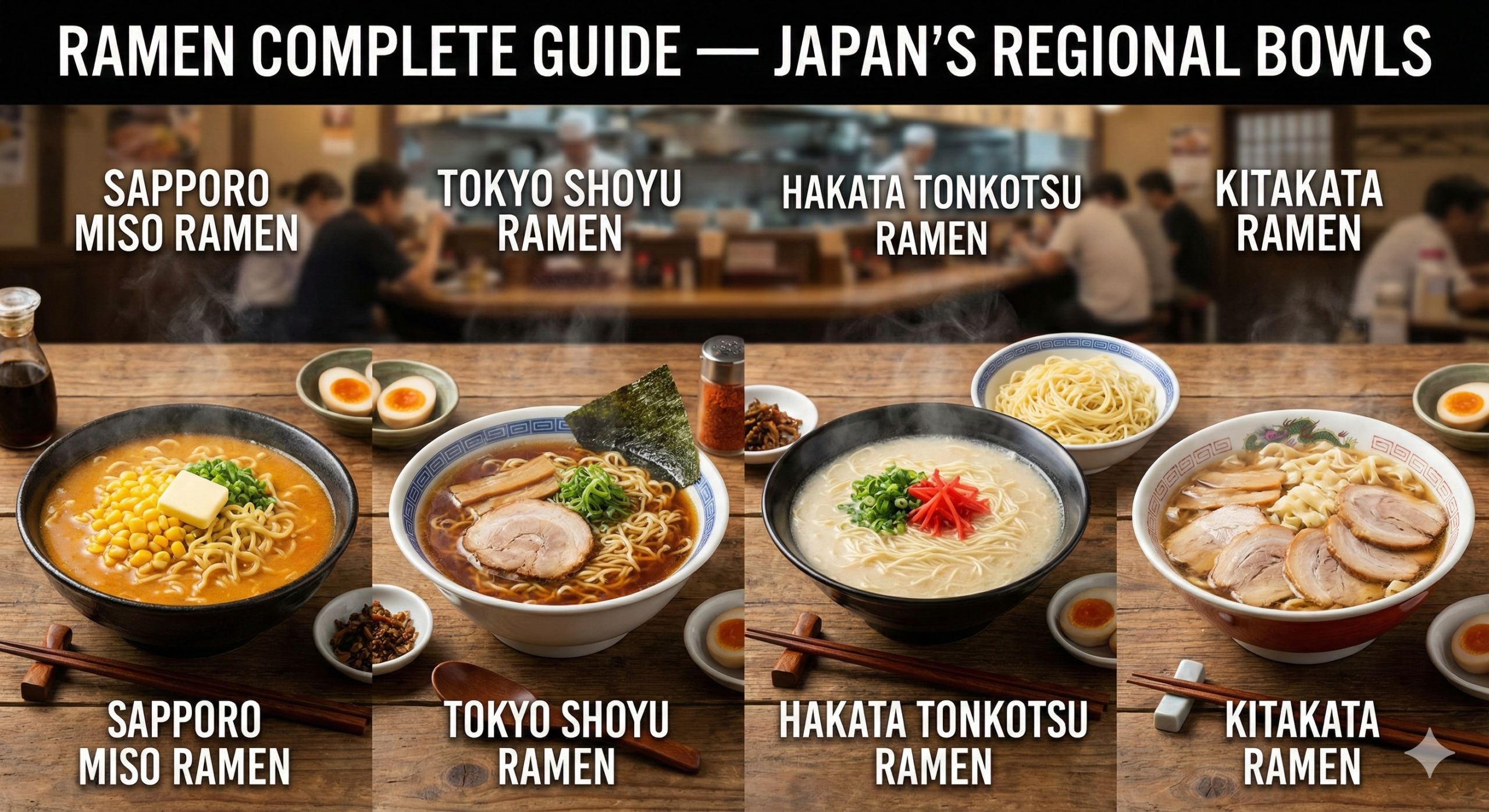
Japan has over 30 distinct regional ramen styles. Here are the “Big Three” + One:
1. Sapporo (Hokkaido): Miso Ramen
- The Bowl: Born in the freezing north, this is rich, hearty, and hot.
- Characteristics: The soup is a thick pork broth flavored with fermented soybean paste (Miso), often stir-fried with vegetables (corn, bean sprouts) and topped with a slice of butter to keep the heat in. The noodles are thick and curly.
2. Tokyo: Shoyu (Soy Sauce) Ramen
- The Bowl: The nostalgic classic.
- Characteristics: A clear, brown broth made from chicken and vegetables, seasoned with soy sauce. The noodles are usually thin and curly. It is light, tangy, and savory.
3. Hakata (Fukuoka): Tonkotsu (Pork Bone) Ramen
- The Bowl: The creamy, white powerhouse.
- Characteristics: Pork bones are boiled for hours (or days) until the marrow dissolves, creating a milky, rich soup. The noodles are ultra-thin and straight.
- Kaedama: In Hakata style, you don’t order a large bowl. You order a refill of noodles (Kaedama) while you still have soup left.
4. Kitakata (Fukushima): The Breakfast Ramen
- The Bowl: Famous for its high water-content noodles.
- Characteristics: Flat, wide, crinkly noodles that have a unique slippery texture. The broth is a light soy sauce base. In this city, ramen is traditionally eaten for breakfast (Asa-Ra).
Toppings and Terminology
- Chashu: Braised pork belly slices.
- Menma: Fermented bamboo shoots.
- Ajitama: A soft-boiled egg marinated in soy sauce (the yolk should be jammy).
- Ninniku: Garlic.
- Kata-me: “Hard.” Use this word if you prefer your noodles cooked al dente.
The Slurp
Yes, slurping is polite. Inhaling air along with the noodles cools them down and aerates the soup, enhancing the aroma. If you eat silently, you are missing half the flavor.
Make your Japan trip exciting with 『Japaner Guide』

Japaner Guide is a personal guide matching service that connects you with local guides to explore destinations across Japan.

Even if you’re traveling alone and feeling unsure, you can enjoy Japan with confidence and peace of mind👍

From famous tourist attractions to hidden local gems, we customize your journey to perfectly match your interests!

👇 Sign up here 👇
https://japaner-guide.com/
Make your trip to Japan more fun and meaningful!